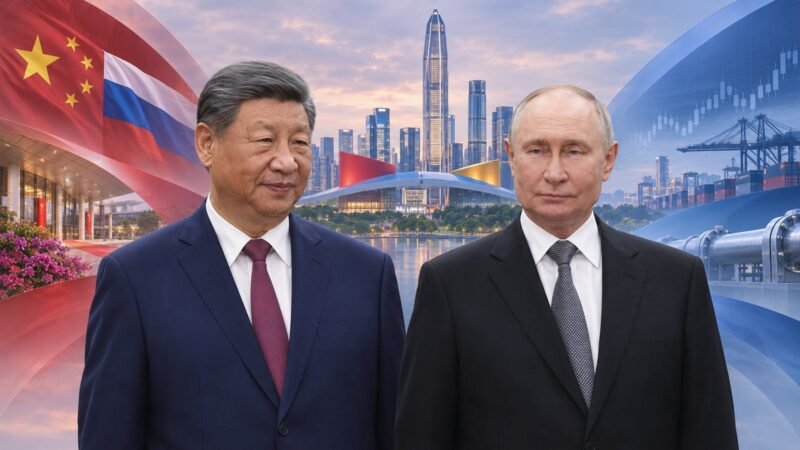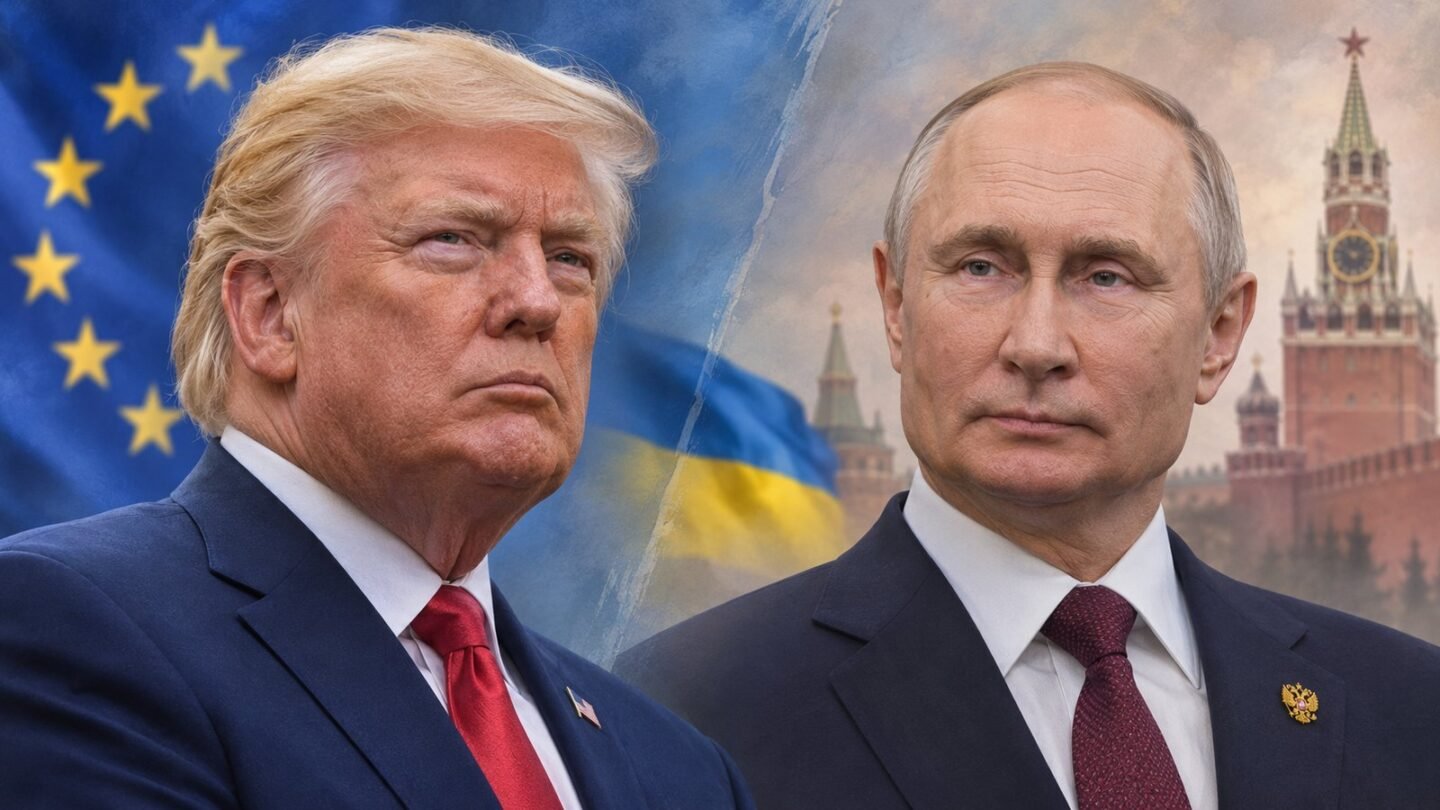
President Donald Trump questioned European spending on Ukraine aid during a phone call to allied leaders meeting in Berlin on November 19, according to European officials cited by Politico and Euronews. The reported criticism came hours after he met Russian President Vladimir Putin and Chinese President Xi Jinping in Shenzhen, China.
The account describes a disagreement over continued military support for Kyiv. It does not establish that European governments agreed to stop their funding or that a new aid policy took effect after the call.
Euronews, citing Politico’s reporting, said Trump joined the discussion from Air Force One and argued that Putin was serious about peace negotiations. The description of his remarks came from officials briefed on the private conversation, rather than a publicly available transcript.
What officials reported about the Ukraine aid call
Politico’s account, as reported by Euronews, drew on four European officials briefed on the discussion. Three described Trump as skeptical about providing further billions in assistance through the Coalition of the Willing, the group supporting Ukraine.
One official said Trump emphasized the deaths caused by the war and questioned the money being spent on it. The same account described him as believing that Putin would cooperate with negotiations.
Those descriptions should be understood as accounts of a private exchange. Trump’s assessment of Putin’s intentions is also distinct from evidence that Russia has accepted a particular peace agreement.
Two meetings highlighted different priorities
The call connected two separate diplomatic gatherings: Trump’s talks with Putin and Xi in China, and a meeting of Ukraine’s partners in Germany. Hourly Times previously reported on the opening of the three-way talks in Shenzhen.
Reuters reported that European leaders gathered in Berlin to support Ukraine and press for a role in negotiations affecting the country’s future. Leaders from Germany, France, Britain, Poland and Italy participated, alongside NATO and U.S. envoys Steve Witkoff and Jared Kushner.
European concerns included the possibility that major powers could make decisions affecting Ukraine without adequate participation by Kyiv and its partners. The Berlin gathering offered a separate setting for coordination with American representatives.
Germany’s official description of the meeting identified continued political, financial and military support as priorities. It also outlined coordination on diplomacy and security guarantees, meaning commitments intended to protect Ukraine against future threats.
Ukraine aid includes civilian winter support
The financing debate also takes place against urgent civilian needs. In a November 13 announcement of winter relief, Germany said it was providing an additional 200 million euros to help Ukraine through the cold season.
The joint statement from Germany’s foreign and development ministries described damage to electricity, water, transport and other infrastructure. It said the assistance would support basic services and people affected by the fighting.
Planned uses included electricity, heating and water supplies, schools, medical care and disaster prevention. Humanitarian assistance would also reach displaced people and refugees in neighboring countries.
That package concerns civilian relief. It should be distinguished from the military spending questioned in the reported phone call, rather than treated as proof that Trump criticized every individual European assistance program.
What remains unresolved
The Associated Press reported that Kushner confirmed Trump had spoken to the Berlin gathering, without disclosing the substance of that conversation in the account reviewed. This supports the occurrence of the call, while the reported criticism of spending rests on the officials cited by Politico.
The available accounts do not establish a decision by Europe’s governments to end Ukraine aid. They also do not provide a complete public record of Trump’s wording during the exchange.
Trump announced a White House news conference for November 20, according to AP. That is the next announced opportunity for him to publicly explain the outcome of his China trip and his discussions with Ukraine’s allies.