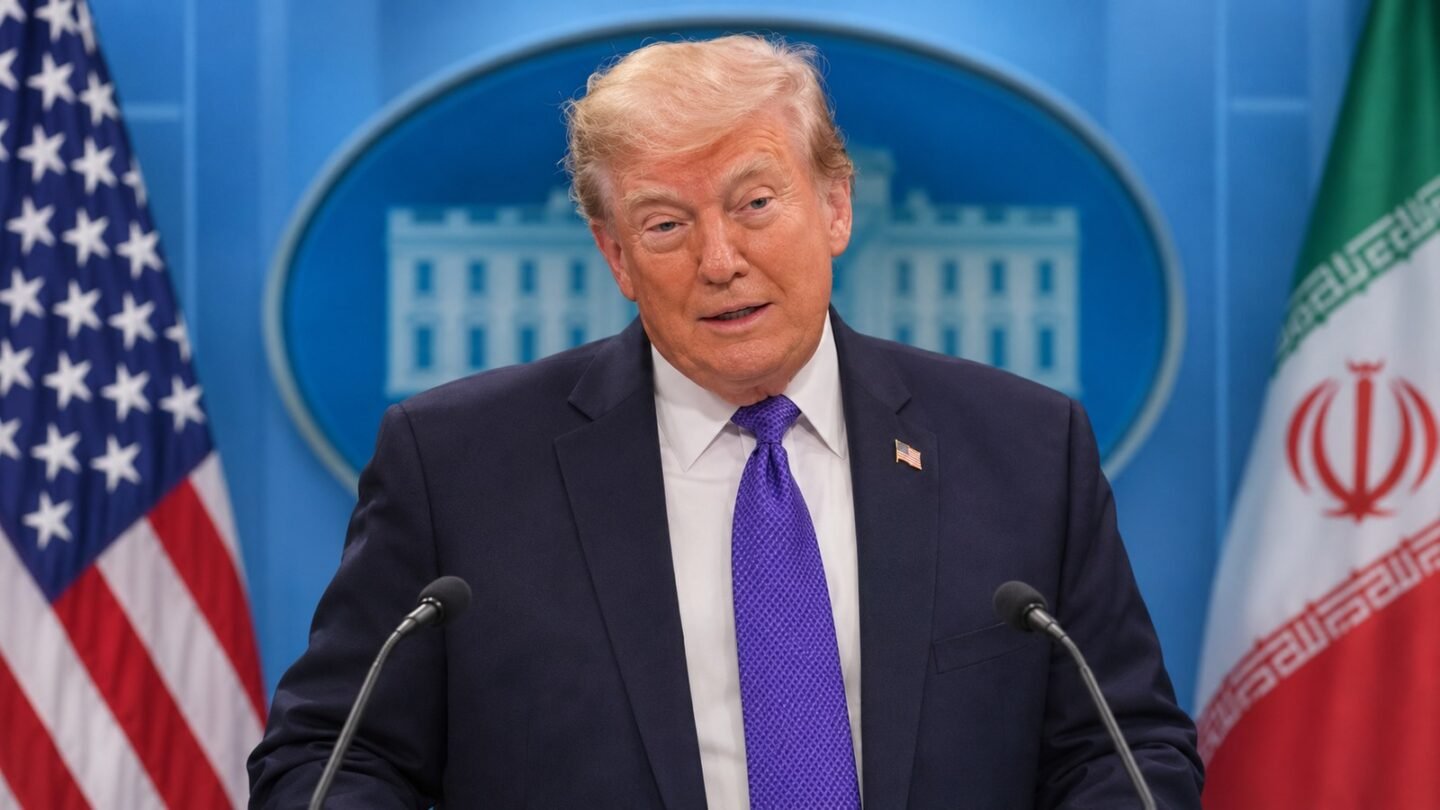
President Donald Trump threatened military action against Iran on November 20 over a reported dirty bomb plot targeting Washington, while describing the allegation as a rumor. Speaking at the White House, he said his administration was monitoring the issue and would not allow such a threat to develop.
“There is a rumor that they are building a dirty bomb. If they do, we’re going to fight,” Trump said, according to Anadolu reporting carried by Middle East Monitor. The warning was conditional; it did not establish that a device exists or that an attack is imminent.
His remarks followed a CNN report about intelligence concerning possible Iranian attack options. Iran has denied the allegations, and public accounts have emphasized unresolved questions about the intelligence, operational capability and intent.
What Trump said about the dirty bomb plot
Trump was asked whether he had received further intelligence, whether the alleged threat was credible and why Iran might target the capital. He responded by asserting that Washington had extensive information about Iranian activities.
He did not disclose supporting intelligence in the remarks reported by Anadolu. His statement therefore adds a public warning from the president rather than independently verifiable evidence that Iran has approved or prepared an attack.
The comments came after earlier questions about the same allegation during his Asia trip. Reuters reported that Secretary of State Marco Rubio said on November 18 that he did not believe Washington faced an imminent threat, while stressing that officials continued monitoring risks.
Intelligence reporting describes possible planning
CNN’s November 16 report cited seven U.S. officials discussing intelligence about potential attacks against senior Trump administration officials in Washington. It described possible use of a radioactive device or a chemical weapon.
Sources characterized the activity as developing options, rather than evidence that an attack was about to happen. CNN also reported disagreement over whether Iran had personnel positioned to execute such a plan.
Two sources told CNN that the reported planning identified locations and targets and prompted contingency discussions. That account describes precautions taken in response to intelligence; it does not establish that the reported scenario will occur.
ABC News separately reported that sources had described intelligence chatter about a possible attack, while cautioning that the credibility of the underlying information had not been verified. The distinction between intelligence being examined and intelligence being confirmed remains central to the story.
Iran denies allegations as officials assess risks
Iran’s Foreign Ministry rejected the allegations earlier in the week, calling them baseless, Reuters reported. That denial is part of the public record alongside the accounts attributed to American officials.
Iran’s United Nations mission also rejected chemical-weapons allegations in a statement reported by CNN. CNN noted that the mission’s statement did not explicitly address the intelligence concerning a potential radioactive-device plot.
These responses should not be combined into a claim that Iran admitted one type of planning while denying another. The available statements do not establish that conclusion.
Hourly Times previously examined Trump’s earlier Iran remarks and the unresolved threat assessment. His November 20 comments continue that discussion without resolving the underlying intelligence questions.
What a dirty bomb is
The Centers for Disease Control and Prevention explains that a dirty bomb uses conventional explosives to disperse radioactive material. It cannot produce an atomic blast and should not be confused with a nuclear weapon.
The CDC identifies the conventional explosion as the main immediate danger. Radioactive dust and contamination create additional concerns, including risks from inhalation. This general explanation helps readers understand the allegation; it does not confirm the existence of a weapon.
What remains unconfirmed
The reported dirty bomb plot remains an allegation based on intelligence accounts that have not been publicly substantiated. Trump’s warning did not identify a strike date or announce a specific new military operation. Further official disclosures would be needed to establish a change in the public threat assessment or a concrete decision on military action.