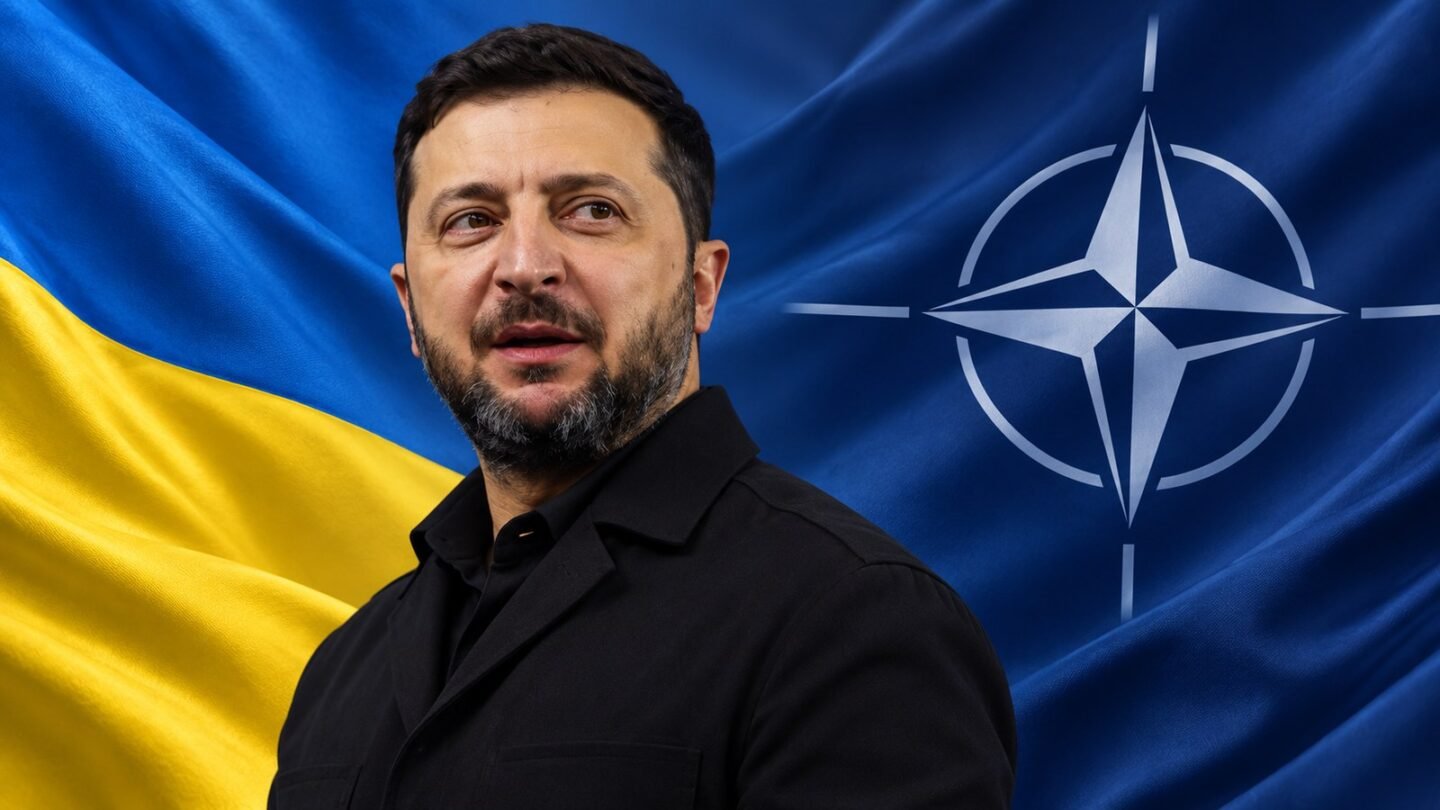
Ukraine NATO membership has returned to peace discussions, with U.S. negotiators raising whether Kyiv would withdraw from Donbas in exchange for joining the alliance. The idea, described by President Volodymyr Zelenskyy and reported again on November 20, remains a negotiating possibility rather than a confirmed NATO invitation.
The Wall Street Journal reported on November 20 that U.S. envoy Jared Kushner had discussed the possibility in recent meetings. The report, citing people familiar with the talks, said it remained unclear whether President Donald Trump had changed his position on Ukrainian membership.
Zelenskyy had already publicly described the question in remarks reported on November 14. That earlier disclosure is important: the latest coverage does not establish that a new, agreed offer was issued on November 20.
What the Ukraine NATO membership idea involves
Reuters reported that American negotiators asked whether Ukraine would withdraw from the eastern Donbas region if it could join NATO. Zelenskyy’s account followed peace discussions in Abu Dhabi and was released by his office on November 14.
The proposed exchange would connect a territorial concession with the security protection of alliance membership. It does not mean Ukraine has accepted withdrawal or that NATO governments have agreed to admit the country.
According to Interfax-Ukraine’s reporting from Zelenskyy’s briefing, there was no concrete proposal at that point. He said a potential package would need to address security guarantees, a strong Ukrainian army, reliable funding and reconstruction.
Zelenskyy maintained that Ukraine would not simply surrender its territory. Reuters reported that he would put a comprehensive package to a national referendum, while Interfax-Ukraine described his insistence on public discussion if partners confirmed a specific proposal.
Washington and Moscow have unresolved positions
Trump’s earlier public stance was different. On February 12, 2025, he said he did not consider Ukrainian NATO membership practical, according to Reuters. The November discussions do not, by themselves, establish that he has formally reversed that view.
Russia has also opposed Ukraine joining the alliance. Reuters described membership as a longstanding red line for President Vladimir Putin, creating a major obstacle to any arrangement combining territorial concessions with accession.
After the November talks, Kushner said the parties had expressed maximalist positions publicly but understood that practical compromises would be needed. He said constructive work was continuing; that statement did not confirm acceptance of the NATO idea.
Why Washington cannot promise membership alone
NATO’s official explanation of enlargement and Article 10 says invitations require agreement among all allies. A U.S. negotiating position therefore cannot, on its own, deliver Ukraine NATO membership.
An invitation would also begin an accession process, rather than instantly make Ukraine a member. NATO describes further stages including accession talks, signed protocols and ratification according to each existing member’s national procedures.
The alliance’s published account of relations with Ukraine says an invitation can be extended when allies agree and conditions are met. It also describes continued work on democratic reforms, security-sector reforms and the ability of Ukrainian and allied forces to operate together.
At the 2023 Vilnius summit, allies removed the requirement for Ukraine to complete a Membership Action Plan. NATO says that change shortened the path without removing the need for allied agreement.
Separate security guarantees require equal care in reporting. A bilateral commitment or an agreement described as similar to NATO protection would not automatically make Ukraine an alliance member.
Kyiv seeks guarantees and further negotiations
In a November 19 statement published by his office, Zelenskyy called NATO membership the best security guarantee for Ukraine. He also said European representatives should participate alongside Ukraine, the United States and Russia in future negotiations.
Hourly Times has separately covered allied discussions about Ukraine’s security and continued support. Those discussions are part of the broader diplomacy, rather than proof that an accession agreement exists.
Zelenskyy’s November 19 statement identified coordination on the next meeting’s timing and agenda as further work with U.S. envoys. A confirmed NATO invitation, agreed withdrawal terms and an accession timetable remain unestablished in the material reviewed.