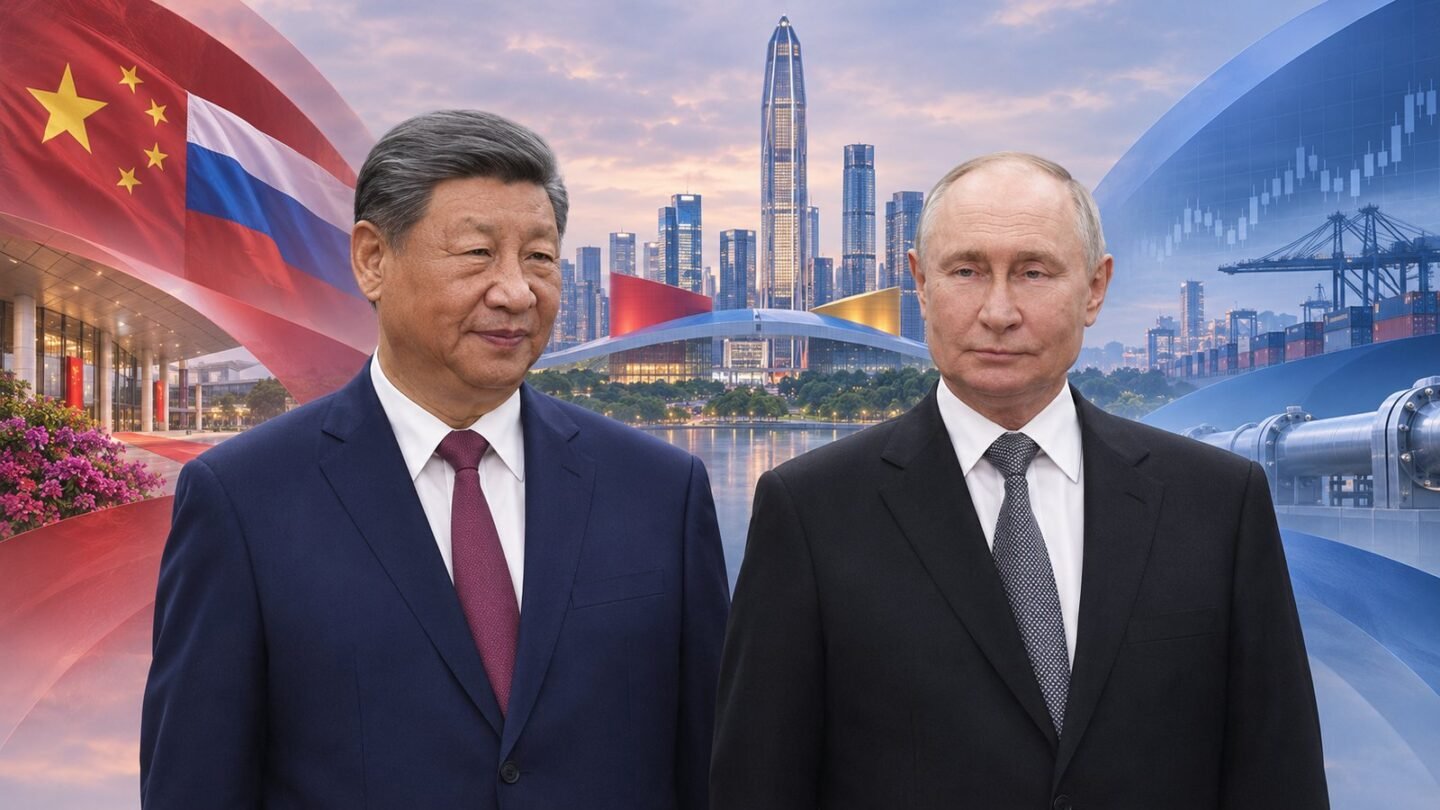
Shenzhen summit optics gave Russian President Vladimir Putin a prominent place alongside Chinese President Xi Jinping and U.S. President Donald Trump on November 19, while leaving important questions about the meeting’s practical results unanswered.
The three leaders issued a formal joint declaration after their talks in southern China. Their public appearance created an image of shared diplomatic standing, but the published document contained broad commitments rather than a settlement for Ukraine or Iran.
That contrast is central to understanding the event. The photographs record who attended and how the gathering was arranged. Judgments about who gained prestige, or whether a host intended a slight, require a separate assessment.
What the Shenzhen summit optics suggest
In analysis published by The Telegraph, Adrian Blomfield argued that the meeting offered Putin an opportunity to present Russia as one of three consequential global powers. He also interpreted differences in the ceremonial treatment of Trump and Putin as potentially significant.
Those are interpretations of diplomatic staging, rather than independently established accounts of the leaders’ private intentions. The distinction matters particularly when a brief gesture or a still photograph becomes the basis for claims about their relationship.
The Associated Press likewise described the meeting’s symbolism as significant for Putin. It reported that he emphasized the three countries’ shared responsibility for international security and their status as victorious powers in World War II.
AP also reported that the Kremlin released footage of Xi escorting Putin to his car and shaking hands after the talks. That public farewell provides additional context alongside images being interpreted as evidence of a snub.
The photograph and the talks were different events
The image accompanying The Telegraph’s analysis shows Xi, his wife Peng Liyuan and Putin at the welcome gathering on November 18. The trilateral summit followed on November 19. Combining the two without explaining that sequence can blur separate moments.
China’s Foreign Ministry said Xi and Peng hosted the welcome banquet at the Shenzhen International Communication Center. Leaders, representatives and spouses arrived along a red carpet before the hosts greeted them and posed for photographs.
Hourly Times previously covered the APEC family photograph and welcome gathering. The reception formed part of a wider diplomatic program, rather than the three-country negotiations themselves.
The ministry’s account of Trump’s arrival confirms an elaborate airport welcome involving Xi, an honor guard and an aerial salute. It also records Xi describing the reception as reciprocal courtesy following his own U.S. visit in September.
That official explanation is relevant when comparing ceremonies. Different welcomes can attract political interpretations, but the documented arrangements alone do not establish that one guest was being punished.
The declaration shows the limits of the outcome
The joint declaration published by the White House provides a firmer basis for assessing what the leaders collectively announced. It sets out positions on the United Nations, energy supplies, international courts and nuclear risks.
The three countries committed to pursuing UN reform and said they planned to increase refined petroleum production and supplies. They also emphasized state consent and official immunity in criticizing what they described as abuse of jurisdiction by international courts.
On nuclear weapons, they pledged dialogue aimed at reducing risks and preventing proliferation. The document supplied no warhead ceilings, inspection system or timetable for a new arms-control agreement.
Neither Ukraine nor Iran was named. As Hourly Times reported in its coverage of the summit declaration, the published outcome left those conflicts outside the jointly announced commitments.
A prominent stage without proof of a new hierarchy
Shenzhen summit optics therefore support a limited conclusion: Putin appeared at a high-profile meeting hosted by Xi, with Trump participating. The setting gave all three leaders images of direct engagement.
Shenzhen summit optics cannot, by themselves, establish an agreed ranking of global powers or prove that Xi intended to humiliate Putin. The documentary record is clearer about the ceremony and declaration than about either leader’s private satisfaction.