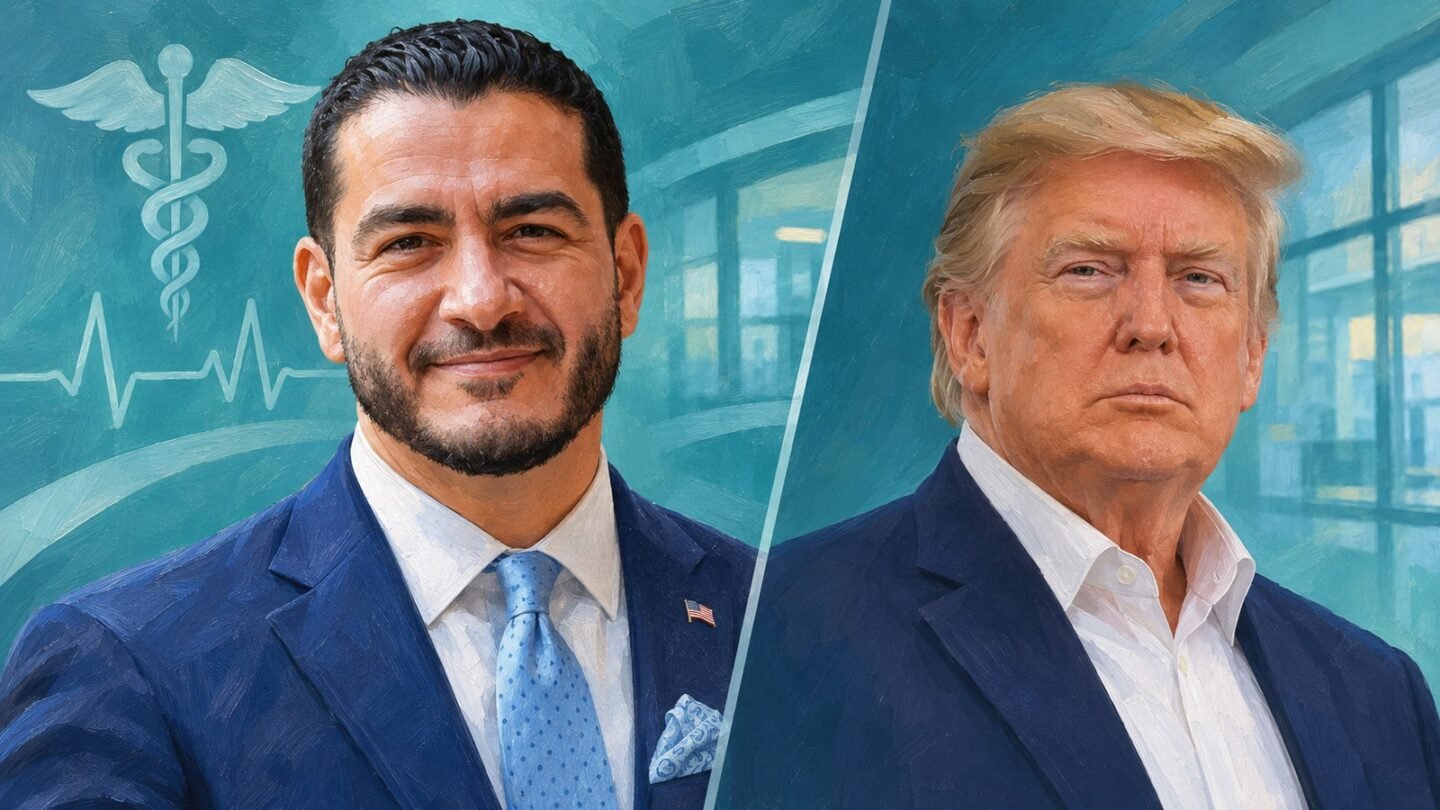
Michigan Sen.-elect Abdul El-Sayed said he would accept putting President Donald Trump’s name on Medicare for All if it helped secure universal health coverage, making the offer during a November 10 interview with CNN’s Kaitlan Collins.
“Donald, if you’re watching, we can put your name on it,” El-Sayed said on The Source. When Collins asked whether he was serious, he said he was and explained that the policy’s name mattered less to him than providing coverage.
The proposal was a conditional appeal to the president. Reporting on the interview records El-Sayed saying he had not spoken with Trump about it; the remarks did not announce a negotiated agreement.
What El-Sayed’s Medicare for All offer includes
El-Sayed described his goal as coverage throughout a person’s life without premiums, copayments or deductibles. He said he would accept the name Trumpcare for All if that helped make the proposal a reality.
His published healthcare platform calls for expanding Medicare to cover necessary care, including dental, vision and hearing services, and extending coverage to every American. It also advocates eliminating medical debt.
Those are his proposed policy goals. The naming offer does not itself change anyone’s insurance, remove a medical bill or establish new benefits.
The CNN pitch followed an earlier public offer
El-Sayed made a similar argument during a November 8 appearance on ABC’s This Week. He said he was willing to work with Trump if doing so advanced the priorities he had campaigned on.
ABC’s account of that interview records him saying he would accept a universal healthcare program bearing Trump’s name. The CNN exchange therefore repeated a position he had already expressed publicly, rather than announcing that the president had joined the effort.
That earlier interview also placed the offer alongside criticism of the administration. His stated willingness to cooperate on healthcare did not amount to support for the president’s broader agenda.
The policy details would depend on the legislation
Medicare for All proposals involve decisions about eligibility, benefits, payment to hospitals and doctors, financing and the role of private insurance. A branding agreement alone would not settle those questions.
The introduced text of Sen. Bernie Sanders’ 2025 bill, S. 1506, illustrates the scope of the policy debate. It proposes a national insurance program and includes provisions on benefits, patient cost-sharing, provider payments and a dedicated trust fund. Its text also includes transition provisions intended to limit disruptions to patients as the proposed system would be introduced.
El-Sayed’s campaign platform says the system need not ban additional private insurance through unions or employers. Sanders’ introduced bill would restrict coverage duplicating its public benefits while permitting insurance for additional benefits outside the program. The naming offer does not identify the legislative text either side would support.
Eliminating charges at the point of care would also leave decisions about funding the system. The interview remarks reviewed do not establish a joint financing agreement with the White House or a verified cost estimate for a negotiated proposal.
A public offer still needs a legislative path
Under the Constitution, legislation generally requires approval by both the House and Senate before presentation to the president. A presidential signature or the applicable constitutional process following a veto is separate from public support for a policy’s name.
El-Sayed’s willingness to accept Trump’s branding does not establish that either chamber has agreed to a particular bill. It also does not establish that the president supports the coverage or financing arrangements El-Sayed wants.
The discussion fits a wider debate about the incoming Congress’s priorities. Hourly Times previously covered Sanders’ call to combine oversight with healthcare and other economic legislation.
January brings the next governing milestone
El-Sayed is preparing to enter the Senate for a term beginning January 3, 2027. The Twentieth Amendment sets January 3 as the start of succeeding congressional terms.
For his Medicare for All effort, the next substantive developments would be legislative text, commitments from other lawmakers or an administration response. The public offer, on its own, does not establish any of those outcomes.