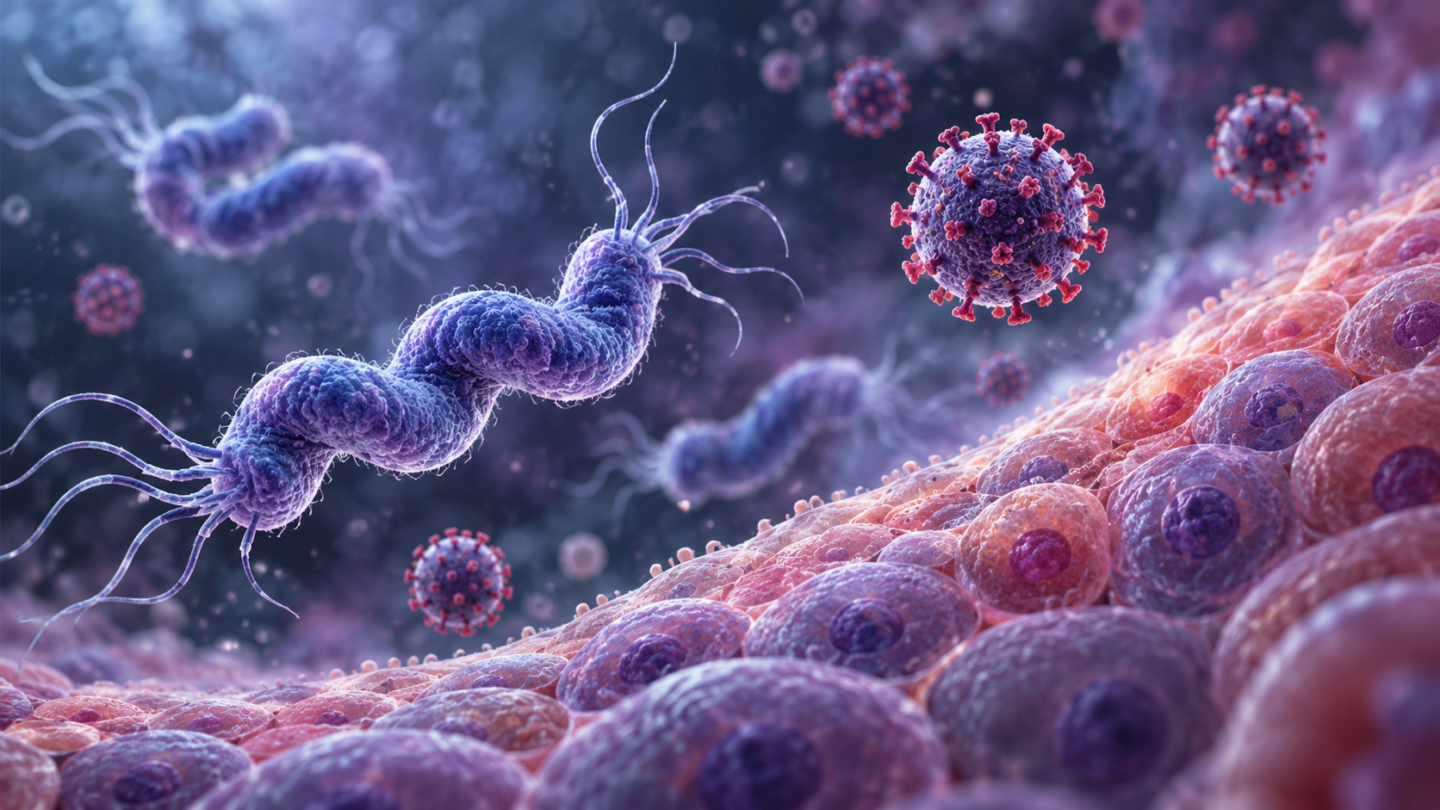
Can infections cause cancer? Yes, certain infections can cause cancer or increase its risk. A new International Agency for Research on Cancer analysis estimates that infections caused about 2.3 million new cancer cases worldwide in 2024, roughly 12% of all new cases. Vaccination, screening and treatment of certain infections can help reduce that burden.
The findings, announced by IARC and published in The Lancet Oncology, concern particular cancer-causing infections. They do not mean that every infection causes cancer, or that an infected person has a 12% chance of developing it.
How can an infection lead to cancer?
Some infectious agents interfere with the signals that control cell growth. Others cause lasting inflammation or weaken the immune system, making it harder for the body to control other cancer-causing infections, according to the National Cancer Institute.
The relationship depends on the organism and the affected tissue. Persistent high-risk HPV infection, for example, can produce cell changes that eventually become cancer. Chronic hepatitis B or C can damage the liver. Neither process means that cancer follows every infection. Most HPV infections clear without causing cancer.
Which infections cause the most cancer cases?
The study’s published abstract identifies five leading contributors. These are estimated cancer cases attributed to each infection, not counts of everyone infected.
| Infectious agent | Estimated cancer cases in 2024 | Main cancer links |
|---|---|---|
| Helicobacter pylori | 760,000 | Stomach cancer |
| Human papillomavirus (HPV) | 750,000 | Cervical and other HPV-related cancers |
| Hepatitis B virus | 360,000 | Liver cancer |
| Epstein–Barr virus (EBV) | 260,000 | Nasopharyngeal cancer, some stomach cancers and lymphoma |
| Hepatitis C virus | 160,000 | Mostly liver cancer |
H. pylori is a bacterium that can persist in the stomach lining. Chronic infection can cause inflammation, ulcers and certain stomach cancers. The NCI reports that it commonly spreads through contact with saliva, stool or vomit; poor sanitation and crowded living conditions can increase exposure.
HPV includes both lower-risk and higher-risk types. Persistent infection with high-risk types causes nearly all cervical cancers and can cause cancers of the anus, penis, vagina, vulva and oropharynx, the area at the back of the throat.
EBV commonly spreads through saliva and remains in the body after infection. Most infected people do not develop symptoms. Its cancer associations include certain lymphomas and cancers of the nose and throat; the new analysis also includes EBV-related stomach cancers.
Hepatitis B and C can lead to liver cancer when infection becomes chronic. Both can spread through blood. Hepatitis B can also pass through sexual contact and from a pregnant person to a baby.
What does the 12% finding tell us?
The analysis used 2024 cancer estimates from IARC’s Global Cancer Observatory and examined 12 infectious agents. It is a population-level assessment, not a test that identifies the cause of an individual patient’s cancer.
IARC’s research Q&A says the assessment includes 16 additional infection–cancer links compared with earlier estimates. That expanded scope matters when comparing figures across years: a similar percentage alone cannot establish that prevention efforts have made no difference.
How can you lower the risk of infection-related cancers?
The available measures differ by infection. Vaccines prevent some infections; testing and treatment address others; cervical screening can identify changes before they become cancer.
- Check HPV vaccination eligibility. CDC guidance recommends routine vaccination at ages 11 or 12, with vaccination possible from age 9 and catch-up vaccination through age 26. Some unvaccinated adults ages 27–45 may benefit after discussing it with a clinician. The vaccine prevents new HPV infections; it does not treat an existing infection.
- Review hepatitis B vaccination. CDC’s posted infant schedule starts hepatitis B vaccination at birth, with timing based on the baby’s birth weight and the birth parent’s infection status. Ask the baby’s care team about the appropriate schedule.
- Keep up with cervical screening. HPV tests and Pap tests can detect infection or abnormal cells. Vaccinated people with a cervix still need recommended screening, because vaccination does not cover every high-risk HPV type.
- Discuss testing and treatment when appropriate. Treating H. pylori can reduce stomach cancer risk. Hepatitis C has treatments that can cure the infection, although there is no vaccine. Testing and treatment for hepatitis B and HIV are also part of infection-related cancer prevention.
- Reduce exposure. Avoid sharing needles and use appropriate protection during sex. Condoms offer some protection against HPV, but cannot eliminate risk because the virus can spread through skin contact outside the covered area.
Does this mean cancer is contagious?
No. Cancer does not ordinarily spread through everyday contact. Some infections associated with cancer can pass between people; the cancer itself is different. The NCI explains this distinction in its cancer myths guidance.
The practical takeaway is to review vaccination, screening and any infection-testing needs with a clinician. An infection result calls for appropriate follow-up, not an assumption that cancer is inevitable.