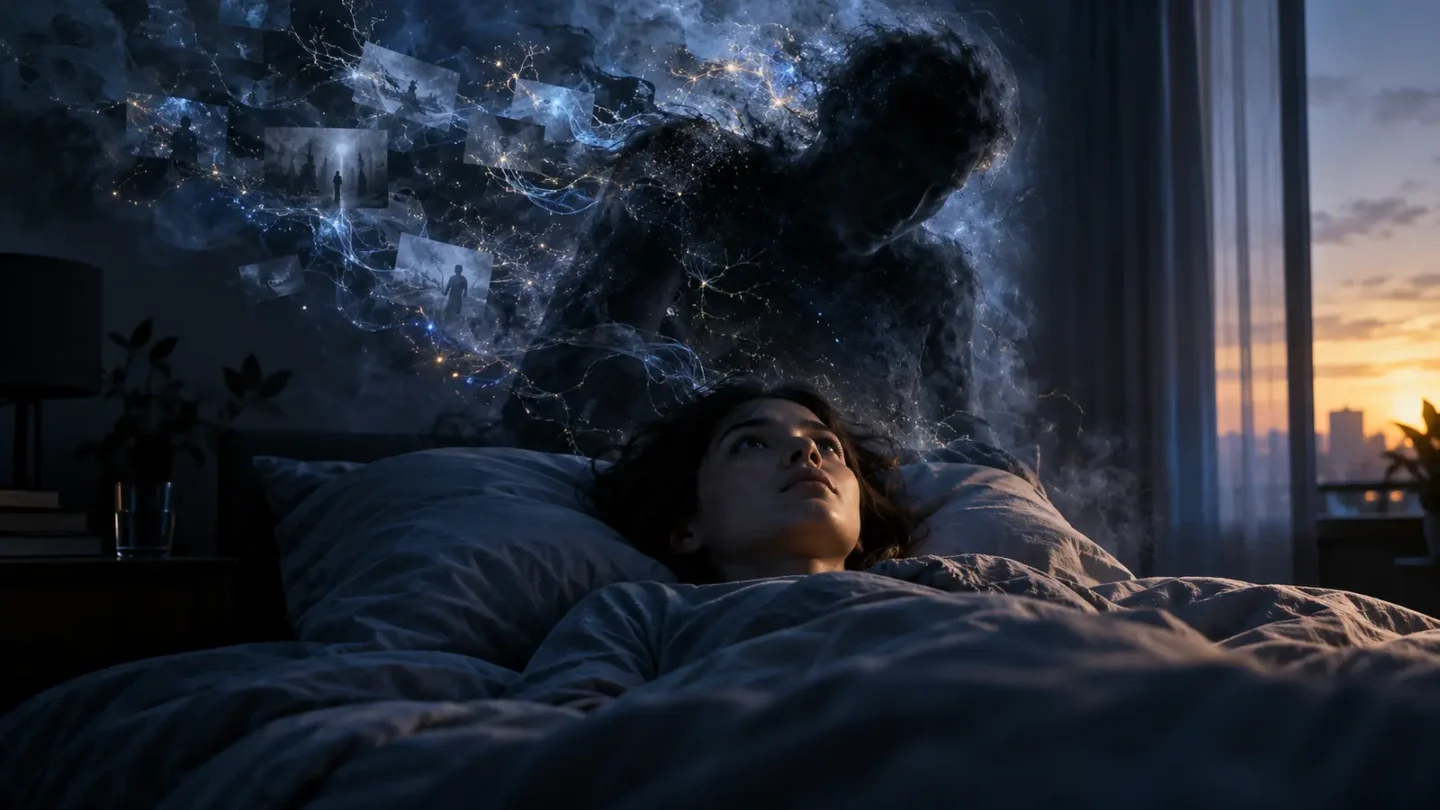
A sleep paralysis demon can feel unmistakably real: you wake up, cannot move, sense a presence nearby and may see a shadowy figure or feel pressure on your chest. Yet the best available evidence does not show an external creature in the room. It points instead to a brief overlap between waking awareness, rapid eye movement (REM) sleep paralysis and dream imagery.
This guide explains why the experience can be so convincing, what researchers know, what remains uncertain and what may reduce future episodes. It does not dismiss the fear or the cultural meaning people attach to it. It separates the experience—which is real—from the supernatural conclusion, which medicine has not established.
At a glance
- Sleep paralysis happens when awareness returns while REM-related muscle paralysis is still active.
- A “demon,” intruder or shadow person is a hallucination or sensed presence—not evidence that a being entered the room.
- Episodes are usually brief, but recurring events or severe daytime sleepiness deserve medical attention.
- Regular sleep, enough sleep and treatment of an underlying sleep disorder may lower the risk.
What is a sleep paralysis demon?
“Sleep paralysis demon” is a popular name for a frightening figure, voice, touch or threatening presence perceived during sleep paralysis. The phrase is not a medical diagnosis. The clinical event is sleep paralysis: temporary inability to move or speak while falling asleep or waking up, even though a person is aware of the surroundings.
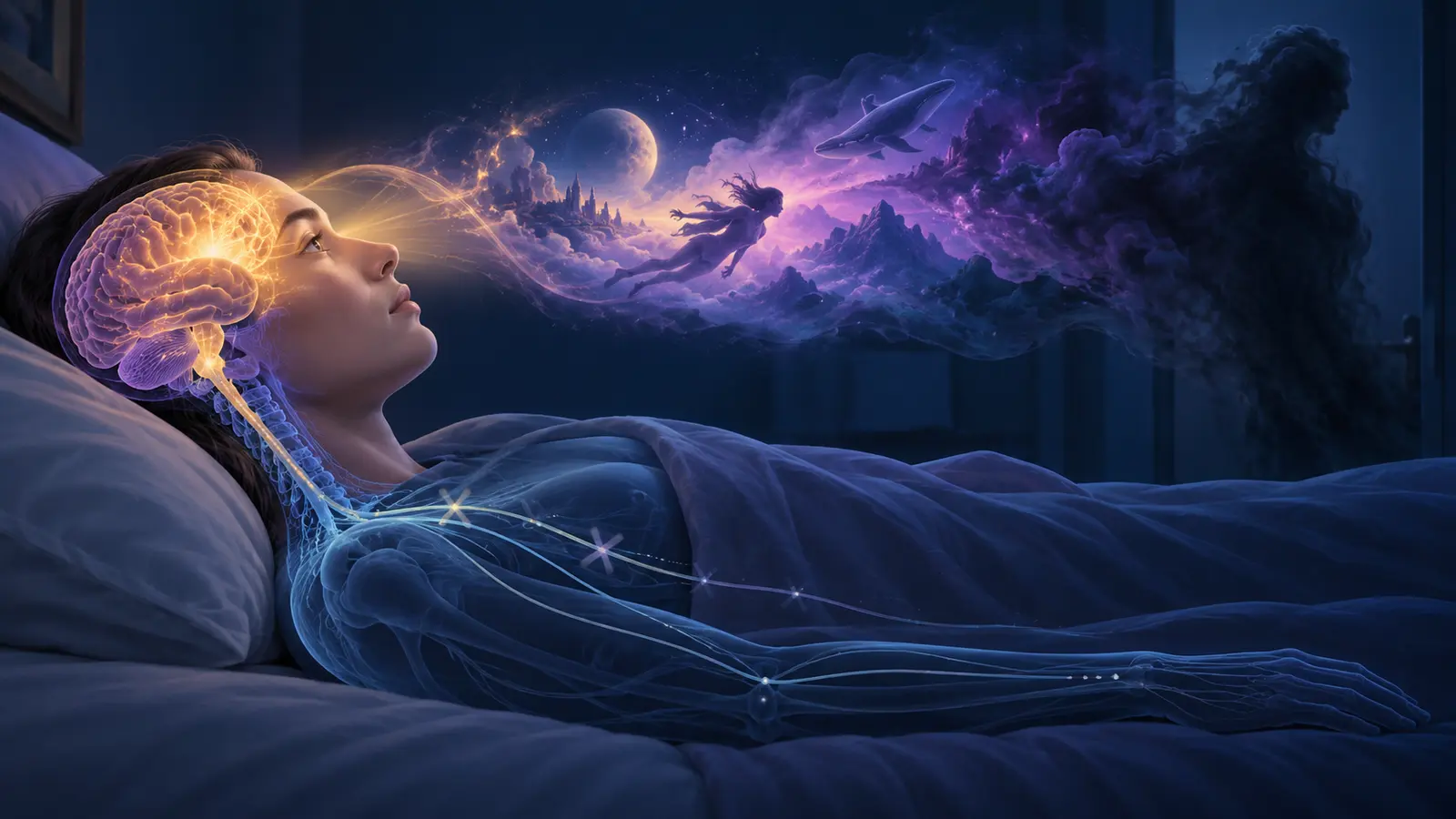
During REM sleep—the stage strongly associated with vivid dreaming—the brain suppresses most voluntary muscle movement. This normal protection is called REM atonia. If awareness returns before that paralysis has switched off, the person can be conscious but temporarily unable to move. Dream-like perceptions can also spill into the bedroom, creating the impression of an intruder.
According to the Cleveland Clinic, an episode generally lasts seconds to a few minutes, although it can last longer. A person can usually breathe and move the eyes, even if chest pressure makes breathing feel restricted.
Can a sleep paralysis demon kill you?
No. Sleep paralysis itself is not considered life-threatening. The NHS describes it as frightening but harmless. A threatening figure, shadow or sensed presence during an episode can be a sleep-related hallucination; the experience does not establish that an external attacker is in the room.
The important distinction is between a typical, temporary sleep paralysis episode and symptoms that may signal another condition. Reassurance about sleep paralysis should not be used to dismiss ongoing breathing problems or other emergency symptoms.
Can you stop breathing during sleep paralysis?
During a typical episode, breathing continues even though you may be unable to move or speak. Cleveland Clinic explains that you can still breathe and move your eyes. Chest pressure and fear can make breathing feel restricted, but that sensation does not by itself establish that breathing has stopped.
Which symptoms need a different response?
| What happens | What to do |
|---|---|
| Brief inability to move or speak while falling asleep or waking, sometimes with a sensed presence. | This fits the usual sleep paralysis pattern. Discuss recurring or distressing episodes with a healthcare professional. |
| Frequent loud snoring, gasping during sleep, witnessed breathing pauses or marked daytime sleepiness. | Ask about assessment for sleep apnea. These are symptoms identified by the National Heart, Lung, and Blood Institute; they should not automatically be attributed to sleep paralysis. |
| Severe breathing difficulty, a tight or heavy chest, or sudden confusion—even if symptoms began around sleep. | Seek emergency medical help. Do not wait for a presumed sleep paralysis episode to resolve. |
If episodes make you afraid to sleep or leave you persistently tired, the NHS recommends medical advice. A clinician can assess the sleep history and consider underlying conditions rather than diagnosing the cause from the perceived figure alone.
Sources: NHS: Sleep paralysis; Cleveland Clinic: Sleep paralysis; NHLBI: Sleep apnea symptoms; NHS: Shortness of breath.
Sleep paralysis demon: 7 facts that explain why it feels real
1. The paralysis is real; an external demon is not established
The inability to move is not imagined. It reflects a measurable sleep mechanism continuing into wakefulness. The terrifying interpretation can arise because the brain is awake enough to register the room but still partly operating in a dream state. Medical evidence supports the REM-overlap explanation; it does not verify that a supernatural visitor causes the episode.
That distinction matters. Telling someone “nothing happened” can sound dismissive because the fear, paralysis and imagery were experienced. A more accurate response is: something happened, but the most evidence-supported cause is a temporary sleep-state mismatch.
2. Awareness can return before the body’s REM lock releases
REM atonia ordinarily keeps a sleeping person from acting out most dreams. In sleep paralysis, two states that are normally separated overlap: conscious awareness returns, while the motor inhibition of REM lingers. This explains the central contradiction—“I was awake, but my body would not respond.”
Common associations include insufficient sleep, irregular schedules, shift work, jet lag and sleeping disorders such as narcolepsy or obstructive sleep apnea. These associations do not mean every episode has one identifiable cause, and having an episode does not by itself mean a person has narcolepsy.
3. The brain may build a threat from incomplete information
Imagine becoming aware in darkness while unable to move, speak normally or check the room. The brain has an urgent problem but very little reliable sensory information. A sensed presence, shadow, voice or touch can provide a story for that uncertainty. Fear then strengthens attention to threat, making the interpretation even more convincing.
Researchers commonly group the experience into three broad patterns: an intruder-like presence; an incubus-like sensation involving chest pressure or suffocation; and vestibular-motor sensations such as floating, spinning or leaving the body. People can experience one pattern, several at once or paralysis without any hallucination.
4. Chest pressure does not mean breathing has stopped
Many accounts of a sleep paralysis demon include a weight on the chest. The sensation can be intense, but breathing normally continues because the diaphragm remains active. REM-related changes in breathing, lying position, panic and inability to take a deliberately deep breath can make normal automatic breathing feel inadequate.
However, repeated choking or gasping during sleep, loud snoring, witnessed breathing pauses or marked daytime sleepiness can suggest sleep apnea. Those symptoms should be discussed with a healthcare professional rather than attributed automatically to sleep paralysis.
5. Sleep paralysis is common, but estimates vary widely
A 2024 systematic review and meta-analysis pooled 76 studies from 25 countries and estimated that about 30% of participants had experienced sleep paralysis. Estimates were about 34% among students and 35% among psychiatric patients. The studies differed substantially, so those figures should not be read as precise predictions for any one person or country.
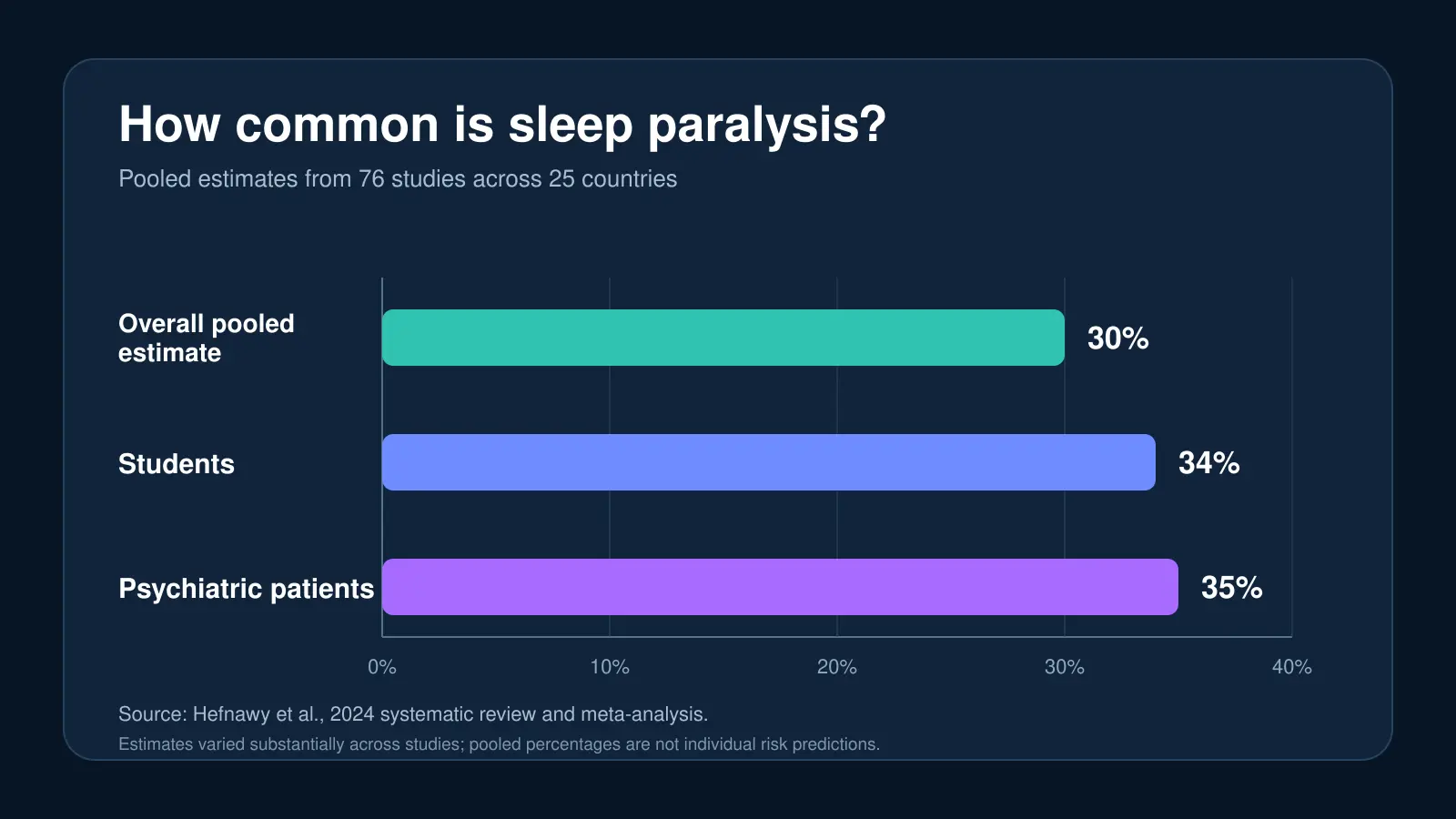
An older systematic review produced lower estimates for the general population. The difference is a useful warning: prevalence depends on definitions, questionnaires, populations and study quality. “Common” is justified; a single universal percentage is not.
6. Culture can influence the face and meaning of the visitor
The body mechanism appears across societies, while the story attached to it varies. Traditions have described an Old Hag, ghost oppression, kanashibari, jinn, Karabasan and other nocturnal attackers. A review of cultural explanations found that beliefs can shape how people interpret and remember the event.
This does not mean culture “causes” REM atonia. It suggests that when the brain tries to explain paralysis and fear, familiar images and beliefs can supply the character. Two people may undergo a similar sleep event yet describe entirely different beings.
7. Recurring episodes can often be managed, but there is no instant guaranteed switch
There is no proven technique that ends every episode on command. Some people report that concentrating on a small movement—such as a fingertip or toe—helps them regain control. Calm, slow breathing and mentally labeling the event as temporary may reduce panic, even if they do not immediately end the paralysis.
For recurring isolated sleep paralysis, clinicians may address sleep habits, stress and any underlying sleep disorder. A small pilot study of meditation-relaxation therapy in people with narcolepsy reported promising results, but it included only 10 treated participants; it is preliminary evidence, not a cure.
The Hourly Times three-layer explanation
The following framework is an editorial synthesis of sleep and cultural research, not a clinical diagnostic model. It explains why a sleep paralysis demon can feel more like an encounter than an ordinary dream.
- Body layer—REM atonia remains active: awareness returns before voluntary muscle control, creating helplessness.
- Threat layer—the brain demands an explanation: darkness, chest pressure and immobility produce uncertainty; threat-detection systems favor a dangerous interpretation.
- Story layer—memory and culture supply a character: previous images, beliefs, horror stories and local traditions can shape the intruder’s appearance and meaning.
The layers can reinforce one another: paralysis creates alarm, alarm increases threat perception, and a familiar frightening image makes the event easier to remember as an external attack. The framework does not prove exactly how every hallucination is produced, but it connects established features without treating a supernatural explanation as fact.
Independent educational video from Brainbook explaining sleep paralysis and hallucinations. Embedded for context; Hourly Times is not affiliated with the creator.
What to do during a sleep paralysis demon episode
If you recognize the experience, the immediate goal is to reduce panic while the REM state resolves:
- Name it: remind yourself, “This is sleep paralysis. It is temporary.”
- Do not fight the whole body: try a tiny movement in a finger, toe or facial muscle.
- Let breathing stay automatic: focus on a steady exhale rather than forcing a large breath.
- Choose one neutral detail: concentrate on a familiar sound or fixed object instead of scanning for a threat.
- If a partner knows: agree in advance that a sound or small movement can signal them to speak calmly or touch you.
These strategies are coping tools, not guaranteed treatments. Do not use internet techniques that restrict breathing, involve substances or create injury risk.
How to reduce the chance of another episode
A sleep paralysis demon cannot always be prevented, but reducing disruptions to sleep is a practical first step. The NHS guidance on sleep paralysis recommends consistent sleep habits and enough sleep.
- Keep wake and sleep times as regular as your schedule allows.
- Aim for sufficient sleep rather than repeatedly “catching up” after short nights.
- Create a dark, quiet and comfortably cool sleep environment.
- Exercise regularly, but avoid intense exercise close to bedtime if it keeps you alert.
- Limit large meals, alcohol, caffeine and smoking near bedtime.
- Notice whether episodes cluster with stress, sleep loss, travel or sleeping on your back.
- Discuss suspected apnea, narcolepsy, medication effects or severe anxiety with a clinician.
A simple sleep diary can record bedtime, wake time, sleep position, stress, substances and episodes. It cannot diagnose a disorder, but it can reveal patterns and give a clinician more useful information.
For more evidence-based health reporting, visit the Hourly Times Health section.
When should you see a doctor?
An occasional sleep paralysis episode is usually not dangerous. Seek medical advice when episodes are frequent, cause fear of sleeping, disrupt daily life or occur with other symptoms. Important clues include:
- overwhelming daytime sleepiness or sudden sleep attacks;
- sudden loss of muscle tone triggered by emotion, which can occur in narcolepsy;
- loud snoring, gasping or witnessed breathing pauses;
- injury, confusion, unusual movements or symptoms that do not fit the sleep-wake transition;
- new episodes after a medication or substance change;
- persistent anxiety, trauma symptoms or hallucinations while fully awake.
A clinician may review sleep schedules, medications and mental and physical health. A sleep study is not required for every case, but it may be appropriate when another sleep disorder is suspected.
Sleep paralysis demon FAQ
Is a sleep paralysis demon real?
The paralysis, fear and perceptions are real experiences. Medical research has not established that an external demon or intruder causes them. The evidence-supported explanation is REM muscle paralysis continuing briefly into awareness, sometimes with dream-like hallucinations.
Why do I see a dark figure during sleep paralysis?
Low light, incomplete sensory information, fear and dream imagery can combine into an intruder-like figure. Memory and cultural expectations may influence its appearance. Not everyone sees a figure.
Can a sleep paralysis demon hurt you?
The perceived figure cannot physically injure you. The event can nevertheless cause intense distress, insomnia or fear of sleep. Recurrent distress deserves professional help.
Can you breathe during sleep paralysis?
Yes. Automatic breathing continues, although chest pressure and panic can make it feel difficult. Repeated gasping, loud snoring or witnessed breathing pauses can indicate another condition such as sleep apnea and should be evaluated.
How long does sleep paralysis last?
Most episodes last seconds to a few minutes. Cleveland Clinic notes they can sometimes last longer. If immobility or confusion occurs outside the transition into or out of sleep, seek medical advice.
Does sleeping on your back cause sleep paralysis?
Back sleeping is frequently reported alongside episodes, but it is not the only cause and changing position is not a guaranteed prevention. If your diary shows a consistent pattern, side sleeping may be a reasonable low-risk experiment.
Is sleep paralysis a sign of narcolepsy?
It can occur with narcolepsy, but many people experience isolated sleep paralysis without having narcolepsy. Severe daytime sleepiness, sleep attacks or emotion-triggered muscle weakness make a clinical assessment more important.
The bottom line
A sleep paralysis demon is best understood as a vivid perception produced during an unstable boundary between REM sleep and waking. The episode can borrow the room, the body’s immobility and a culture’s stories to create an encounter that feels external. Understanding that mechanism does not erase the fear, but it replaces helpless mystery with a testable explanation and a practical plan.
Medical disclaimer: This article is for general information and is not a diagnosis or a substitute for advice from a qualified healthcare professional. Seek urgent care for severe breathing difficulty, chest pain, loss of consciousness, stroke-like symptoms or another medical emergency.