
Why does my heart pound after I eat sugar? The short answer is that a sweet food or drink can coincide with several different body responses, but the sensation does not prove that sugar directly caused an abnormal heart rhythm. Timing matters. A pounding heartbeat that starts while you are eating may have a different explanation from symptoms that appear two to four hours later.
There is no single answer to “Why does my heart pound after I eat sugar?” because the same sensation can come from different triggers and may not begin in the heart itself.
Get urgent help: Call 911 if a pounding or irregular heartbeat occurs with chest pain or pressure, fainting, severe shortness of breath, collapse, or other symptoms suggesting a medical emergency.
Why does my heart pound after I eat sugar?
A meal changes circulation, hormone activity and the workload of digestion. Research in healthy adults has found that eating can increase heart rate and cardiac output, while carbohydrate-rich meals can produce a stronger cardiovascular response than some other meal types. Glucose ingestion has also been shown to temporarily alter autonomic activity—the system that helps regulate heart rate.
That does not mean every post-dessert palpitation is harmless or that sugar is always responsible. “Pounding” can describe a faster pulse, a forceful but regular beat, skipped beats, fluttering, or simply becoming more aware of a normal heartbeat. Those experiences cannot be reliably separated without considering the pattern, other symptoms and, when necessary, medical testing.
At a glance: If your question is “Why does my heart pound after I eat sugar?”, the most useful first details are how soon it begins, whether the beat feels regular, what else was in the food or drink, and whether warning symptoms occur.
The timing clue most articles overlook
Instead of focusing only on what you ate, record when the sensation begins. This simple timeline can make a conversation with a healthcare professional more useful.
| When it starts | Possibilities worth discussing | Useful details to record |
|---|---|---|
| During or just after eating | A large meal, a normal digestive cardiovascular response, caffeine, alcohol, anxiety or heightened heartbeat awareness | Meal size, soda/coffee/chocolate, pulse pattern and whether standing changes it |
| About 30–120 minutes later | Post-meal circulation and autonomic changes; individual response to a high-carbohydrate meal | How quickly symptoms started, duration, pulse and associated dizziness or sweating |
| About 2–4 hours later | Possible reactive hypoglycemia, especially if shakiness, sweating, hunger or confusion occurs—but symptoms alone do not confirm it | Exact time, symptoms, medicines, diabetes history and any clinician-directed glucose reading |
| After many meals or repeatedly | A food trigger may not be the whole explanation; medication effects, anemia, thyroid disease, an arrhythmia or an autonomic condition may require assessment | Frequency, rhythm regularity, resting/standing pulse, medicines, supplements and family history |
7 possible reasons your heart pounds after sweets
1. Digestion naturally changes your circulation
After a meal, more blood flows toward the digestive system. The body compensates through changes in heart rate, cardiac output and blood-vessel tone. A controlled study of healthy adults found measurable post-meal increases in heart rate and cardiac output, and later research has continued to examine these normal hemodynamic shifts.
A noticeable beat is not automatically an arrhythmia. However, a new, persistent or irregular pattern deserves more attention than a brief, familiar sensation.
2. A high-carbohydrate load can affect the autonomic nervous system
Sugary drinks and refined sweets deliver rapidly absorbed carbohydrate. Controlled research has found short-term changes in heart rate and autonomic measurements after glucose ingestion. Another study found that a high-carbohydrate meal increased heart rate alongside sympathetic nervous-system activity in healthy young participants.
These studies help explain a plausible connection, but they do not prove that a particular person’s palpitations were caused by sugar. Study conditions, doses and participants may differ from an ordinary meal at home.
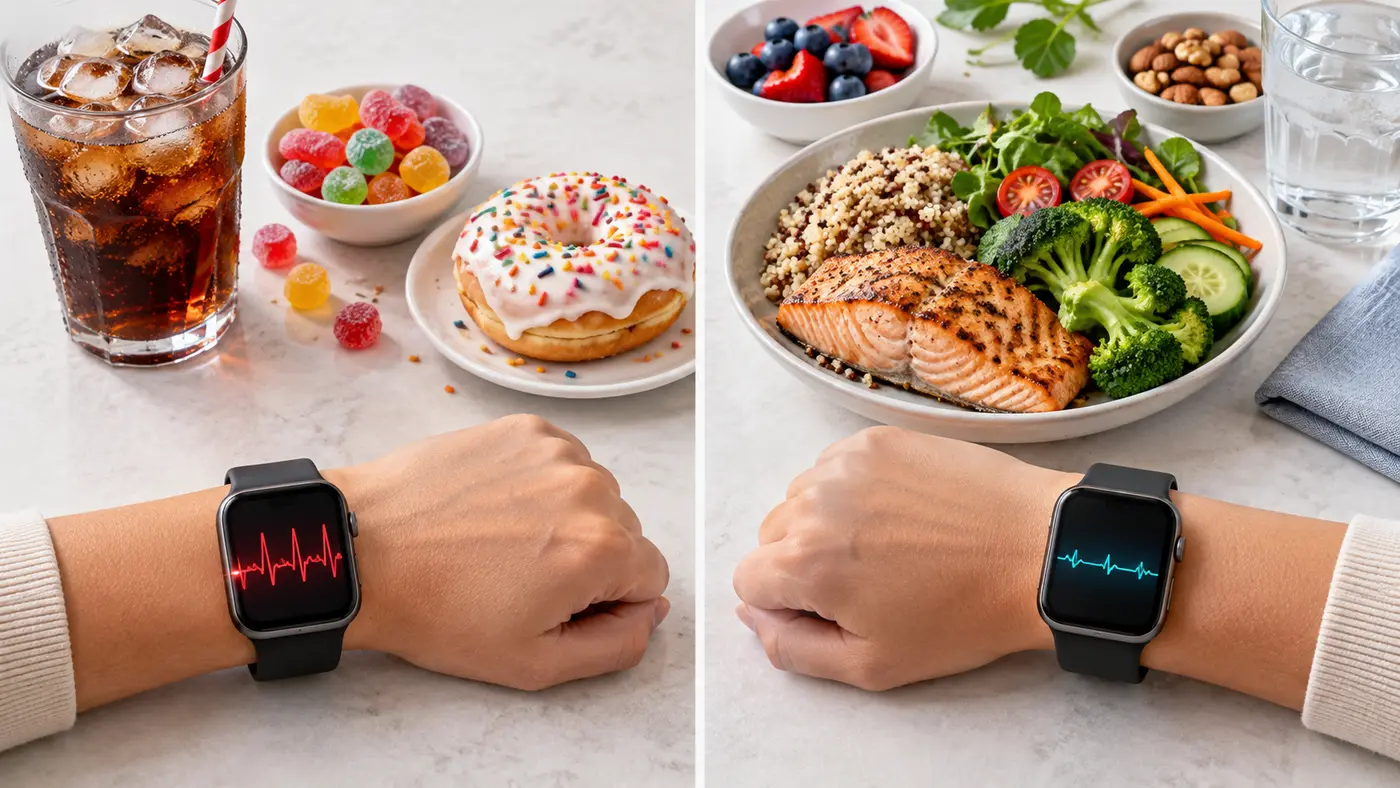
3. Reactive hypoglycemia is possible—but often assumed too quickly
Reactive, or postprandial, hypoglycemia means blood glucose falls after eating, usually within four hours. A fast or irregular heartbeat can occur with low blood glucose, along with shakiness, sweating, hunger, dizziness or confusion. The National Institute of Diabetes and Digestive and Kidney Diseases lists a fast or unsteady heartbeat among possible hypoglycemia symptoms.
The important caution: feeling shaky or having palpitations does not by itself establish low blood sugar. Research on suspected post-meal hypoglycemia has found that symptoms do not always coincide with a documented low glucose level. Do not diagnose yourself from symptoms or a single consumer-device reading.
4. Caffeine or chocolate may be the hidden trigger
The “sugar” may arrive with another stimulant. Cola, energy drinks, coffee-based desserts and chocolate can contain caffeine. If symptoms occur after a mocha, caffeinated soda or chocolate-heavy dessert but not after non-caffeinated sweets, that distinction is useful to record.
5. The size of the meal may matter as much as the dessert
A study comparing high-carbohydrate meals of different sizes found that larger meals produced greater post-meal changes in cardiac output. Someone may blame the slice of cake when the total amount of food, rapid eating, alcohol or the combination of several factors contributed to the sensation.
6. Anxiety can amplify heartbeat awareness
Worrying about a fast heartbeat can make the sensation more noticeable, while stress itself can raise heart rate. That does not mean the symptom is imaginary. It means perception and physiology can reinforce each other. A clinician should still evaluate recurrent or concerning episodes rather than automatically attributing them to anxiety.
7. Sugar may be revealing—not causing—another condition
Repeated palpitations can have causes unrelated to sweets, including an arrhythmia, medication or supplement effects, anemia, thyroid problems and autonomic conditions. Research involving people with postural orthostatic tachycardia syndrome (POTS), for example, found worse post-meal tachycardia after glucose, but that pattern is not enough to diagnose POTS.
The American Heart Association notes that pounding, rapid or irregular sensations can occur with arrhythmias and recommends professional evaluation when an abnormal rhythm is suspected.
What to do when your heart starts pounding
- Stop and assess your symptoms. Sit safely and note whether you have chest pressure, trouble breathing, faintness or severe weakness.
- Check the pattern, not only the number. If practical, count your pulse for 60 seconds and note whether it feels regular or irregular. A smartwatch can provide a clue, but it cannot diagnose the cause.
- Write down the timing. Record what you ate and drank, portion size, when symptoms began, how long they lasted and whether you were sitting or standing.
- Do not experiment with medication. Do not start, stop or change heart, diabetes or other prescription medicines without professional advice.
- Arrange medical review for a recurring pattern. Bring your symptom record and medication/supplement list. A clinician may decide whether an ECG, ambulatory monitor, blood tests or glucose evaluation is appropriate.
The 60-second symptom note
Save these details whenever you find yourself asking, “Why does my heart pound after I eat sugar?”
- Food and drink:
- Time eaten:
- Time pounding started:
- Pulse rate and regular/irregular feeling:
- Other symptoms:
- Sitting, standing or active:
- Duration:
Can changing how you eat help?
If serious causes have been excluded, a healthcare professional may suggest testing simple changes one at a time. The Mayo Clinic’s guidance on reactive hypoglycemia includes eating a balanced, high-fiber diet, avoiding sugary foods—especially on an empty stomach—and eating several smaller meals or snacks spaced through the day.
Those suggestions are not a universal treatment for palpitations. Avoiding every carbohydrate is unnecessary for most people, and dietary changes should not replace assessment of a persistent, fast or irregular heartbeat. If you have diabetes or take glucose-lowering medication, follow the plan provided by your healthcare team.
When is a pounding heartbeat an emergency?
Seek emergency help immediately if palpitations occur with:
- Chest pain or pressure
- Fainting, near-fainting or collapse
- Severe shortness of breath
- Sudden marked weakness or confusion
- A very fast or irregular heartbeat that does not settle, especially with other symptoms
The American Heart Association advises calling 911 for chest pain or pressure because heart-attack and arrhythmia symptoms can overlap. Do not drive yourself if you may be experiencing an emergency.
Frequently asked questions
These short answers address common versions of “Why does my heart pound after I eat sugar?” without assuming that a single food proves the cause.
Can too much sugar make your heart beat fast?
A high glucose or carbohydrate load can temporarily affect heart rate and autonomic activity, and meals naturally change circulation. But a fast heartbeat after sweets does not prove sugar is the cause. Caffeine, meal size, anxiety, medication effects and underlying conditions may also matter.
Why does my heart pound after I eat sugar but not other foods?
The difference could relate to rapidly absorbed carbohydrate, a caffeinated sweet, portion size or an individual response. Record the exact food, amount and timing rather than assuming all sugar produces the same reaction.
If “Why does my heart pound after I eat sugar?” remains a recurring concern despite changing the type or size of the meal, take the pattern to a qualified healthcare professional instead of repeatedly testing it yourself.
Can a sugar crash cause palpitations?
Low blood glucose can include a fast or irregular heartbeat, shakiness, sweating and dizziness. Reactive hypoglycemia generally occurs within several hours after eating, but similar symptoms can happen without documented low glucose. Diagnosis requires appropriate clinical assessment.
Should I stop eating sugar completely?
Not solely because of one brief episode. Reducing added sugar can fit a healthy diet, but recurrent palpitations deserve evaluation rather than an extreme elimination diet. People taking diabetes medication should make changes with their healthcare team.
How do doctors investigate palpitations after eating?
The evaluation depends on the history and symptoms. A clinician may review foods, caffeine, alcohol, medicines and supplements; examine the heart; and consider an ECG, heart monitor or blood testing. Testing should be chosen for the individual rather than assumed from one trigger.
The bottom line
If you are asking, “Why does my heart pound after I eat sugar?”, use timing as your first clue—not as a diagnosis. A brief sensation may reflect an ordinary post-meal response, while episodes associated with stimulants, a delayed glucose drop or another condition require different consideration. Track the pattern, avoid self-diagnosis and seek medical care for recurrent or concerning symptoms.
Medical disclaimer: This article provides general educational information and is not a diagnosis or a substitute for care from a qualified healthcare professional. In the United States, call 911 for emergency symptoms.