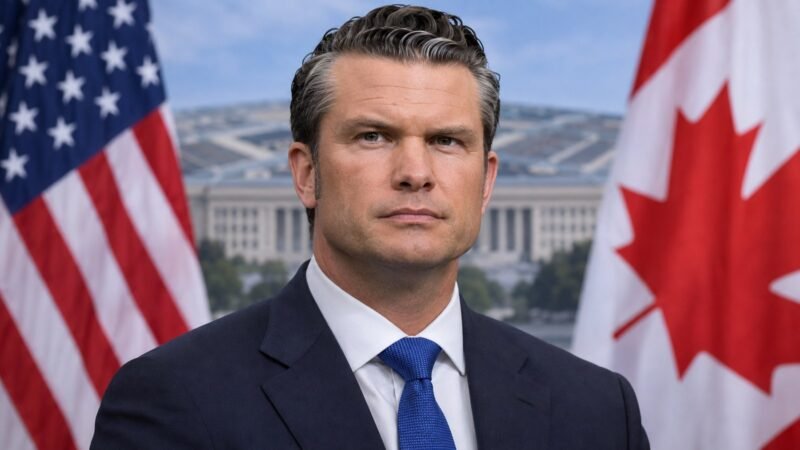
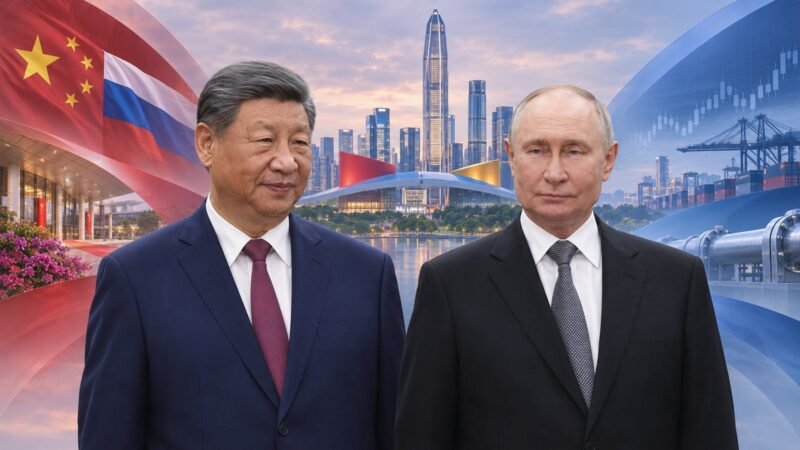
The Shenzhen summit ended on November 19 with President Donald Trump, Chinese President Xi Jinping and Russian President Vladimir Putin issuing a four-point declaration, but no new nuclear arms-control treaty. Their statement promised dialogue on nuclear risks without announcing a settlement for the wars in Ukraine or Iran.
The leaders met in the southern Chinese city during the Asia-Pacific Economic Cooperation gathering. The Associated Press reported that their closed-door discussion lasted roughly 70 minutes.
The published declaration set out shared positions on the United Nations, energy supplies, international courts and nuclear weapons. Its wording expressed broad commitments rather than detailed agreements on weapons reductions or ending the conflicts that framed the meeting.
What the Shenzhen summit declaration says
The declaration, published by the White House and Chinese authorities, said the three countries would pursue dialogue aimed at lowering nuclear risks and preventing the spread of nuclear weapons. It reaffirmed their position that nuclear war cannot be won and must never be fought.
The document also committed the countries to reforming the United Nations so it could respond more effectively to international challenges. It did not specify the institutional changes they would seek.
On energy, the leaders said they planned to increase production and supplies of refined petroleum products and emphasized stable energy flows. They did not announce production targets or a timetable in the declaration.
The fourth area concerned international courts. The statement emphasized state consent and immunity for state officials, and argued that the International Criminal Court and similar institutions should not abuse their jurisdiction.
Nuclear dialogue leaves important questions open
The nuclear discussions followed the expiration of New START, the U.S.-Russian strategic arms treaty, in February. That agreement had limited the two countries’ deployed strategic nuclear forces.
In a November 16 briefing on the proposed three-way talks, the Arms Control Association said a short leaders’ meeting could begin a longer negotiating process, but was unlikely to produce immediate, dramatic progress.
The association identified several possible steps, including sustained negotiations, limits on additional deployments and further work on nuclear testing risks. These were recommendations before the meeting, rather than commitments subsequently adopted by the leaders.
China’s position also complicates a three-country agreement. The association noted Beijing’s longstanding resistance to negotiating numerical limits with Washington and Moscow, whose nuclear arsenals are substantially larger.
The Shenzhen summit declaration did not establish warhead ceilings, inspection arrangements or a schedule for formal arms-control negotiations. Its promise of dialogue therefore leaves those practical questions unresolved.
Ukraine and Iran remain outside the published agreement
Neither Ukraine nor Iran was named in the declaration. The text contained no ceasefire terms, territorial settlement or arrangement to end either war.
Hourly Times previously covered the opening of the Shenzhen summit, when the leaders outlined their priorities. The declaration provides a subsequent record of the positions they jointly published.
Separate discussions took place alongside the three-way meeting. China’s Foreign Ministry said Xi and Trump discussed economic relations, Taiwan and cooperation on issues including energy and agricultural products.
According to that Chinese account, Xi urged greater communication on trade and constructive management of differences. The two sides described their bilateral meeting positively and agreed to formulate an action plan for their relationship. Those statements concern the U.S.-China meeting and should be distinguished from the three-country declaration.
International court language carries a separate context
The declaration’s criticism of international courts comes with Putin facing an ICC arrest warrant. The court issued the warrant in March 2023 over alleged war crimes involving the unlawful deportation and transfer of Ukrainian children.
Those are allegations, not a conviction. The three leaders’ statement expressed their position on jurisdiction and immunity; it did not announce a court decision withdrawing the warrant.
The next announced public update is Trump’s White House news conference on November 20, according to AP. His remarks could provide further explanation of the talks, while the published declaration remains the record of the commitments jointly announced at the Shenzhen summit.