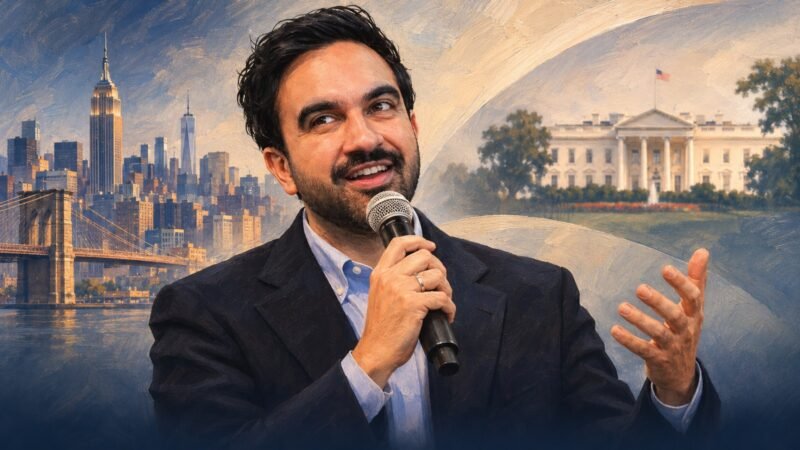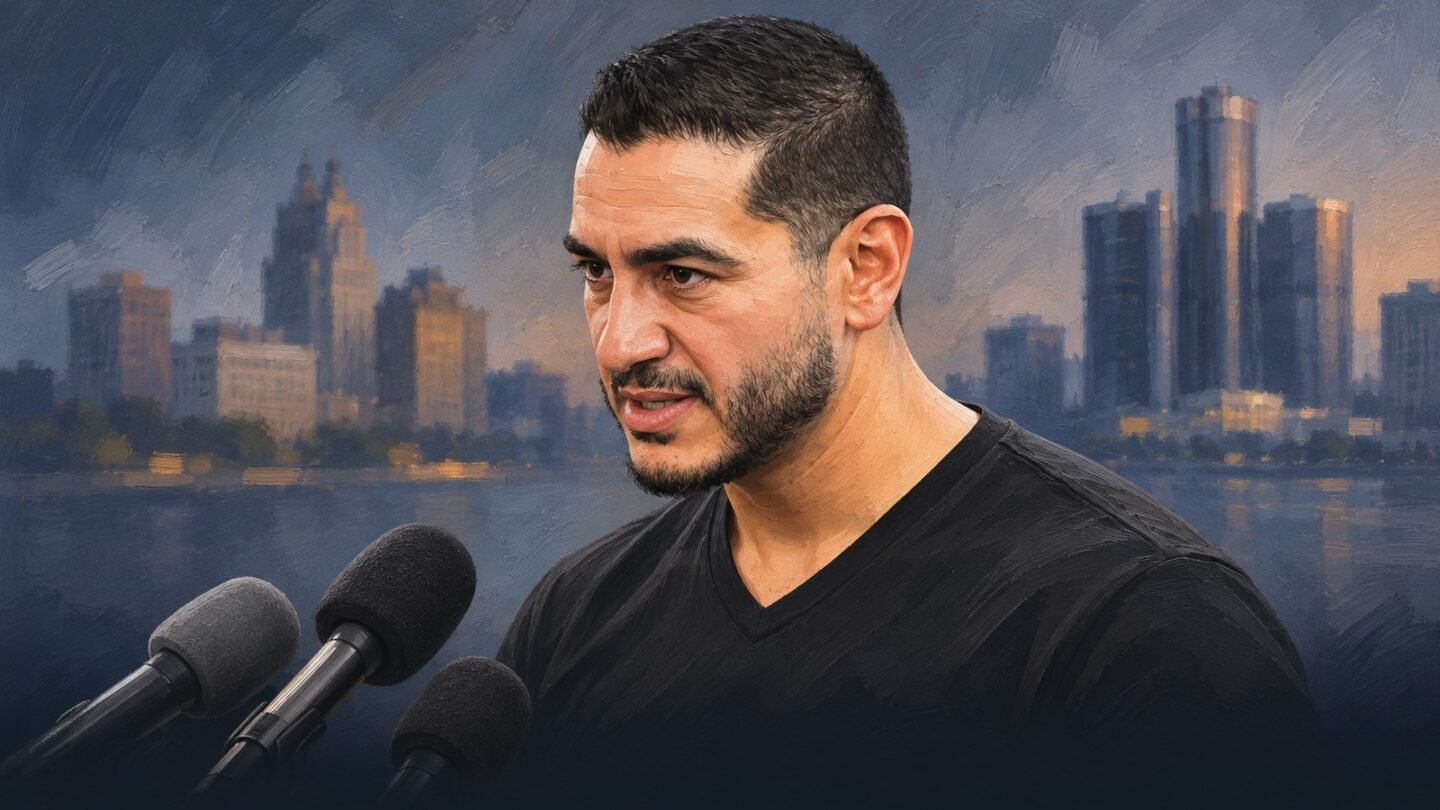
Abdul El-Sayed challenged Sky News correspondent James Matthews over his interest in speaking to a British broadcaster during a November 3 encounter outside a Detroit polling center. The Michigan Democrat placed his hands on the reporter’s shoulders during the exchange, according to reporting published before and after his Senate victory.
El-Sayed questioned whether Matthews was registered to vote in Michigan, then said he wanted no votes in the United Kingdom. Matthews defended his role as a journalist covering an American election with consequences beyond the United States.
Sky News subsequently stood behind its correspondent. Separately, the Associated Press and Reuters reported that El-Sayed defeated Republican Mike Rogers for Michigan’s open U.S. Senate seat.
What Abdul El-Sayed Said to the Reporter
Sky published its account and video page on November 3. Its description says El-Sayed confronted Matthews and refused to answer questions because he was seeking no votes in Britain.
El-Sayed asked whether Matthews was a Michigan voter. When Matthews said he was not and identified himself as a journalist, the candidate emphasized that the broadcaster was based in the United Kingdom.
El-Sayed then said he would never run for office there. Variety’s account describes him holding Matthews by the shoulders while questioning why he should speak to an international outlet.
Matthews argued that the election mattered to an international audience. El-Sayed dismissed the size of Sky’s American viewership and accused the correspondent of following him around, according to Variety. Matthews disputed that characterization and said he was asking questions.
Sky’s original report and video page document the broadcaster’s publication of the encounter. The physical contact reported was to the shoulders; broader characterizations of the incident should be distinguished from that specific description.
Sky Defends Matthews’s Reporting
In a statement to Variety, Sky said it supported Matthews’s work covering the campaign and asking questions for its audiences. The broadcaster argued that American elections have consequences internationally, including for viewers in Britain.
That response addressed the premise of El-Sayed’s objection: that a foreign outlet’s audience was not relevant to a candidate seeking American votes. Sky’s position was that the worldwide effects of American political decisions made the coverage legitimate.
In his own November 5 account, Matthews said his team had been filming outside the Detroit polling center when El-Sayed arrived unexpectedly. He said he had not had an opportunity to ask a question before the candidate began questioning him.
Matthews argued that the responsibilities of American legislators extend beyond national borders. His article was an account by a participant in the exchange, rather than an independent account of how it began.
Senate Victory Followed the Encounter
Abdul El-Sayed went on to win the seat being vacated by Democratic Sen. Gary Peters. The result kept that seat in Democratic hands; it was not a Republican-held seat changing parties.
Reuters described El-Sayed as a former public health official whose campaign emphasized lowering costs for working families and reducing corporate influence in politics. His platform included Medicare for All, a proposal for government-funded universal healthcare.
The AP reported that his victory would make him the first Muslim senator. Its account placed his victory remarks in Detroit early on November 4, following the November 3 vote.
Hourly Times previously covered El-Sayed’s response to disputed campaign allegations about Muslim Brotherhood ties. That earlier dispute provides campaign background and is separate from the encounter with Matthews.
What Remains Unclear
The reviewed reporting establishes the confrontation and the later election result, but does not establish that the exchange affected voters’ decisions. The supplied photograph also should not be treated as proof of the shoulder contact.
Fox News reported that Abdul El-Sayed’s campaign had not responded to its requests for comment. A further explanation from the senator-elect or his campaign would add his account beyond the remarks reported from the encounter itself.