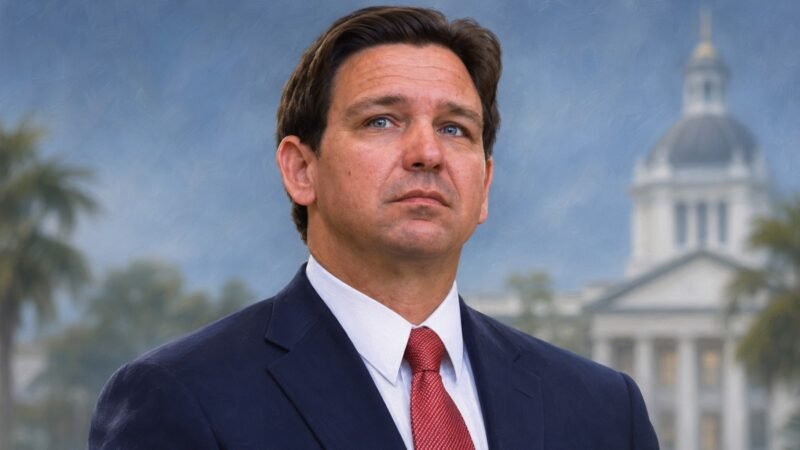
Ron DeSantis gained ground in prediction markets for the 2028 Republican presidential nomination after the November 3 midterm elections, with Kalshi reporting a sharp election-night increase. The movement concerned his prospects of becoming the GOP nominee, a different outcome from winning the presidency.
Mediaite reported on November 4 that DeSantis rose from about 5% to 17% in Kalshi’s nomination market in less than 24 hours. Kalshi’s own election recap also described a large jump, saying his nomination odds quadrupled during election night.
Kalshi’s recap lists separate markets for entering the presidential race, winning a party nomination and winning the general election. A movement in one contract should be described using that contract’s specific outcome.
Those accounts establish a substantial rise but describe different snapshots. They should not be combined into a single live price or treated as evidence that DeSantis has announced a campaign.
What the Ron DeSantis Market Move Shows
Using Mediaite’s rounded figures, the change from 5% to 17% equals 12 percentage points. Relative to the starting value, that is a 240% increase: 12 divided by 5, multiplied by 100.
That is more than a doubling, but it does not mean his probability exceeded 100%. A relative increase measures how much a figure changes compared with its starting point; the final market probability remains a separate number.
Mediaite also distinguished the nomination market from the presidential-winner market. In the latter, it reported DeSantis rising from 2.7% to 6%. The two contracts ask different questions and should not share an interchangeable headline.
None of these figures is presented here as a current executable trading price. Prediction-market values can move after a report is published, making the date and measurement window essential context.
Market Prices Reflect Traders, Not a Voter Poll
Kalshi’s explanation of prediction markets says contract prices reflect participants’ views about whether a specified event will happen. Traders buy and sell contracts tied to outcomes.
Its pricing guide explains that prices respond to changing market expectations. A rising price signals that traders are assigning more value to that outcome; it is not a survey showing what percentage of Republican voters support a candidate.
The distinction matters for Ron DeSantis because a nomination-market increase does not count delegates, record primary votes or establish that he leads a national opinion poll. It reflects the market’s assessment of a future event.
Florida Stayed Republican Statewide, With Narrower Margins
Florida’s results supplied political context for the attention around its outgoing governor. Republican Byron Donalds defeated Democrat David Jolly in the governor’s race, while Republican Ashley Moody defeated Democrat Angie Nixon in the U.S. Senate contest.
Florida Phoenix reported Donalds’ margin at about 1.3 percentage points and Moody’s at roughly three points. Republicans also retained the attorney general, chief financial officer and agriculture commissioner offices.
But describing Florida as untouched by Democratic gains would miss an important part of the result. The same outlet reported that Democrats gained 15 state House seats and one state Senate seat, ending their superminority position in the Legislature.
The statewide wins and legislative gains can both be true. They show why retaining Republican control should be distinguished from repeating the large margins the party achieved in some recent elections.
A Stronger Market Position Is Not a Campaign Launch
Action Network reported that Ron DeSantis had not announced a 2028 presidential campaign. Its account described the nomination-market surge alongside his criticism of the administration’s handling of the Iran conflict and rising gasoline prices.
The timing makes those developments relevant context, but it does not prove that any one speech, state result or chart caused traders to change their positions.
The confirmed development is a post-midterm increase in market pricing. Whether it develops into a presidential campaign remains a separate question that would require an announcement from DeSantis.