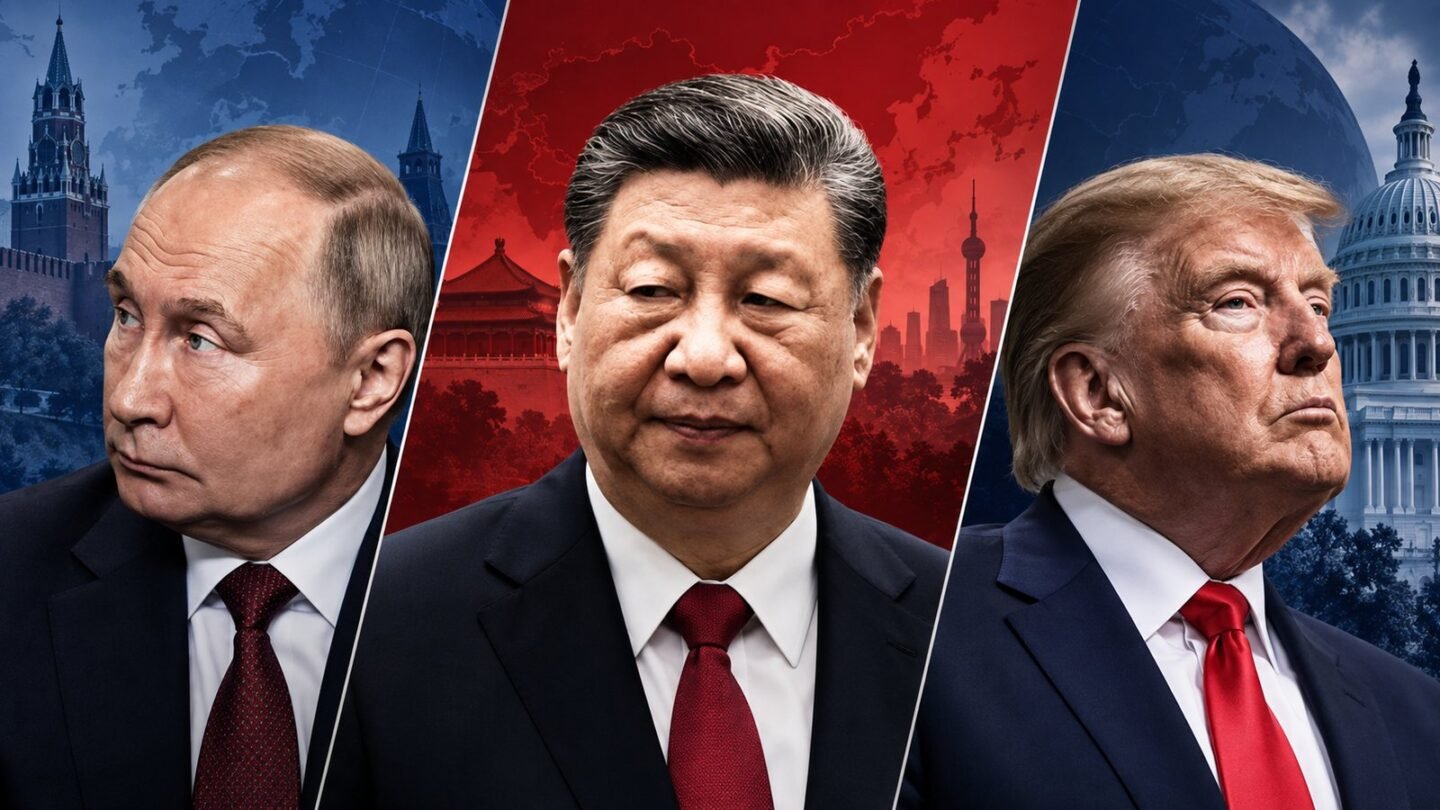
Public actions can show how President Donald Trump deals with Chinese President Xi Jinping and Russian President Vladimir Putin. They cannot confirm whether Trump privately fears either leader. Recent events show a mix of warm diplomatic language, trade negotiations and pressure on Russia, leaving room for political debate but no public proof of his personal feelings.
Trump hosted Xi in Washington for a state visit from September 23 to 25, 2026. Their summit focused on issues including trade, artificial intelligence, Taiwan and Iran. Reuters reported that the visit produced a two-month extension of the U.S.-China trade truce, but major differences remained unresolved.
The White House also listed outcomes from the visit, including operationalizing trade and investment boards, recommendations on tariff treatment for some goods, and a new U.S.-China dialogue on emerging technology. Those are concrete results, even as both governments continue to compete over trade, technology and security.
What Trump’s China Diplomacy Shows
Trump has publicly described his relationship with Xi in friendly terms. During the state visit, he praised their personal relationship. That approach may look too accommodating to critics, especially while disputes over Taiwan and technology remain unresolved.
The summit’s results offer more context than the welcome ceremony alone. The two countries agreed to keep their trade truce in place for another two months, according to Reuters. The White House described additional working arrangements, including an AI dialogue and a bilateral communication channel for technology incidents.
Reuters reported that Xi pressed Trump on Taiwan and that Trump had previously described a pending arms package as a negotiating tool. Those actions and statements may lead some people to call Trump’s approach cautious or deferential. They do not establish that fear caused his decisions.
Trump’s Recent Contacts With Putin
Trump has also spoken directly with Putin while the administration tries to end Russia’s war in Ukraine. Reuters reported that, during a September 7 phone call described by the Kremlin, Trump pressed for a swift end to the war and said better U.S.-Russia relations could follow. The Kremlin said the leaders agreed to stay in contact. No public transcript of the call was provided in the report.
That account may support the view that Trump is emphasizing negotiation and future relations. But the Kremlin’s description is an attributed account, not independent proof of Trump’s private motives.
Other recent actions point to pressure on Moscow. On September 18, Trump signed a Russia sanctions law targeting Russia’s energy and defense industries and its “shadow fleet” of oil tankers. The measure also authorizes tariffs on Russia’s trading partners. That action complicates any simple claim that Trump is always deferential to Putin, but it still cannot tell us whether he feels afraid.
Diplomacy and Fear Are Different Questions
Supporters may view direct talks with Xi and Putin as practical diplomacy: keeping communication open while seeking trade arrangements or an end to war. Critics may argue that friendly language or delayed decisions can give powerful leaders more room. Those are political interpretations of public actions.
Whether Trump is “afraid” is a different question. Fear is a private state of mind, and public meetings, phone calls and policy decisions do not prove it. The available information supports discussion of Trump’s choices, but it does not confirm what he personally feels toward Xi or Putin.
The reader poll below can invite opinions on those choices. Its responses should be treated as views from participating readers, not as a scientific measure of what Americans think. The White House says the next U.S.-China technology dialogue is expected by November 2026; no exact date has been announced.