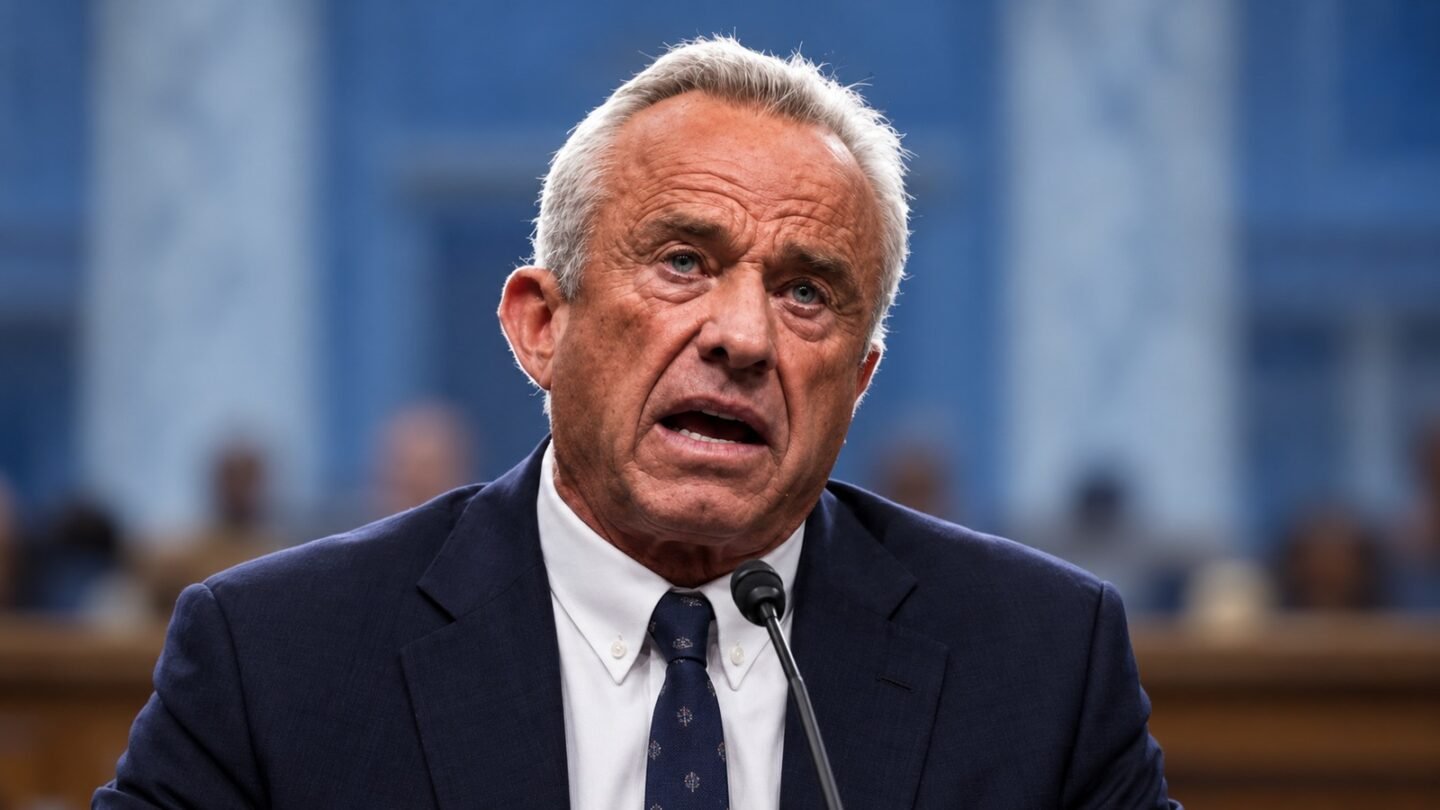
Kennedy vaccine policies remain under legal challenge as the United States records thousands of measles cases and declining childhood vaccination coverage. The CDC’s October 9 update reported 4,080 confirmed cases in 2026 through October 8, up from 3,887 reported one week earlier.
The debate involves both the scientific basis for vaccine recommendations and the process used to appoint advisers. Medical organizations have challenged Health Secretary Robert F. Kennedy Jr.’s changes, while his administration argues that its overhaul is intended to rebuild confidence in federal health agencies.
Why Kennedy vaccine policies are in court
On June 9, 2025, the Department of Health and Human Services announced the removal of all 17 sitting members of the CDC’s Advisory Committee on Immunization Practices, known as ACIP. Kennedy said the replacement process would improve transparency and protect recommendations from conflicts of interest.
The American Academy of Pediatrics and other medical groups sued. Their challenge expanded to include the reconstituted committee and changes to childhood immunization recommendations.
On March 16, 2026, U.S. District Judge Brian E. Murphy issued a temporary order blocking specified appointments and policy actions. He stayed the appointments of 13 committee members, all votes taken by the reconstituted panel and a January 2026 memorandum revising the childhood schedule.
Murphy found that the plaintiffs were likely to succeed in showing that the committee’s reconstitution and the January schedule changes violated the Administrative Procedure Act. In discussing the panel’s scientific function, he described the newly appointed members as appearing “distinctly unqualified.”
The order grants preliminary relief while the case proceeds. It is not a final judgment resolving every allegation against Kennedy or every vaccine-policy decision made during his tenure.
The appeal and the schedule currently posted
At an October 6 appeals hearing, the administration argued that blocking the appointments prevented ACIP from functioning, Reuters reported. It sought to overturn the appointments portion of the order, rather than the other policy-related portions. Some appellate judges questioned the legal justification for the appointments restriction.
The CDC’s currently posted childhood immunization schedule is the version with an addendum dated July 2, 2025. Its guidance includes age-based recommendations, catch-up intervals and considerations for particular medical conditions.
That distinction matters for families: a proposed policy change, a committee vote and the guidance currently published by the CDC are not interchangeable. Reporting on Kennedy vaccine policies should identify which action is being discussed and whether it remains blocked.
What the latest measles and vaccination figures show
The CDC’s latest national measles update lists 4,080 confirmed cases as of October 8. The agency recorded 2,289 cases for all of 2025. These are cumulative national totals involving multiple outbreaks, rather than a count from one single outbreak.
CDC data also show that kindergarten MMR vaccination coverage fell from 95.2% in the 2019–20 school year to 92.4% in 2025–26. That is a decline of 2.8 percentage points, calculated by subtracting 92.4 from 95.2.
The agency’s school vaccination report estimates that about 280,000 kindergartners attended school without documentation of completing the MMR series in 2025–26. That estimate should not be read as 280,000 confirmed infections or proof that every child received no vaccine doses.
National coverage also does not describe every community equally. Local concentrations of people without protection, exposure to infected travelers and subsequent transmission help determine where outbreaks occur.
Public-health concerns and the limits of assigning blame
The American Academy of Pediatrics welcomed the March ruling and said unsupported changes had created confusion for parents and pediatricians. HHS, by contrast, had presented its committee overhaul as a way to restore trust through independent science and transparent review.
Those competing assessments do not change the established protection offered by vaccination. The CDC says measles can cause serious complications, particularly in young children, and that two MMR doses are about 97% effective at preventing the disease.
The verified record supports serious scrutiny of Kennedy vaccine policies. It does not establish that Kennedy personally caused every outbreak or quantify how many infections resulted from a particular federal decision. The coverage comparison begins years before his appointment, and national case totals alone cannot demonstrate that causal link.