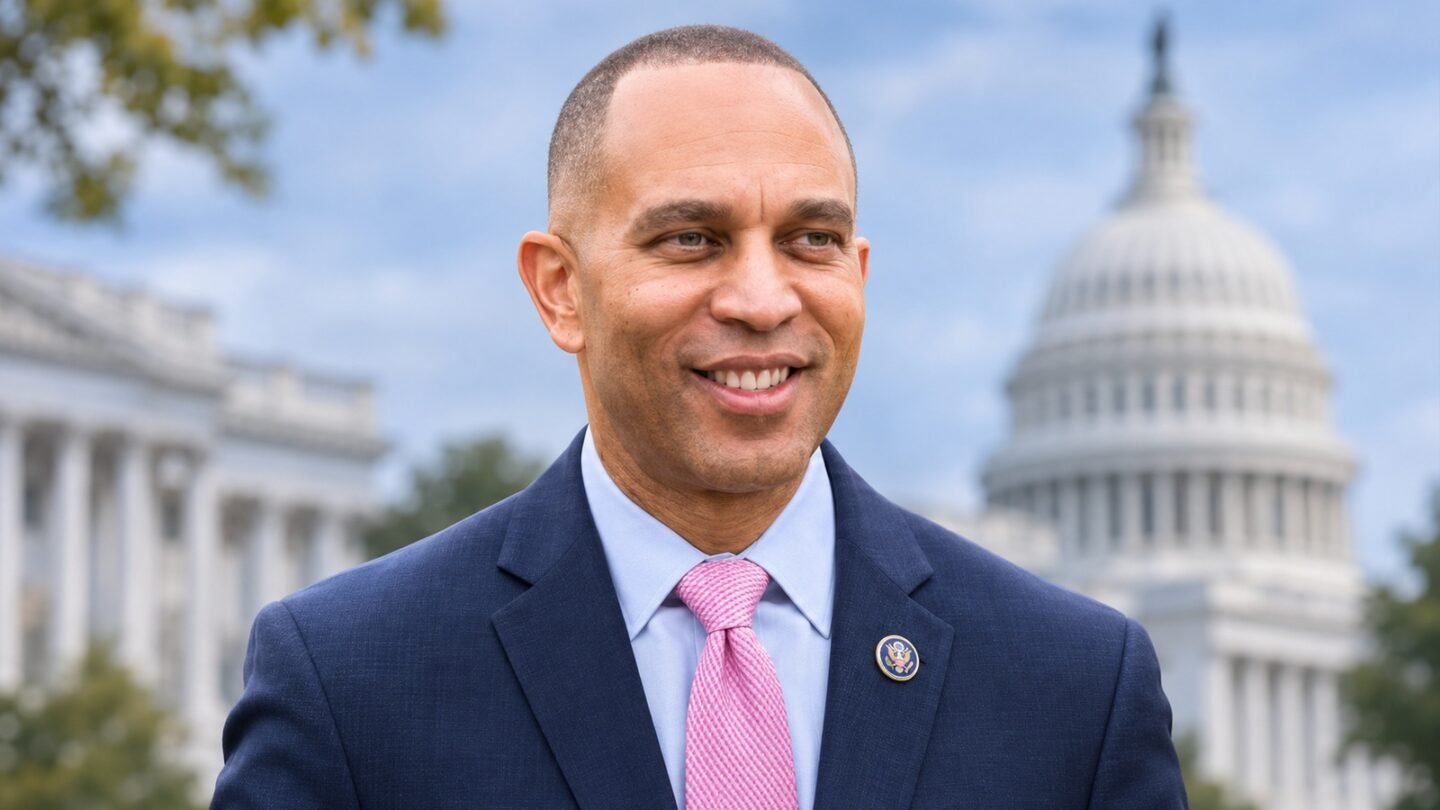
House Democrats approved the Jeffries speaker nomination in Washington on November 18, 2026, backing Hakeem Jeffries 251–11 in a closed-door caucus vote. The result puts the New York Democrat on course to become the first Black speaker of the House, but a separate election by the full chamber is still required.
The vote selected the incoming Democratic majority’s candidate for the speakership. It did not immediately transfer the office or complete the election scheduled when the new Congress convenes in January.
Rep. Zoe Lofgren’s office confirmed the 251–11 tally in a statement released Wednesday. Reuters and The Associated Press also reported the result, describing a decisive nomination victory for the current House Democratic leader.
What the Jeffries speaker nomination means
Of the 262 yes-or-no votes reported, Jeffries received 251, or approximately 95.8%. That rounds to 96%, the percentage cited in the circulating graphic. The figure describes support among those casting those ballots, rather than a nationwide approval rating or a vote of the entire House.
Lofgren’s office said no other member of Congress entered the race against him. Her statement emphasized party unity and described affordability and accountability as priorities for the incoming Democratic majority.
The result advances a campaign Jeffries formally launched on November 4. Hourly Times previously explained his speaker bid and the House selection process, including the distinction between winning a party nomination and securing the chamber’s top office.
Why a Full House Vote Still Matters
The House’s official leadership guide states that the speaker is elected by the whole House of Representatives. Party members meet separately to choose their leaders, while the election for speaker determines who leads the institution itself.
The guide describes the speaker as the House’s presiding officer and administrative head, as well as the majority party’s leader. The office is also second in the presidential line of succession, after the vice president, which adds to the significance of the selection.
The Office of the House Historian likewise explains that parties generally select their candidates in closed-door meetings before the new Congress begins. Members then participate in the speaker election on the floor.
Representatives-elect may support a candidate, answer present or abstain. Present votes can lower the threshold required to win. The November caucus tally therefore should not be presented as the final roll call that installs a speaker.
The Jeffries speaker nomination is a significant step toward a historic first. However, describing him as already elected to the office would move ahead of the formal process.
Some Democrats Withheld Their Support
The lopsided result also included opposition from within the party. AP reported that progressive newcomers were among those resisting Jeffries’s nomination and that their discussions with him about policy commitments were continuing.
Their opposition does not establish how every dissenter will vote when the full House meets. A private party ballot and a public floor election are separate decisions, and the November result cannot be treated as a completed January vote.
Jeffries responded to the outcome by emphasizing cooperation across the caucus, according to AP. He framed the party’s task as confronting the Republican agenda and delivering results for the public.
Hourly Times has also covered the public campaign opposing his speaker bid. That petition is separate from lawmakers’ leadership votes and does not carry authority to choose the speaker.
Affordability and Accountability Shape His Agenda
In his November 4 candidacy letter, Jeffries outlined three priorities: affordability, accountability and American values. He called for work on housing, healthcare, groceries, fuel and caregiving costs, while saying Democrats should seek bipartisan agreement where possible.
The letter also advocated congressional oversight and a ban on members of Congress trading stocks. Those proposals describe his intended agenda; the nomination vote itself did not enact legislation or change federal policy.
The next decisive step for the Jeffries speaker nomination is the full House election when the new Congress convenes on January 3, 2027. If elected then, Jeffries would become the first Black American to hold the speakership.