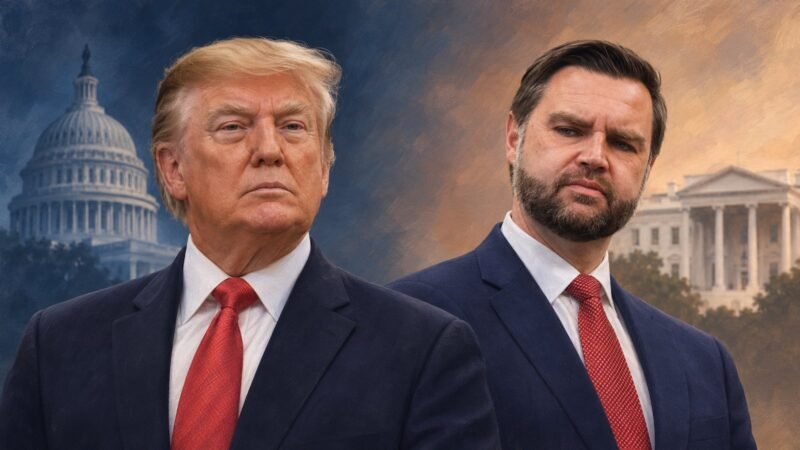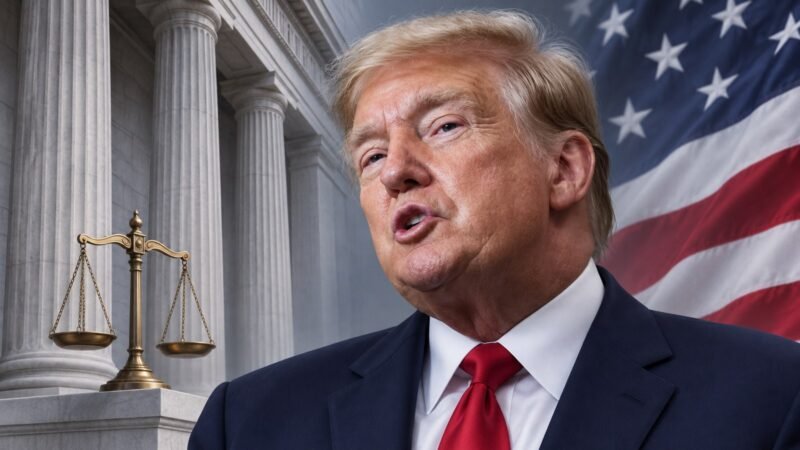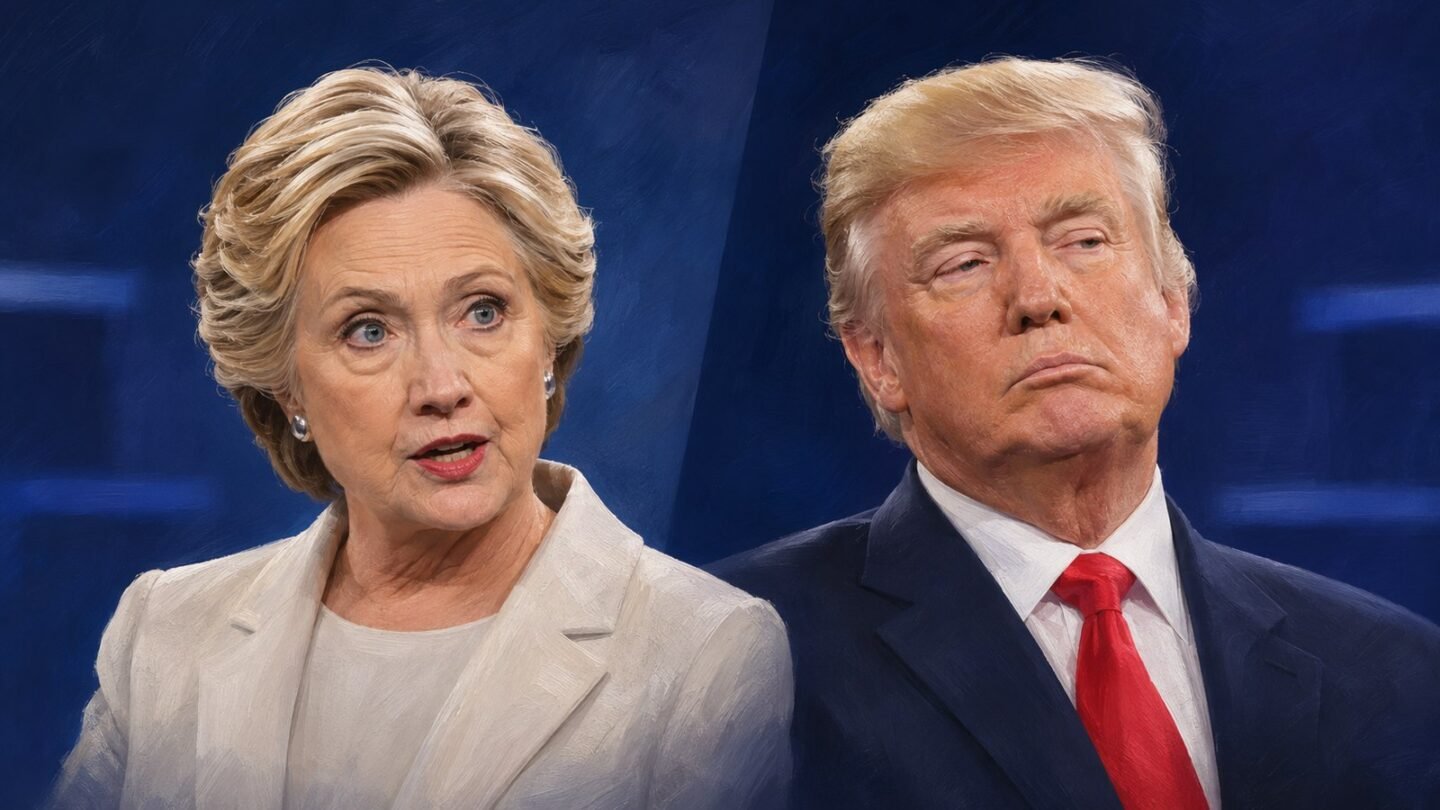
Hillary Clinton’s puppet remark about Donald Trump dates to the final presidential debate on October 19, 2016, and she revived the exchange for its tenth anniversary on October 19, 2026. The original transcript confirms the words, while the anniversary post represents her criticism of Trump’s Russia policy.
The distinction matters when the clip circulates again. The debate footage records a political accusation and Trump’s immediate rejection of it. It does not, on its own, establish that Russian President Vladimir Putin controls the U.S. president.
Clinton’s October statements also predate the November meeting involving Trump, Putin and Chinese President Xi Jinping. Describing that gathering only as a proposed summit would leave the chronology incomplete.
What the puppet remark meant in 2016
The Commission on Presidential Debates transcript places the exchange during a discussion of Russia, relations with Putin and interference in the American election.
After Trump argued that Putin did not respect Clinton, she replied: “Well, that’s because he’d rather have a puppet as president of the United States.”
Trump interrupted: “No puppet. No puppet.” He then told Clinton: “You’re the puppet!” She continued by accusing him of supporting Putin’s agenda, undermining NATO and benefiting from Russian interference.
Trump disputed her account. He said he did not know Putin, argued that better U.S.-Russia relations could be beneficial and accused Putin of outmaneuvering Clinton and President Barack Obama.
The transcript therefore preserves both the allegation and the response. It supports reporting that Clinton challenged Trump over Russia, rather than presenting her description as a conclusion established by the debate itself.
Clinton returned to the clip in 2019
On January 14, 2019, Clinton shared the exchange again with the caption: “Like I said: A puppet.” Contemporary reporting by Fast Company documents the post and its accompanying debate clip.
That revival followed reporting about an FBI inquiry into Trump’s relationship with Russia. The timing helps explain why an exchange from the campaign returned to public discussion during his first presidency.
The post was Clinton’s reaction to that reporting. Repeating her earlier accusation did not itself announce a new investigative finding or establish the outcome of the inquiry.
The anniversary post and later interview
Benzinga reported on October 20, 2026, that Clinton had marked the debate’s tenth anniversary by reposting the video. Her accompanying criticism concerned Russian diesel purchases, sanctions and a dispute involving Ukraine’s satellite connectivity.
She also objected to the prospect of Trump, Putin and Xi discussing Ukraine without Kyiv participating. These were the policy arguments she used to renew the puppet remark, rather than a newly disclosed document proving personal control.
In an October 21 episode of On with Kara Swisher, Clinton again stood by the description. A published transcript records her calling Trump “a willing Putin puppet to help Putin.” That wording expresses her assessment of his decisions and intentions.
Separately, RBC-Ukraine reported on October 22 that former President Bill Clinton accused Trump of abandoning Ukraine and moving closer to Putin. His criticism was a separate statement, not part of Hillary Clinton’s 2016 debate exchange.
The summit discussion has moved on
By November, the proposed meeting discussed in the anniversary criticism had become an actual diplomatic event. Hourly Times has examined the November 19 Shenzhen summit and its public outcome.
That coverage distinguishes the leaders’ appearance together from the commitments they announced. The published declaration did not provide a Ukraine peace settlement.
Hourly Times has also covered the Russian diesel agreement and the objections it prompted, providing background to another issue Clinton raised in October.
Trump’s latest stated position
Reuters reported on November 26 that Trump said he had urged Putin during their China discussions to reduce military aggression across Europe, hoping for a quick agreement to end the war in Ukraine.
That is Trump’s stated diplomatic position, rather than a direct response to Clinton’s puppet remark. It also does not establish that Russia accepted his request or that a peace agreement was reached.