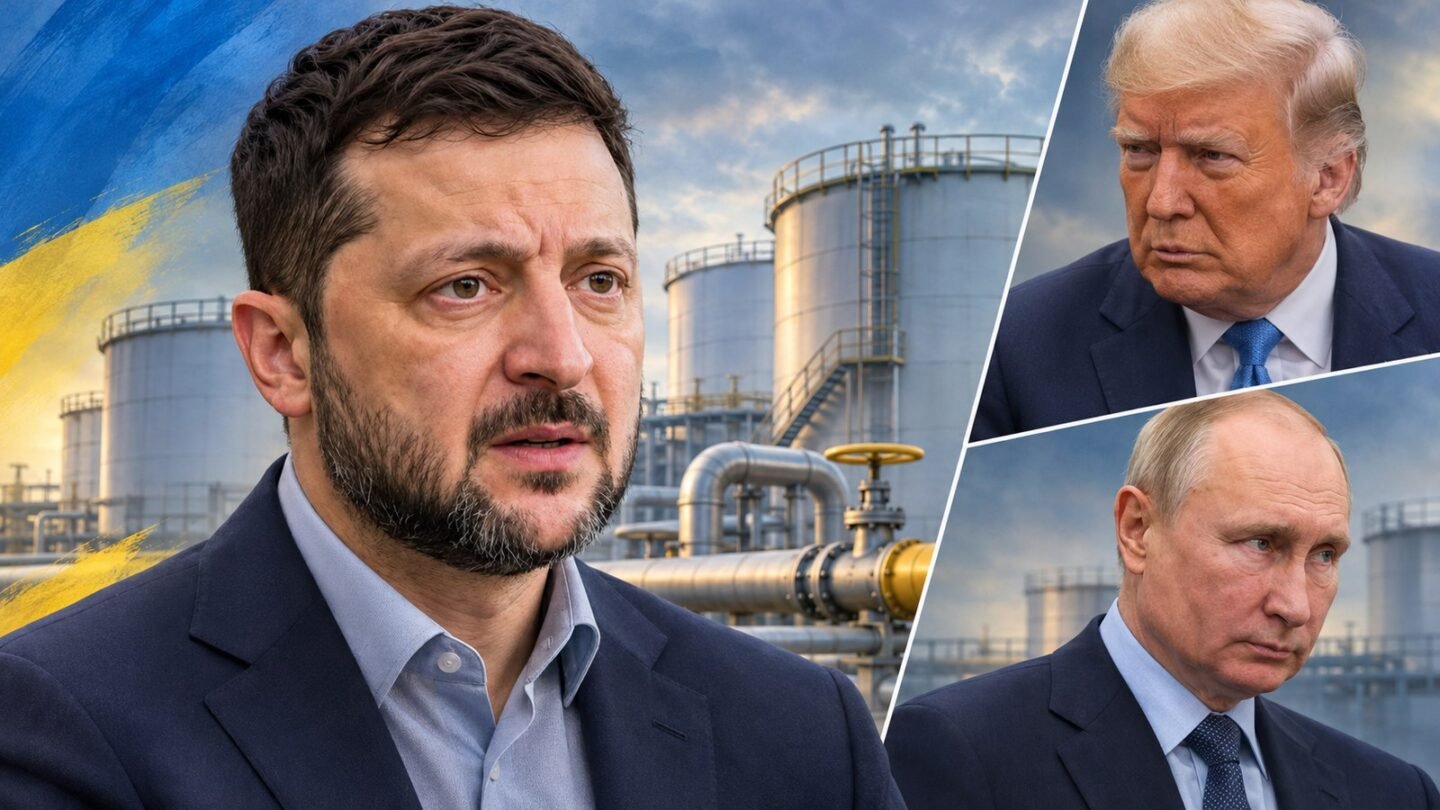
Ukrainian President Volodymyr Zelenskyy criticized the Russia diesel deal announced by President Donald Trump, saying in an October 14, 2026, London interview that Washington risked favoring Moscow while Ukraine continued fighting Russia’s invasion.
Speaking on Piers Morgan Uncensored, Zelenskyy acknowledged feeling betrayed by the agreement. The show’s official episode listing confirms that Morgan interviewed him in his London studios and that the discussion addressed the diesel arrangement, an energy ceasefire and Ukraine’s relationship with Washington.
The dispute centered on competing priorities: Trump’s administration presented increased fuel supplies as a way to lower prices, while Ukrainian officials warned that easing restrictions would give Russia more room to finance its war.
Why Zelenskyy criticized the Russia diesel deal
“It’s painful when President Trump chooses one side, not our side,” Zelenskyy said, according to Reuters. He indicated that he could accept Trump acting as a mediator, but argued that the role required remaining between the two countries.
His comments conveyed concern about losing a major partner. They were a criticism of the administration’s decisions, rather than an announcement that diplomatic relations or American support had formally ended.
USA TODAY’s report, republished by AOL, placed the remarks against a wider deterioration in relations. It reported that Trump defended his agreement with Russian President Vladimir Putin and called for a change of leadership in Kyiv.
The interview’s timing matters. Zelenskyy made these remarks on October 14; they should not be presented as a newly delivered statement in November.
What the diesel authorization permits
The Treasury Department’s General License 135, dated October 9, authorizes specified transactions involving diesel of Russian origin that would otherwise be prohibited under two Russia-related sanctions regulations.
Its coverage includes sales, delivery, offloading and imports, including imports into the United States. The document sets an expiration of 12:01 a.m. Eastern Daylight Time on April 7, 2027.
The license also contains an exception: it does not authorize debits to accounts held at American financial institutions by Russia’s central bank, National Wealth Fund or Finance Ministry.
That scope is narrower than removing every sanction against Russia. The document provides legal authorization for defined transactions; it does not establish how much fuel was delivered, how much Moscow earned or what savings American consumers received.
Senators from both parties sought a reversal
An October 13 letter published by the Senate Foreign Relations Committee shows that 12 senators urged Trump to rescind the Russia diesel deal. Six Republicans and six Democrats signed it.
The Republicans were Thom Tillis, Susan Collins, Alan Armstrong, Lisa Murkowski, Mitch McConnell and John Cornyn. The Democrats were Jeanne Shaheen, Richard Blumenthal, Dick Durbin, Sheldon Whitehouse, Jack Reed and Chris Coons.
The letter documents opposition within Trump’s own party as well as among Democrats, without establishing the position of Congress as a whole.
The lawmakers acknowledged pressure to lower energy costs but argued that the arrangement would provide little relief while strengthening Russia’s ability to continue the war. Those projected effects were the senators’ assessment, rather than measured results established by the letter.
They also urged the administration to implement sanctions authorized by legislation passed the previous month. Their letter provides a later, directly documented measure of bipartisan opposition than the initial criticism described in early reports.
The administration defended its approach
Reuters reported on October 11 that Treasury Secretary Scott Bessent defended the agreement as lawful and beneficial to Americans facing high fuel costs. Former Vice President Mike Pence urged Trump to rescind the decision.
A separate sanctions dispute followed. Reuters reported that Trump issued an October 16 waiver affecting additional Russia-related sanctions and tariffs, citing American national interests. Zelenskyy criticized that move the following day.
Hourly Times’ coverage of the subsequent sanctions waiver explains that later development. It should be distinguished from the October 9 diesel authorization and the October 14 interview.
The diesel license lists April 7, 2027, as its expiration. That is the deadline stated in the original authorization, rather than confirmation that the policy will remain unchanged until then.