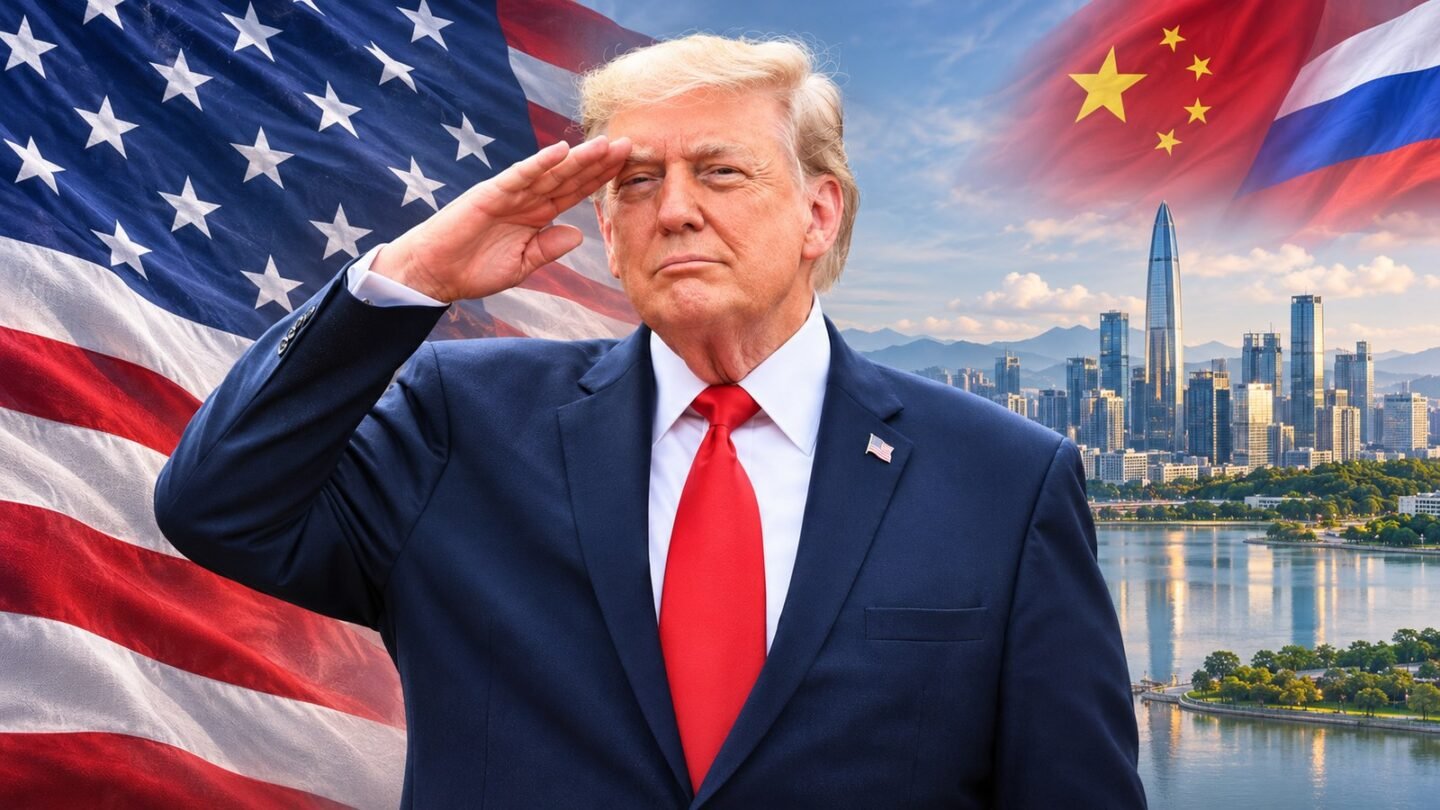
President Donald Trump praised his four-day Asia trip at a White House news conference on November 20, calling it one of the most successful presidential visits to the region in American history. His remarks followed talks with Chinese President Xi Jinping and Russian President Vladimir Putin in Shenzhen, China.
Trump presented the visit as evidence of renewed respect for the United States and praised his personal relationships with both leaders. His assessment came after a rare three-way meeting on November 19 during the Asia-Pacific Economic Cooperation gathering.
The summit produced a joint declaration promising further dialogue on nuclear risks and cooperation in other areas. It did not announce a new nuclear arms-control treaty or an agreement ending the wars in Ukraine or Iran.
Asia trip draws Trump’s praise
LaPresse reported that Trump described the completed journey as among the most successful visits in American and Asian history. The Times separately reported that he called the Shenzhen summit “amazing” and emphasized the chemistry between himself, Xi and Putin.
Those descriptions reflect the president’s judgment of his diplomacy. They do not establish an independently measured historical ranking of presidential travel or international attitudes toward the United States.
During the visit, Trump repeatedly highlighted the reception he received in China. Reuters reported that he pointed to Xi’s airport greeting, the military welcome and arrangements at a banquet as evidence of a strong relationship.
The Asia trip also included a stop in the Philippines and trade announcements involving the Philippines and Thailand. Reuters reported that some announcements still lacked important details, with formal negotiations on the Thailand agreement continuing.
What the three leaders committed to
The joint declaration published by the White House sets out four areas of agreement: United Nations reform, energy supplies, international courts and nuclear risks. It confirms that the three presidents met in Shenzhen on November 19.
On nuclear issues, the governments committed to dialogue aimed at reducing risks and preventing the spread of nuclear weapons. The text also reaffirmed their shared position that nuclear war must be avoided.
However, it contained no numerical limits on nuclear arsenals, inspection arrangements or timetable for negotiations. Its language commits the countries to discussions rather than establishing an enforceable arms-reduction agreement.
The energy provision said the countries planned to expand production and supplies of refined petroleum products. The declaration also supported changes to the United Nations and emphasized state consent and official immunity in relation to international courts.
Hourly Times previously examined the Shenzhen summit declaration and its limits, including the absence of a new nuclear treaty.
China outlines a separate bilateral agenda
China’s Foreign Ministry offered a separate account of Xi’s meeting with Trump. It said both sides considered their bilateral discussion positive and constructive and agreed to develop an action plan for their relationship.
The ministry said Xi called for stronger communication on economic and trade concerns and constructive management of unresolved differences. Its account also described discussions involving agricultural products, energy and artificial intelligence.
On AI, the Chinese statement called for communication to prevent security risks and keep the technology under human control. These were points in China’s account of the bilateral meeting, distinct from the commitments in the three-country declaration.
Criticism and unfinished negotiations
Trump’s positive assessment of the Asia trip drew a sharply different response from Senate Minority Leader Chuck Schumer. ABC News reported that Schumer criticized the meeting on the Senate floor on November 19 and argued that Trump had failed to obtain meaningful, lasting commitments from China or Russia.
Trump, meanwhile, told NBC News that he rated the meeting above the top of a ten-point scale, according to ABC. He also said decisions about the Russia-Ukraine war would include Ukraine.
The published declaration did not set a date for another three-leader summit. Its announced follow-up is further nuclear-risk dialogue, while the bilateral Chinese account identifies an action plan as the next step in developing U.S.-China relations.