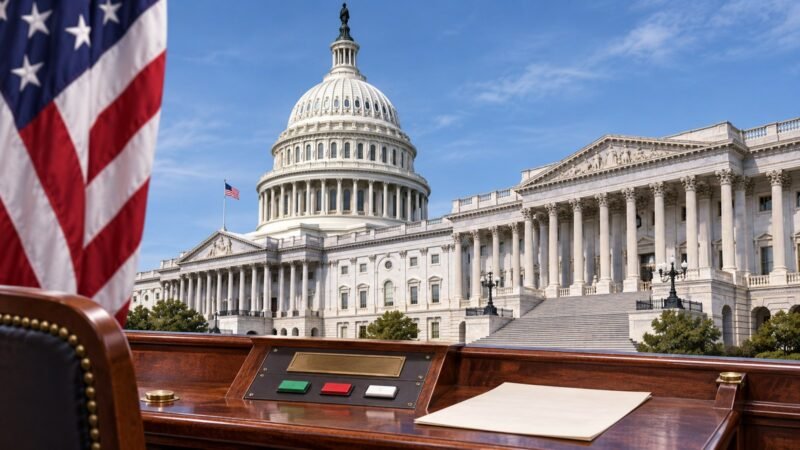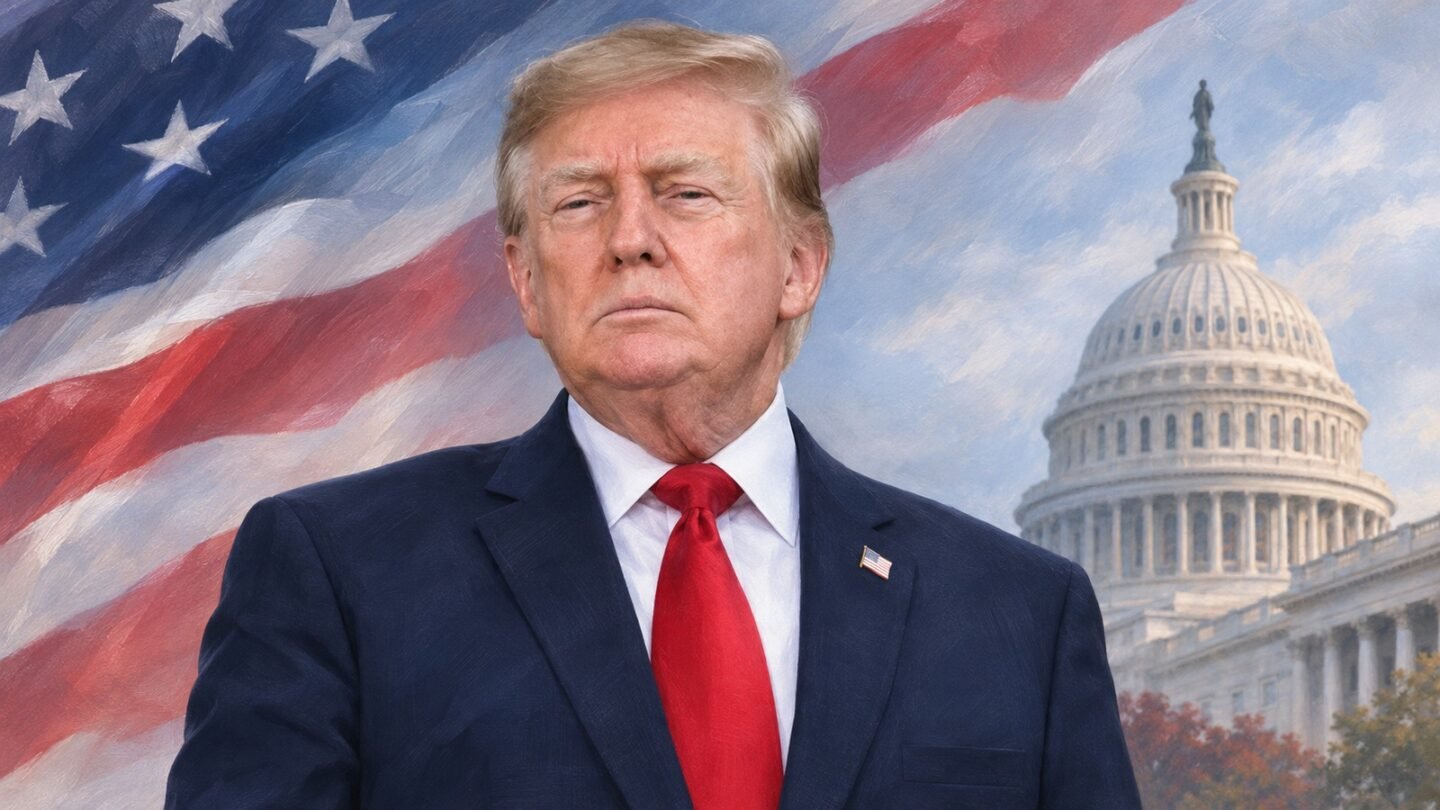
President Donald Trump said on November 12 that failure to pass the SAVE America Act hurt Republicans in the midterm elections, while renewing his criticism of the Senate’s decision to keep the legislative filibuster.
In a Truth Social post Thursday morning, Trump called the bill’s nonpassage “devastating to the Republican Party in the Midterms.” He also described not eliminating the filibuster as “one of the greatest mistakes” in American political history.
Those statements express Trump’s assessment of the election and Senate strategy. The sources reviewed for this report do not establish that passing the legislation would have changed the midterm results.
Trump directs his criticism at the Senate
Trump’s post urged Republican senators to stop allowing legislation to stall in their chamber. He linked his frustration over the voting measure to a broader argument that Republicans should have removed procedural barriers to approving their agenda.
He also predicted that Democrats would end the filibuster themselves. That was a prediction about future decisions, rather than an announcement of a Democratic agreement to change Senate rules.
The post ended with congratulations to John Thune on another year of leadership, alongside a reference to Republicans serving in the minority. Hourly Times previously reported on Democrats’ projected Senate majority after the midterms.
What the SAVE America Act would change
The legislation would change how voters establish eligibility for federal elections. The House approved S. 1383, the vehicle carrying the voting legislation, on February 11 by a vote of 218–213, according to the House clerk’s recorded vote.
The House Rules Committee’s published legislative text describes documentary proof of U.S. citizenship for voter registration and eligible photo identification for voting. These are separate requirements: proving citizenship when registering is different from showing identification when casting a ballot.
The text lists a U.S. passport among accepted citizenship documents. It also includes combinations of identification and supporting records, along with a process for applicants who cannot provide the listed documentation to submit other evidence for an official determination.
In its February 11 policy statement, the White House supported the SAVE America Act and said it would strengthen enforcement of citizenship requirements and increase confidence in elections. The administration also acknowledged that federal law already prohibits foreign nationals from registering or voting in federal elections.
Democratic opponents disputed the bill’s benefits. In a March 15 press call, Senate Democratic Leader Chuck Schumer argued that its documentation and registration requirements would make voting harder for eligible citizens. Those comments explain the opposition’s position; they were not a response to Trump’s November 12 post.
How the Senate filibuster affects legislation
A filibuster can delay or block action on legislation by preventing debate from ending. The Senate calls the procedure for limiting debate cloture.
Under the chamber’s official explanation of legislative cloture, ending debate generally requires three-fifths of senators duly chosen and sworn. With 100 senators, that means 60 votes.
That threshold differs from the vote on final passage. The Senate’s voting guidance says most measures pass by a simple majority. A party can therefore have enough senators to support a bill’s passage while lacking the votes needed to overcome opposition that keeps debate open.
The chamber also distinguishes legislation from nominations. Senate precedents adopted in the 2010s allow a simple majority to end debate on nominations, according to its historical overview.
What remains unproven about the midterms
Trump’s criticism connects a legislative setback to an electoral outcome. Neither the House vote nor the Senate’s procedural rules demonstrate how voters would have behaved if the SAVE America Act had become law before the election.
His post therefore establishes his explanation for Republican losses, rather than proving a cause. It also does not establish that changing the filibuster would have secured agreement on every part of his agenda.
The next fixed transition is January 3, 2027. Under the Constitution’s 20th Amendment, the incoming terms of senators and representatives begin at noon that day, placing the dispute over voting legislation and Senate procedure against the approaching change in Congress.