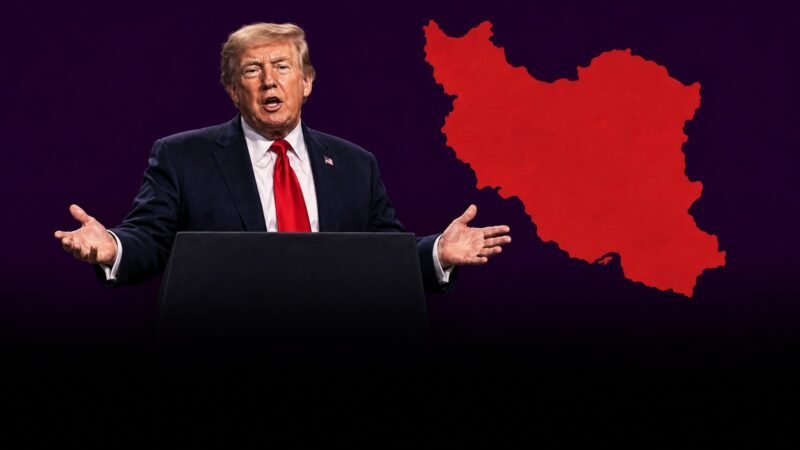
An ICC evidence submission seeking action against President Donald Trump and other senior U.S. officials is planned for November 11, according to the Taxpayer Alliance Against Genocide. The group says its delegation will deliver material to prosecutors in The Hague concerning alleged crimes in Gaza.
The announcement establishes an advocacy initiative and a proposed delivery date. It does not establish that the International Criminal Court’s prosecutor has applied for a warrant against Trump or that judges have issued one.
The allegations concern what the group describes as U.S. assistance to genocide, war crimes and crimes against humanity. Those accusations have not been adjudicated through the planned submission.
What the ICC evidence submission would contain
The group’s published announcement names Trump, Secretary of State Marco Rubio and other senior officials as targets of its accountability campaign. It says U.S. political, military, diplomatic and financial support helped enable Israeli actions in Gaza.
Middle East Monitor reported on November 6 that the proposed material includes doctors’ sworn statements, eyewitness accounts, whistleblower testimony, videos and documents. Its report attributed the details to the group and reporting by The National.
The description of that material is not an independent assessment of its reliability or legal sufficiency. Prosecutors would need to evaluate the evidence and the relationship between particular officials and particular alleged crimes.
Washington rejects the court’s authority
The Trump administration’s position is set out in its February 6, 2025 executive order imposing ICC sanctions. The order describes the court’s actions against the United States and Israel as illegitimate and argues that neither country accepted its jurisdiction.
That is Washington’s legal and political position. The order also invokes threats to American sovereignty and national security in explaining the sanctions.
The National reported in July 2026 that Rubio had outlined a broader campaign against the court, including diplomatic pressure and possible additional restrictions. Those earlier statements provide context; they should not be presented as a specific response to the November 11 initiative.
Israel has also denied genocide allegations in legal submissions. Its March 2024 observations in the separate International Court of Justice proceedings rejected South Africa’s accusations. That state-to-state case is distinct from an ICC effort concerning individual criminal responsibility.
A submission is one step before any warrant
The ICC evidence submission would go to the Office of the Prosecutor. Under Article 58 of the Rome Statute, a warrant requires an application by the prosecutor and a decision by the Pre-Trial Chamber.
Judges must find reasonable grounds to believe the person committed a crime within the court’s jurisdiction and that arrest is necessary for one of the statutory reasons.
Article 25 addresses individual responsibility, including aiding or abetting for the purpose of facilitating a crime. Showing that a government supplied assistance is therefore different from establishing an individual official’s criminal responsibility under a particular legal theory.
Who has the stronger legal argument?
The parties are contesting different questions. The lawyers seek an examination of alleged individual wrongdoing; Washington challenges the tribunal’s authority over American officials.
The court’s own framework does not treat nationality in a non-member state as an automatic bar to every case. Its published Palestine jurisdiction materials explain the territorial basis covering Gaza and the West Bank, including East Jerusalem.
That does not automatically establish jurisdiction over every act alleged against an American official. The connection between the conduct, territory and charges would still require legal analysis.
Article 27 states that official capacity does not itself exempt a person from responsibility under the statute. It does not establish guilt or eliminate other jurisdictional and procedural questions.
The available announcements do not support declaring either side the winner of a criminal case. The next verifiable milestone is whether the planned ICC evidence submission takes place and what prosecutors subsequently decide.