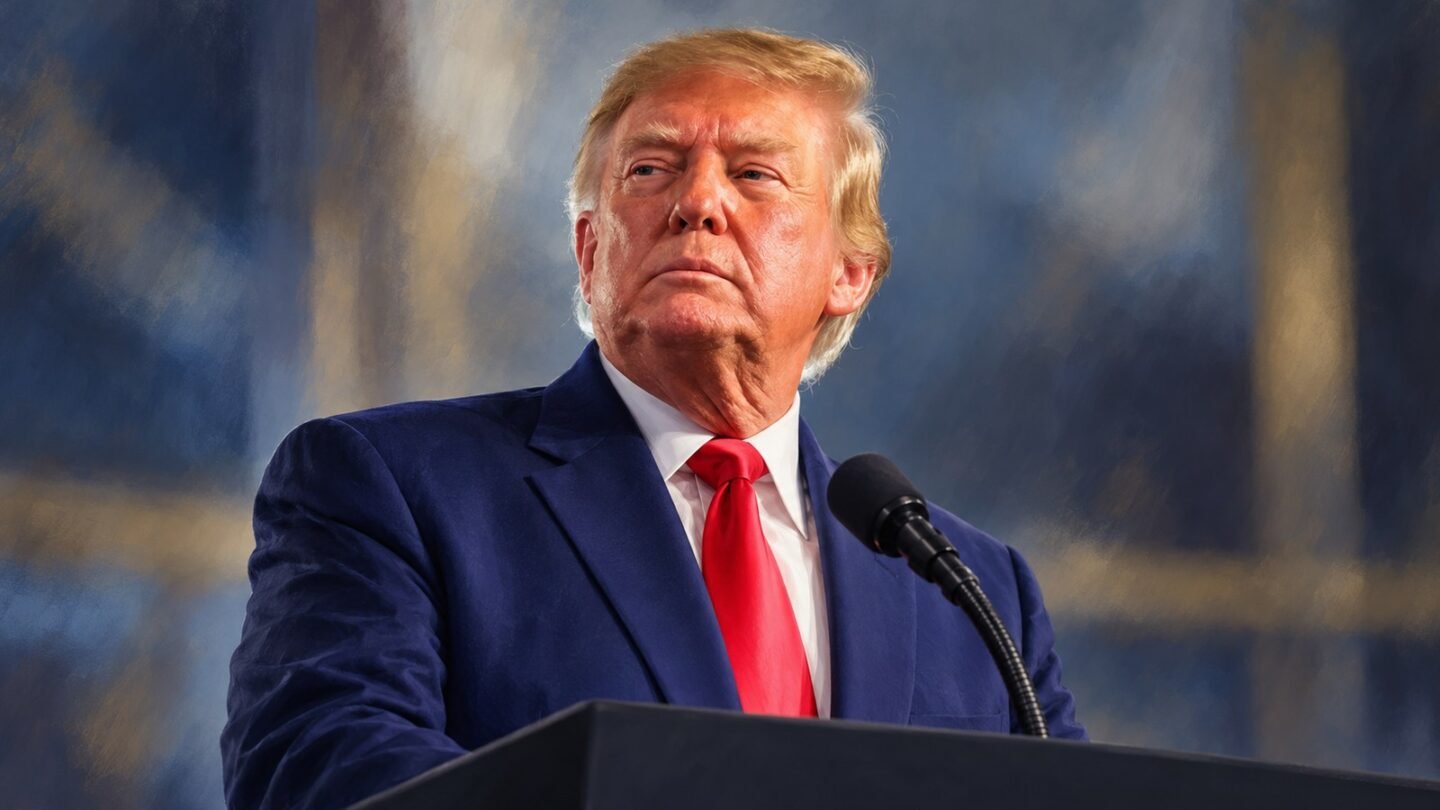
President Donald Trump said the Iran war would end “whenever I want it to end” during an October 27 campaign rally in Lubbock, Texas, as reporting placed the U.S. military’s estimated cost of the conflict at $47.1 billion through mid-October.
The remarks asserted control over the conflict’s timetable but did not announce an end date or a completed agreement. Trump also said an acceptable conclusion must include a clear commitment that Iran would never obtain a nuclear weapon.
The reported cost figure comes from a U.S. Central Command estimate provided to Congress. It includes projected replacement costs as well as operational expenses, rather than representing only money already paid out.
What Trump Said About Ending the Iran War
A transcript indexed by Roll Call’s Factba.se places the statement at Trump’s October 27 rally. He described being asked when the conflict would end, then gave the answer quoted above.
He said an ending could come quickly but needed to meet his stated nuclear condition. That is the president’s position on the desired outcome, not evidence that Tehran has accepted it.
The distinction matters because a claim about how quickly a conflict could end is different from announcing agreed terms, implementation steps or a date for ending military operations. The quoted remarks did not supply those details.
What the $47.1 Billion Estimate Includes
The Associated Press reported that the CENTCOM estimate covers costs through October 16. It is a dated assessment released through reporting, rather than a live accounting of the military’s expenses on October 28 or 29.
Stars and Stripes reported approximately $29 billion for replacing expended munitions, $6.1 billion for replacing lost equipment and platforms, and $11.9 billion in operational costs.
The report said the munitions and equipment replacement expenses remained unfunded. Describing the entire estimate as cash already spent would therefore miss an important part of what the figure measures.
The published categories use rounded figures and should not be treated as a complete itemized ledger. Their purpose is to describe the main sources of the military’s estimated financial burden.
AP compared the new figure with an earlier estimate of $43.6 billion through early September. Subtracting $43.6 billion from $47.1 billion produces the reported increase of $3.5 billion.
Why the Estimate Is Not the Full Economic Cost
The estimate excludes damage to U.S. bases in the Middle East, according to AP’s reporting. It therefore should not be presented as a final total covering every military consequence of the conflict.
It also is not a measure of all costs facing households or businesses. A military accounting and the wider effects of disrupted energy markets answer different questions.
Hourly Times previously covered oil-market reactions to Trump’s pledge to pause attacks before the midterms. That earlier report distinguished a temporary market response from a permanent end to the conflict.
Current reporting does not establish that the $47.1 billion estimate captures every eventual replacement expense or repair bill. Its scope and October 16 cutoff should remain attached to the number.
Congress Faces Continuing Questions About War Funding
Congressional scrutiny predates the latest estimate. In a September 19 statement, Sen. Jack Reed, the leading Democrat on the Senate Armed Services Committee, demanded fuller disclosure of the conflict’s financial and human costs.
His office said 46 senators had sought an accounting from the Pentagon and a breakdown of a proposed supplemental funding request. Those were lawmakers’ demands for information, not an independent audit certifying all spending.
AP’s October 28 report said the White House was seeking a separate $95 billion package covering the Iran war and other priorities. A funding request and a cumulative cost estimate are different measures and should not be combined into one war-spending total.
The Pentagon did not immediately respond to Reuters’ request for comment on the latest estimate. A publicly released copy of the underlying CENTCOM document was not independently reviewed for this article.
The Iran war remains an issue ahead of the November 3 congressional elections. Trump’s Lubbock remarks offered no confirmed peace deadline; the next scheduled nationwide political milestone is Election Day.