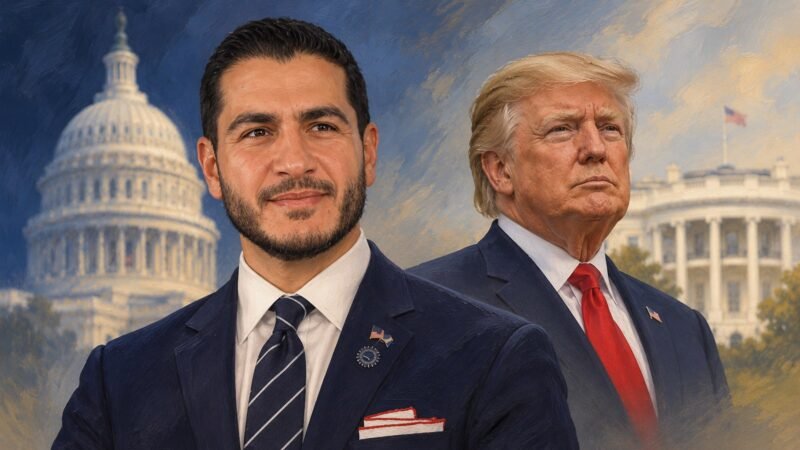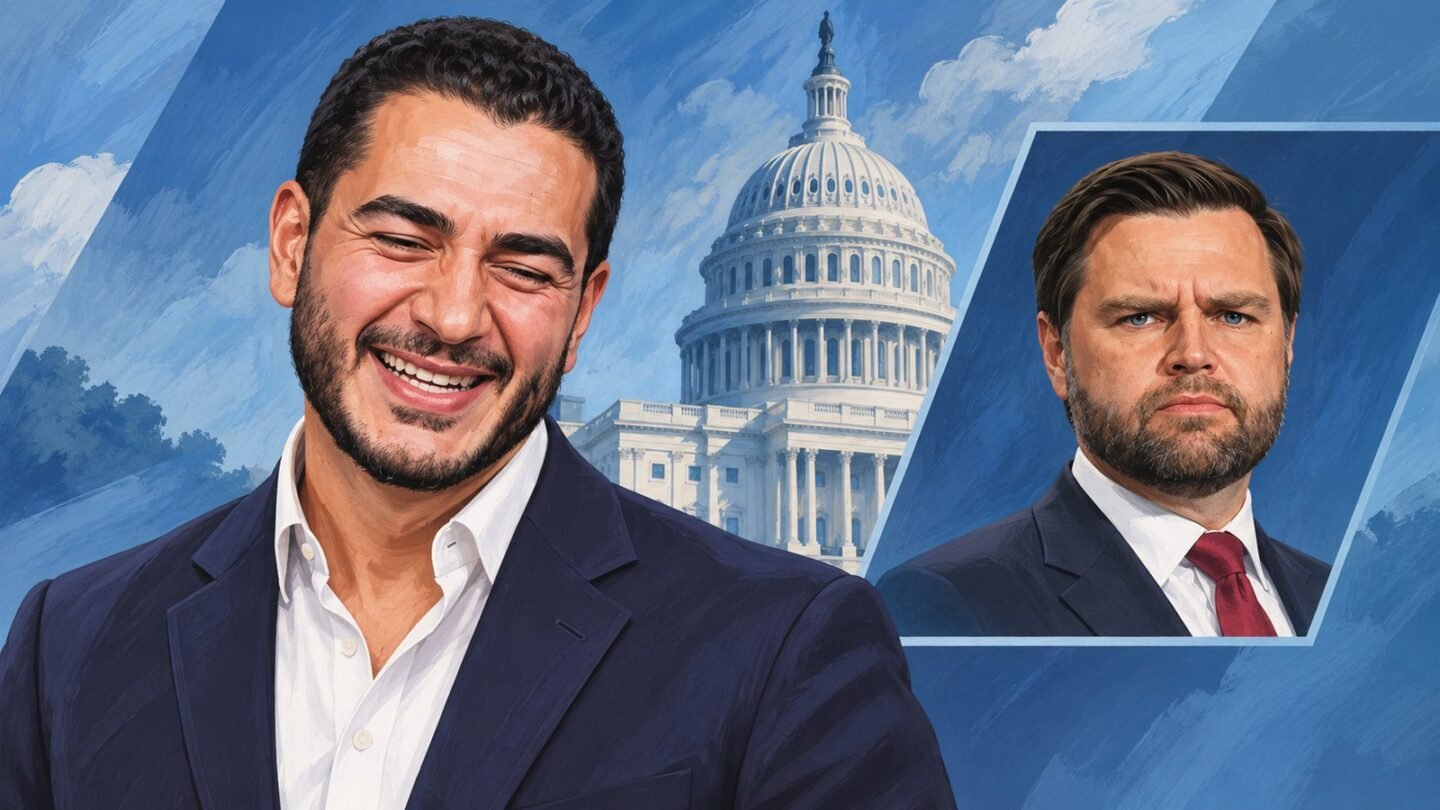
The El-Sayed Senate oath is drawing attention after Michigan Democrat Abdul El-Sayed addressed Vice President JD Vance in his November 4 victory speech. El-Sayed defeated Republican Mike Rogers in the November 3 election, becoming the first Muslim elected to the U.S. Senate, according to media projections reported by Reuters.
Addressing Vance as “JD, habibi,” El-Sayed said the vice president was “constitutionally obligated to swear me in in January.” The remark appears in Anadolu’s published footage and transcript of his appearance before supporters in Michigan.
The statement reflects the vice president’s customary role at the opening of a new Congress. However, Senate procedure provides an alternative if the vice president is absent. Separately, the sources reviewed do not confirm whether El-Sayed plans to use a Qur’an during his swearing-in.
What the El-Sayed Senate Oath Requires
The Senate Historical Office’s account of opening-day procedure explains that senators-elect present election credentials and take their oath in an open Senate session before exercising legislative responsibilities.
The vice president normally administers the oath. In the vice president’s absence, the president pro tempore can do so instead. That means the ceremony does not legally depend on Vance personally appearing beside El-Sayed.
Senators pledge support for the Constitution and the faithful performance of their duties. The Senate describes members raising their right hands; some also hold a Bible or another personally significant text.
A separate reenactment traditionally follows in the Old Senate Chamber, allowing photographs with family members. The official oath and the later ceremonial photograph are related but distinct events.
A Qur’an Ceremony Has Not Been Confirmed
Claims that Vance will have to hold a Qur’an go beyond the verified information available for this report. El-Sayed’s election and his reference to a January swearing-in do not establish which book, if any, he will choose or who would hold it.
The distinction matters because a possible ceremonial choice is not an announced arrangement. Reporting that he will become the first senator sworn in using a Qur’an would require confirmation of that plan and verification of the historical comparison.
There is a documented congressional precedent outside the Senate. The Library of Congress records Keith Ellison’s 2007 ceremony using a two-volume Qur’an formerly owned by Thomas Jefferson.
Ellison used those volumes for his ceremonial swearing-in by House Speaker Nancy Pelosi after taking the official oath with other House members. That event concerned a representative, not a senator, and cannot establish El-Sayed’s future arrangements.
The Constitution Bars a Religious Test
Article VI requires senators and other specified officeholders to support the Constitution through an oath or affirmation. It also bars a religious test as a qualification for federal office, as reproduced in the Supreme Court’s explanation of constitutional oaths.
That rule protects eligibility for office regardless of religion. It does not require a particular religious book or establish who must hold one during a ceremony. The El-Sayed Senate oath concerns his obligations to the Constitution.
A Victory After Attacks on His Faith
Reuters reported that Trump called El-Sayed a jihadist at an October 25 Michigan rally and suggested he would need a metal detector to enter the Senate. El-Sayed rejected allegations of Muslim Brotherhood affiliation.
Rogers told NBC he had never called El-Sayed a terrorist, while continuing to question his affiliations. Hourly Times previously examined the disputed allegations and El-Sayed’s denials.
El-Sayed’s win retained the seat of retiring Democratic Sen. Gary Peters. The result was a Democratic hold, rather than a Republican seat changing parties. That distinction matters when describing Michigan’s contribution to the national contest for control of the chamber.
His professional background includes leading Detroit’s health department, a role documented by the Rhodes Trust. The trust identifies him with Michigan and Oriel College’s 2009 cohort.
What Comes Next in January
The Twentieth Amendment sets the start of the next Senate term at noon on January 3, 2027. The precise El-Sayed Senate oath arrangements, including any religious text and ceremonial participants, remain to be confirmed.