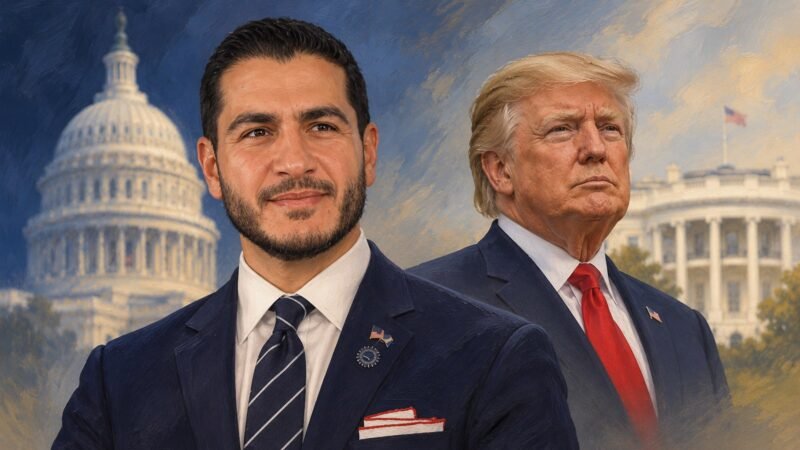
Hakeem Jeffries endorsed impeaching Defense Secretary Pete Hegseth on November 8, telling ABC’s This Week he was a “hard yes” as Republican Rep. Thomas Massie prepared to renew his effort to force House consideration.
The House minority leader’s announcement put him publicly behind the proposal before Democrats’ planned discussion of the measure on Tuesday. He predicted strong support within his caucus, while President Donald Trump continued to defend Hegseth.
“I’m a hard yes on the Hegseth resolution,” Jeffries said. “Pete Hegseth has got to go.”
Why Hakeem Jeffries supports the resolution
The New York Democrat accused Hegseth of abusing his authority, weakening national security and helping engineer the Iran war. He argued that the conflict had increased prices for Americans and made the country less safe.
Those were Jeffries’s stated reasons for supporting impeachment. His interview did not establish a congressional finding on the allegations against Hegseth or quantify how much of any price increase was attributable to the war.
The interview transcript published by Jeffries’s office records his endorsement and his answer when ABC’s Jonathan Karl asked whether all House Democrats would join him.
Jeffries said members would discuss the resolution on Tuesday morning, when they reconvene in Washington. He expected strong backing but did not announce that every Democrat had committed to voting for it.
That leaves an important distinction between a party leader’s endorsement and a confirmed House majority. Hakeem Jeffries made his own position clear; the interview was not a completed vote count.
During the same interview, Jeffries linked accountability to a wider agenda focused on household costs. He identified groceries, housing, gas and healthcare as priorities and said Democrats wanted Congress to act as a check on the executive branch. Those remarks describe his party’s intended direction, rather than legislation or investigations that have already been completed.
Massie plans to revive his impeachment proposal
ABC reported that Massie, an outgoing Kentucky Republican, intended to reintroduce a privileged resolution as early as Monday, November 9. The proposal contains eight articles accusing Hegseth of misconduct, including violations of the War Powers Resolution of 1973.
Massie’s September 15 announcement identifies three articles concerning the Iran conflict. They challenge the authority to begin or continue hostilities and allege violations of statutory limits.
The remaining allegations cover other military operations and asserted abuses of office. They are the sponsor’s accusations, rather than facts established by the publication of the proposed articles.
Hourly Times’ earlier reporting on Massie’s planned post-election push explains the proposal’s history and the procedural delay before the midterms.
The New York Times, in reporting republished by The Philadelphia Inquirer, described the need for Massie to renew his notice after the earlier effort expired. A proposed timetable for renewed action does not establish that lawmakers have already impeached Hegseth.
Trump and Hegseth reject the push
Trump has continued to support his defense secretary. ABC reported that the president told Karl on November 5 that he intended to keep Hegseth in the administration.
Hegseth defended himself in a social-media video the same day. He dismissed the articles as politically motivated, criticized Massie and Democrats, and compared the effort with Trump’s two impeachments.
Those responses show the administration contesting the campaign against him. Neither presidential support nor the secretary’s rejection of the allegations decides how members of Congress will vote.
What happens after an impeachment vote
The Constitution gives the House the sole power of impeachment and the Senate the authority to try impeachments. A House decision to approve articles would not, by itself, remove Hegseth from his position.
Senate conviction requires support from two-thirds of senators present. That separate requirement means support for taking up a House resolution should not be described as a guarantee of removal.
For Hakeem Jeffries, the next announced step is a discussion with fellow Democrats. For Massie, it is renewing the proposal. Any subsequent report should distinguish procedural action, approval of impeachment articles and a Senate judgment.