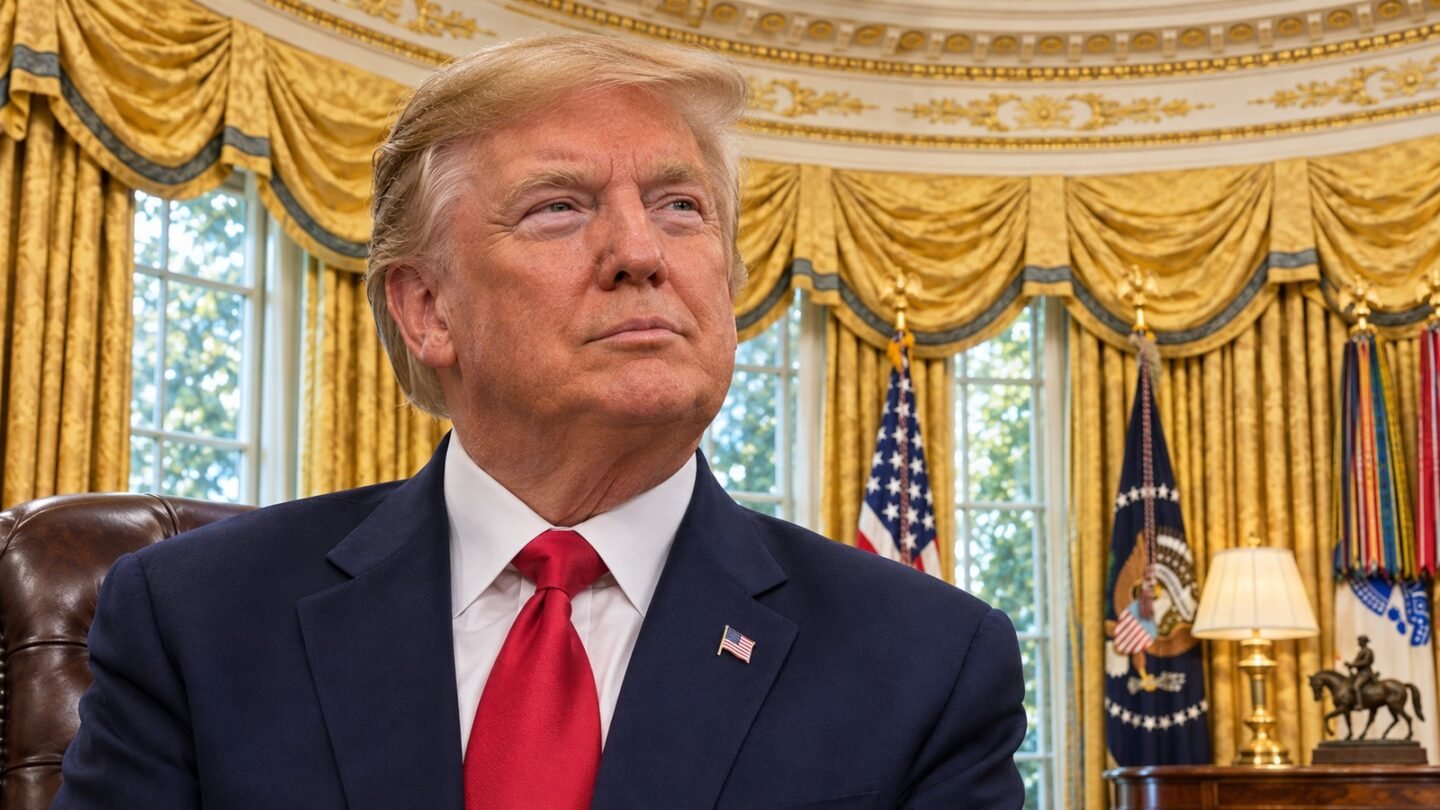
President Donald Trump signed an Oval Office monument proclamation at the White House on November 5, seeking to preserve the historic West Wing space and the Cabinet Room. The designation adds preservation requirements but explicitly allows future presidents to redecorate.
The action came two days after Republicans lost control of Congress in the midterm elections. Trump said he wanted congressional ratification and described the measure as protection against future demolition or major changes.
His public description went further than the written document. The proclamation establishes the monument under the Antiquities Act, while leaving presidential decorating authority intact. It does not contain the congressional approval requirement Trump described to reporters.
What the Oval Office Monument Covers
The White House identifies the protected spaces as the Oval Office, the Outer Oval Office and the Cabinet Room. Its accompanying fact sheet presents the designation as an effort to preserve rooms closely associated with presidential decision-making.
The Interior secretary, working through the National Park Service, is responsible for management. The administration directs consultation with White House offices and coordination with the Committee for the Preservation of the White House and other appropriate advisers.
The management process must prioritize important structural and architectural features. Before substantial alteration or demolition, officials must document the proposal, review it and consider alternatives. Proposed changes affecting historic character must also be assessed against the monument’s national significance.
The White House argues that the office deserves distinct protective management despite the property’s existing National Historic Landmark recognition. Its stated rationale centers on the room’s historical role and its association with consequential domestic and international decisions.
The proclamation traces the oval design to President William Howard Taft and the room’s current location and form to President Franklin D. Roosevelt. It describes the office as both a working space for the executive branch and a setting for meetings with foreign leaders, giving historical context for the new designation.
Future Presidents Can Still Redecorate
The published proclamation preserves authority to choose furnishings, redecorate and make routine operational or security changes, provided those actions do not substantially damage historic structure or architectural character.
That exception matters because Trump’s own decorative choices have attracted attention. The Associated Press reported that the designation does not freeze the office’s appearance or prevent a successor from reversing the proclamation.
Asked whether another president could remove his gold decorations, Trump acknowledged that changes would remain possible if handled carefully, according to Reuters. The Oval Office monument therefore should not be described as permanently preserving every current furnishing or ornament.
Trump’s Congressional Proposal Is a Separate Step
ABC News reported that Trump intended to send the document to Congress for ratification. He also said major modifications should require lawmakers’ approval. Those remarks describe his proposed congressional role; they do not establish that Congress has approved such a requirement.
The Antiquities Act provision cited in the proclamation, 54 U.S.C. 320301, authorizes presidents to designate qualifying historic structures and objects on federally owned or controlled land by proclamation. That provision supplies the authority invoked for this designation.
The written order also preserves Congress’s authority over federal property and existing statutory exemptions applying to the White House under the National Historic Preservation Act.
The Move Follows Trump’s White House Renovations
The preservation initiative follows extensive changes Trump has made himself. CNN reported additions including gold-colored figures, mirrors and decorative details in the Oval Office. Trump also highlighted new Cabinet Room chandeliers when discussing improvements to that space.
ABC News reported that the East Wing was demolished in October 2025 for his ballroom project. On November 4, he brought reporters to the construction site as its final beam was raised.
That appearance also included Trump’s comments about working with Democrats and using his veto, linking the construction event to the political transition after the election.
Reuters reported no identified effort to demolish or dramatically reshape the Oval Office or Cabinet Room. The next implementation step specified in the Oval Office monument proclamation is development of the preservation management plan; it sets no completion deadline.