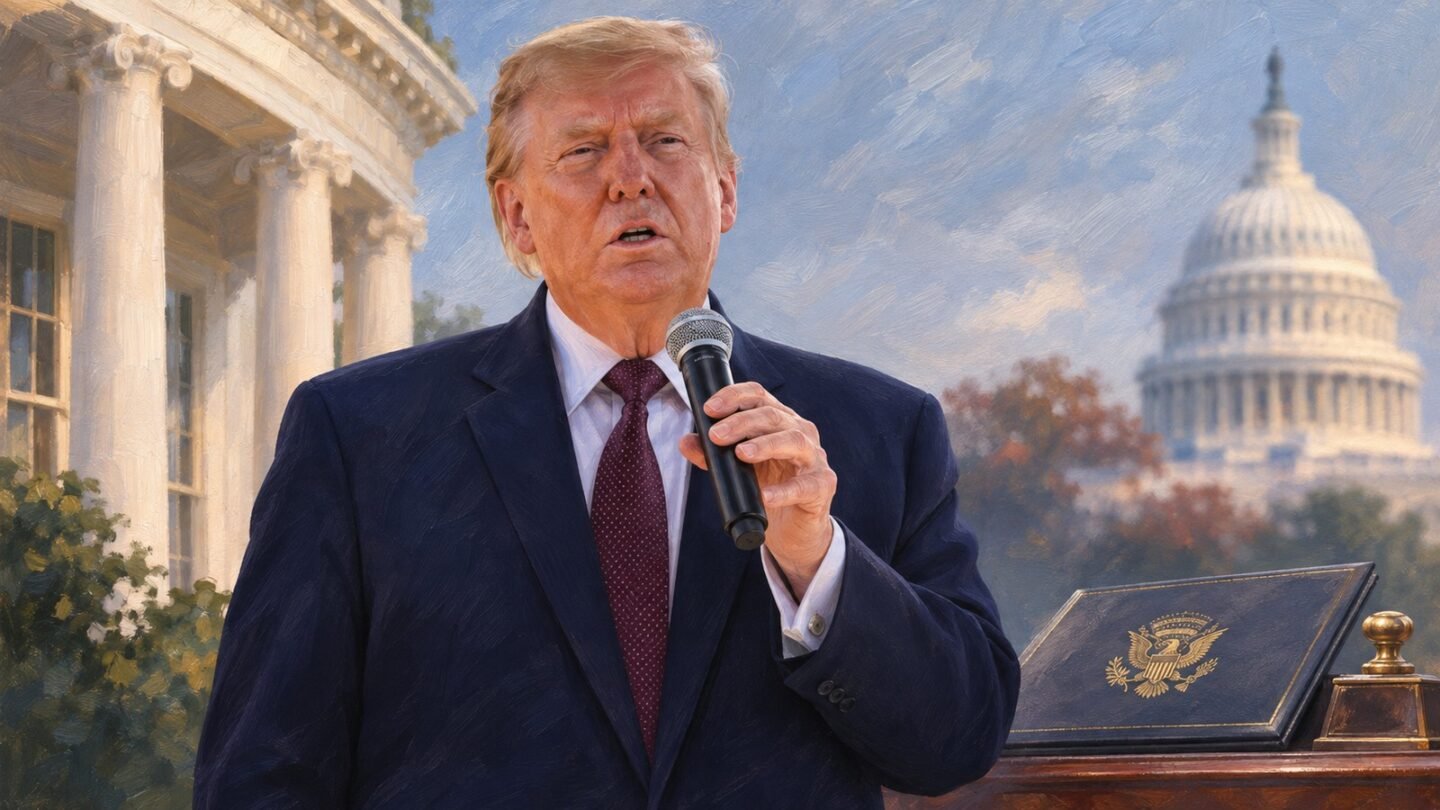
Trump and Democrats could work together after the midterm elections, President Donald Trump said at the White House on November 4, while warning that cooperation would depend on how the opposition party used its gains. He also emphasized his power to veto legislation.
The remarks came a day after voters elected Democratic majorities in the House and Senate. Speaking to reporters Wednesday, Trump combined a willingness to deal with Democrats with a reminder that congressional victories would not give them unrestricted control over federal policy.
A contemporaneous White House press-pool report recorded his conditional message about getting along with the party. Separate reporting by Anadolu and Reuters confirmed that he coupled it with a reference to his veto authority.
What Trump Said About Working With Democrats
“I’ll get along probably with the Democrats unless they want to be destructive,” Trump said.
He made the comments during his first public appearance after the Republican losses, when he showed reporters the White House ballroom construction project. Reuters reported that much of the appearance concerned the building work, with election questions forming only part of the exchange.
The president also dismissed concerns about possible impeachment, according to Anadolu. He argued that pursuing it would hurt Democrats politically. That was his assessment of a possible confrontation, rather than an announcement that Congress had begun new proceedings.
Trump and Democrats Face a Changed Congress
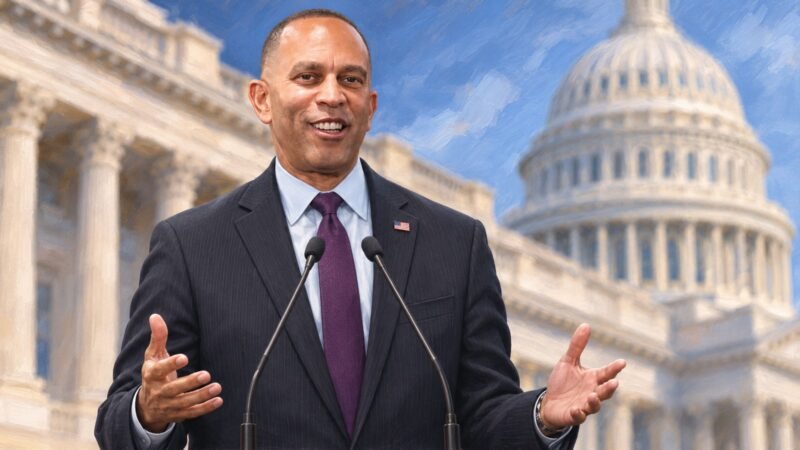
The election result gives Democrats incoming control of both chambers while leaving a Republican president in the White House. Reuters reported that House Democratic Leader Hakeem Jeffries identified affordability and accountability as priorities for the next majority.
Jeffries is expected to seek the speakership when the new House organizes. A separate Reuters leadership report said parties were expected to choose their leadership teams after lawmakers returned to Washington the following week.
The same report said Speaker Mike Johnson would not serve as House minority leader next year. That decision opened a Republican leadership contest, adding an internal party transition to the negotiations over how Congress would operate after the election.
In the Senate, Reuters reported that Chuck Schumer expected to retain his Democratic leadership role, although a potential challenge remained unresolved. Leadership expectations were therefore distinct from completed votes selecting the next congressional leaders.
Those changes do not transfer power on election night. Under the Constitution’s 20th Amendment, the new congressional terms begin at noon on January 3, 2027. Until then, the existing Congress remains in place.
What the Veto Warning Means
Trump and Democrats would still have to navigate the constitutional process for passing legislation. The Constitution’s bill-signing and veto provisions require legislation approved by both chambers to be presented to the president.
If the president rejects a bill and returns it with objections, Congress can reconsider it. Overriding that veto requires two-thirds support in each chamber, a higher threshold than an ordinary majority.
The veto concerns legislation. Impeachment follows a separate constitutional process: the House has the power to impeach, and the Senate conducts the trial. Conviction requires agreement from two-thirds of senators present.
Hourly Times’ explainer on congressional power and presidential removal describes those distinctions. An election victory, an investigation, impeachment and removal are separate events, each requiring its own steps.
Earlier Remarks Also Mixed Cooperation With Resistance
Trump’s Wednesday comments followed similar messages in interviews after the results. ABC News reported that he expressed openness to working with Democrats in a Politico interview, including considering an immigration agreement if he believed it would benefit the country.
ABC also reported that Trump emphasized vetoing Democratic legislation in a Fox News interview and shared an image of a red hat displaying the word VETO. Together, those remarks outlined both his stated openness to negotiations and his intention to resist bills he opposed.
For Trump and Democrats, the next confirmed institutional change is the start of the new congressional terms on January 3. Party leadership decisions will help determine who leads the negotiations when the incoming majorities take office.