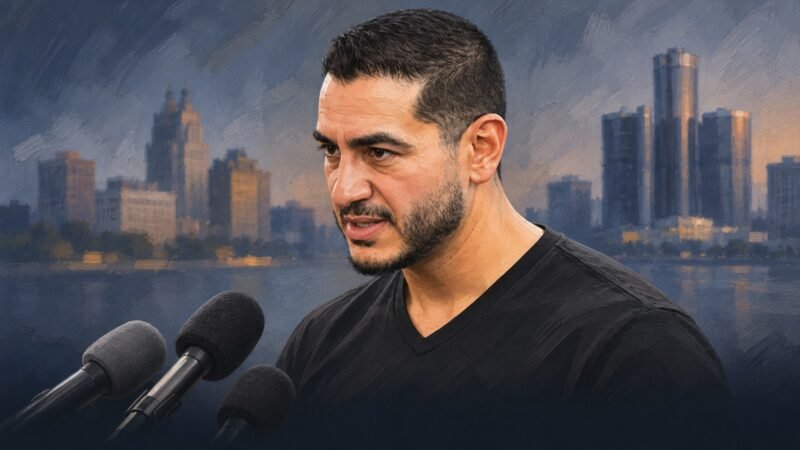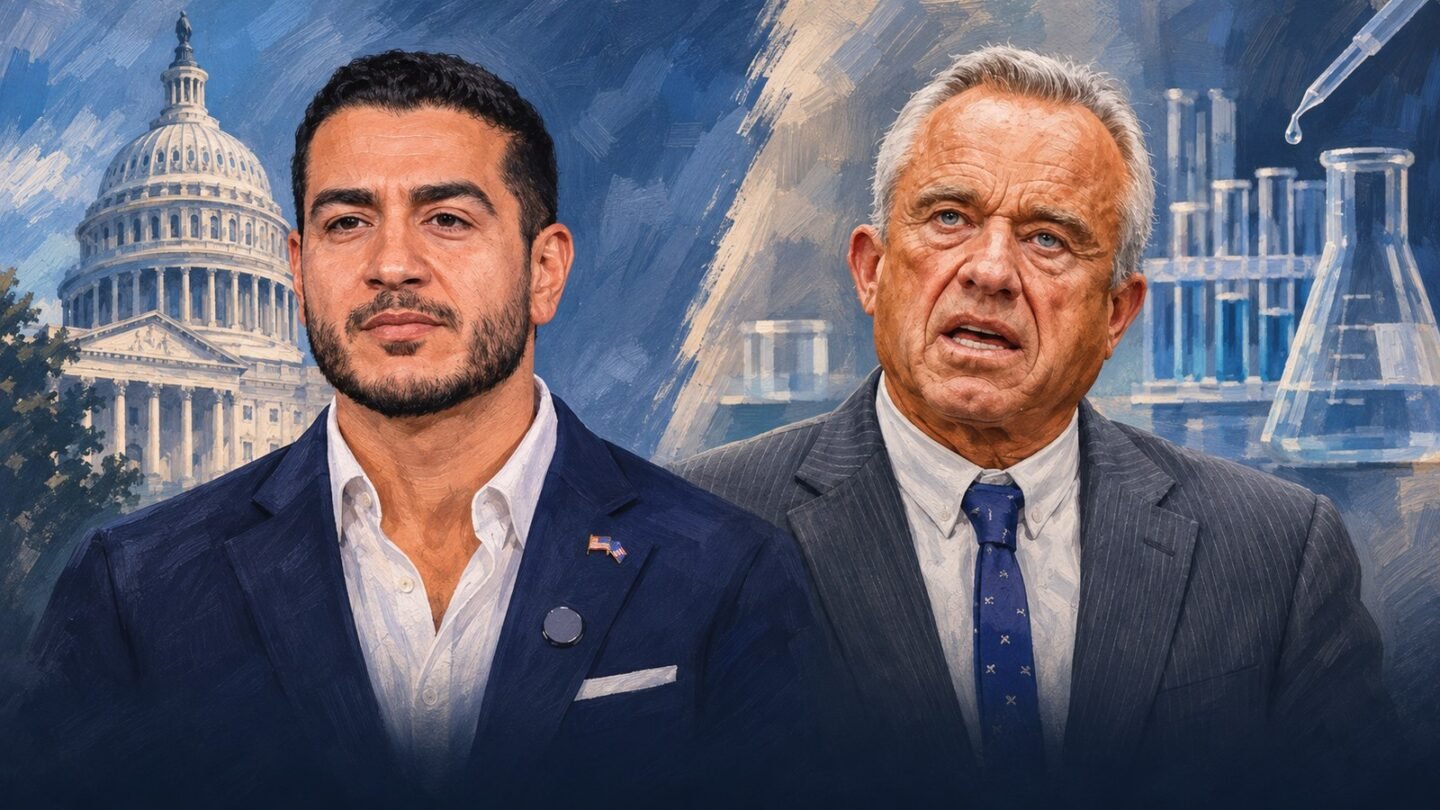
The El-Sayed investigation proposal would examine staffing cuts at federal health agencies and the response to foodborne illness, Michigan Sen.-elect Abdul El-Sayed said in a November 5 CNN interview. His comments focused on Health and Human Services Secretary Robert F. Kennedy Jr., the Food and Drug Administration and the Centers for Disease Control and Prevention.
El-Sayed argued that cuts weakened the government’s ability to respond to this summer’s Cyclospora infections. That is an allegation he wants examined, rather than a finding established by the case totals or an already completed congressional inquiry.
The Democrat defeated Republican Mike Rogers in the November 3 Senate election. His remarks describe intended oversight after taking office; they do not establish that he has already opened an official Senate investigation or scheduled a hearing with Kennedy.
What the El-Sayed investigation would examine
Reporting on his interview with CNN’s Kate Bolduan describes a proposed examination of decisions at the FDA and CDC, including how staffing changes affected food safety. El-Sayed said the purpose was accountability and solving problems, rather than retaliation.
The proposed review follows a summer in which public health officials investigated multiple clusters of cyclosporiasis, the intestinal infection caused by the Cyclospora parasite. One major outbreak was traced to iceberg lettuce processed by Taylor Farms de Mexico.
To assess El-Sayed’s argument, investigators would need evidence connecting particular staffing or funding decisions to specific delays or failures. The existence of cuts and a large outbreak does not, by itself, establish that relationship.
The National Case Total Covers More Than One Outbreak
The CDC’s October 23 seasonal surveillance update lists 20,996 laboratory-confirmed infections acquired in the United States. Those cases had symptom onset dates during May 1 through August 31, 2026, and were reported from 49 states and the District of Columbia.
That figure is not the number attributed exclusively to contaminated lettuce. The agency explicitly says the seasonal total includes cases linked to the lettuce outbreak and cases not linked to it.
In its separate September 11 final outbreak update, CDC reported 12,883 illnesses in 21 states associated with Taylor Farms de Mexico iceberg lettuce. It declared that outbreak over, while noting that additional earlier infections could still be reported.
Michigan’s week-41 disease surveillance report lists 15,592 reported cyclosporiasis cases for 2026. The state warns that its counts are not final. CDC also cautions that state totals can differ from federal figures because reporting criteria and case definitions differ.
What Changed in FoodNet
CDC’s FoodNet explanation says reporting for data collected from July 1, 2025, became optional for pathogens other than Salmonella and Shiga toxin-producing E. coli. Cyclospora was among the pathogens affected.
FoodNet is a specific surveillance collaboration involving federal agencies and 10 state health departments. Making reporting optional within that network is different from eliminating every system used to track Cyclospora nationally.
The same CDC page identifies the Nationally Notifiable Diseases Surveillance System as another source of Cyclospora surveillance. Any El-Sayed investigation would therefore need to distinguish changes to FoodNet from the performance of the broader reporting system.
Kennedy Disputed Criticism of the Response
On July 21, Kennedy said the outbreak was under control and rejected criticism that surveillance changes had undermined the response, The Independent reported. He characterized the FoodNet reductions as removing redundant surveillance and said outbreak tracing continued.
The newspaper also reported CDC officials’ position that the systems and processes used to track cyclosporiasis that season were unchanged. Those statements dispute El-Sayed’s assessment; they do not substitute for a detailed review of the decisions involved.
Separately, AP reporting documented Kennedy’s October 26 Michigan campaign remarks falsely claiming that Arabs do not produce science. That campaign dispute is background, rather than evidence that agency cuts caused infections.
Hourly Times has also covered scrutiny of Kennedy’s wider health policies. The next development to watch is a documented oversight request, committee action or hearing announcement turning the El-Sayed investigation proposal into a formal process.