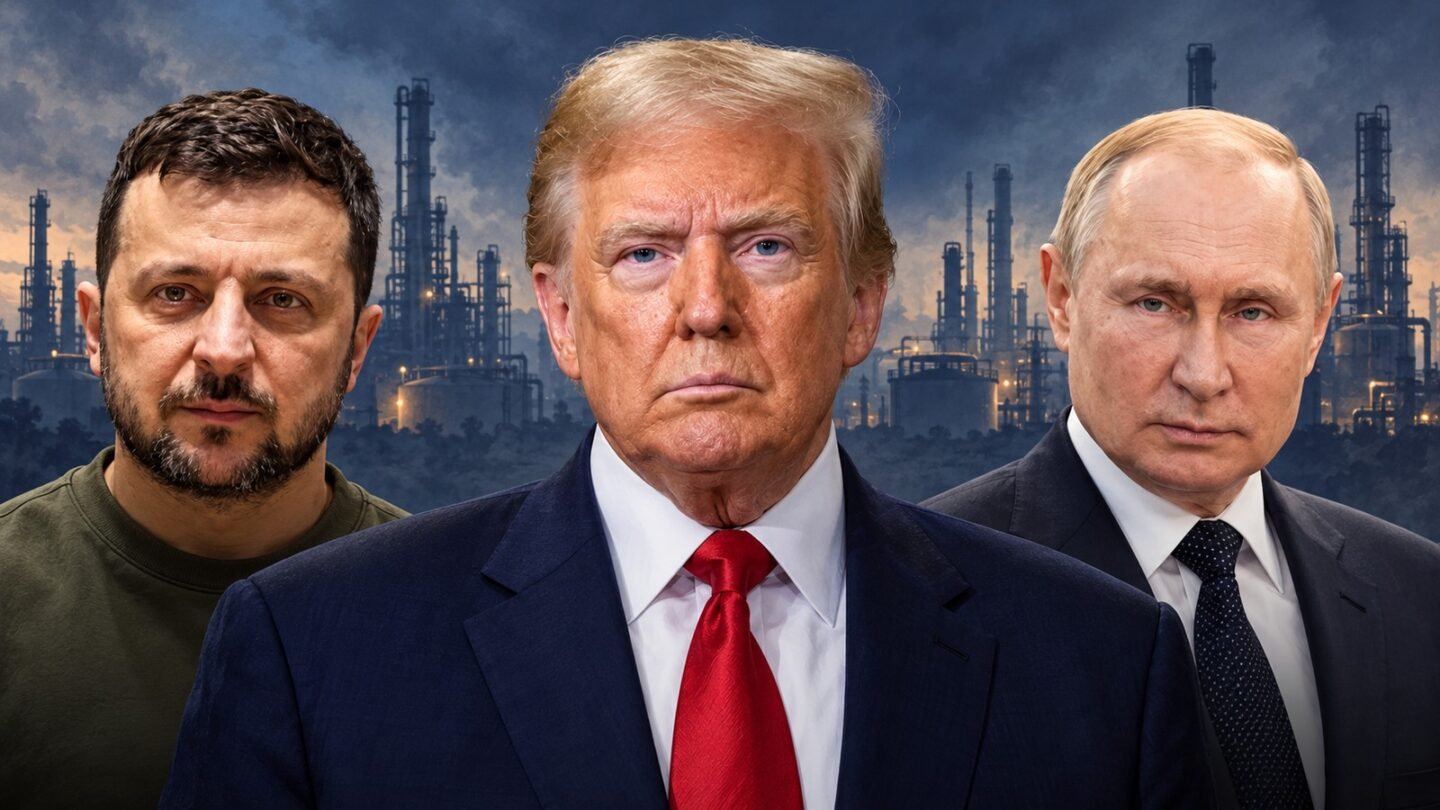
Trump Ukraine policy is facing renewed scrutiny after President Volodymyr Zelenskyy said American officials warned that American intelligence support could be cut unless Ukraine stopped striking Russian oil refineries. President Donald Trump, meanwhile, said the United States was continuing to share intelligence and wanted the war to end.
The dispute follows Trump’s call for Ukraine to replace Zelenskyy and his announcement of a Russian diesel agreement. Together, the developments have intensified questions about how Washington is using its influence over Kyiv while negotiating with Moscow.
Trump Ukraine policy dispute centers on intelligence
In an NPR interview published October 14, Zelenskyy said the warning had reached his military generals. His account describes pressure over future assistance; it does not establish that intelligence sharing has already ended.
The White House referred NPR to Trump’s October 13 comments that the United States was helping Ukraine and sharing intelligence. That response leaves an important distinction between a reported threat and an implemented cutoff.
Earlier, the Financial Times reported threats involving intelligence and the mechanism through which allies procure American weapons for Ukraine. Reuters carried that report on October 11 while explicitly saying it could not immediately verify it.
The later interview supplies Zelenskyy’s own account of the warning. It should still be attributed to him rather than presented as a publicly released American directive.
Diesel agreement deepens the disagreement
On October 10, Trump told reporters at the White House that Ukraine should get a new leader capable of making a deal. He criticized Zelenskyy after the Ukrainian president condemned Washington’s agreement to buy Russian diesel.
Trump presented additional Russian fuel supplies as a response to high prices. Zelenskyy argued that easing restrictions would help Moscow finance its war rather than deliver peace.
Ukraine’s foreign minister, Andrii Sybiha, defended Zelenskyy and said Ukrainians had the right to decide their leadership. Russian economic envoy Kirill Dmitriev welcomed Trump’s remarks about replacing the Ukrainian president.
Those reactions show why the dispute extends beyond fuel markets. Washington’s message about Ukraine’s leadership became part of an argument over sovereignty, negotiating leverage and the treatment of the country resisting Russia’s invasion.
Hourly Times has also examined the wider diesel-supply dispute involving European allies. That earlier coverage provides background on the fuel pressures surrounding the administration’s diplomacy, rather than confirmation of the later Russian agreement’s results.
“Never pressures Russia” overstates the record
Critics can question the balance of Trump Ukraine policy without claiming Washington has never acted against Russian interests. An official Treasury record provides a clear counterexample.
On October 22, 2025, the Trump administration announced sanctions against Rosneft and Lukoil, Russia’s two largest oil companies. Treasury said the measures responded to Moscow’s lack of commitment to peace and aimed to restrict revenue supporting its war.
The announcement also covered subsidiaries and explained restrictions on property and transactions involving designated entities. Treasury Secretary Scott Bessent called for an immediate ceasefire and said further action was possible.
That documented action does not settle whether today’s approach is effective, consistent or sufficiently demanding of Putin. It does establish that the absolute claim that Trump never pressures Russia leaves out relevant policy history.
Russian attacks test claims of progress
Russian missile and drone attacks continued damaging Ukrainian energy infrastructure on October 14, according to Reuters. The strikes followed Trump’s announcement that the two countries had agreed to stop attacks on energy facilities.
The continuing attacks make implementation essential to assessing any diplomatic announcement. A statement describing a truce should not be treated as proof that both sides have observed it.
The central questions for Trump Ukraine policy are therefore concrete: whether intelligence assistance continues, whether Russia stops attacking and whether fuel arrangements produce the benefits Washington promises.
Calling Trump the country’s “most cowardly” president is an opinion, not a verifiable historical finding. The evidence supports reporting the pressure on Ukraine, the administration’s stated peace objective and the unresolved results of its approach.