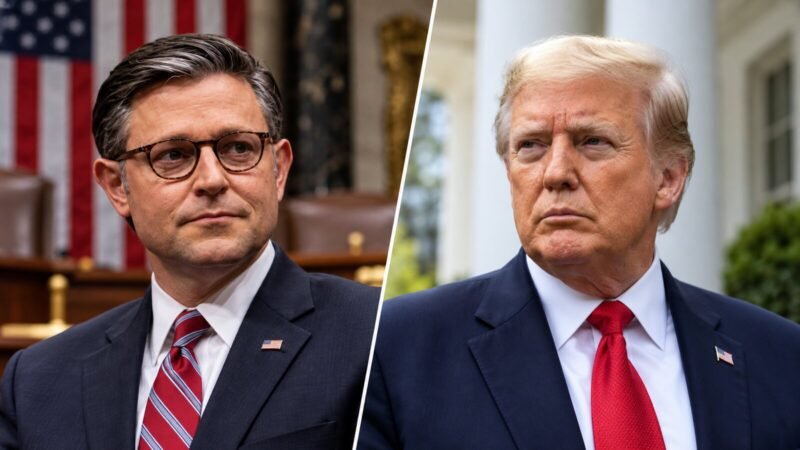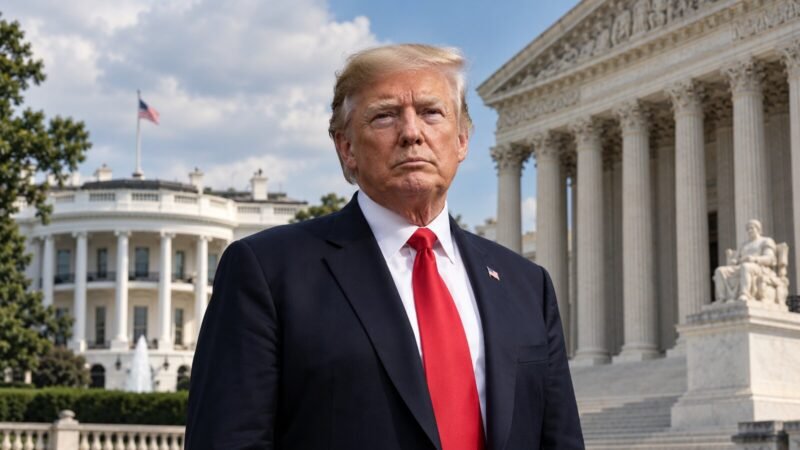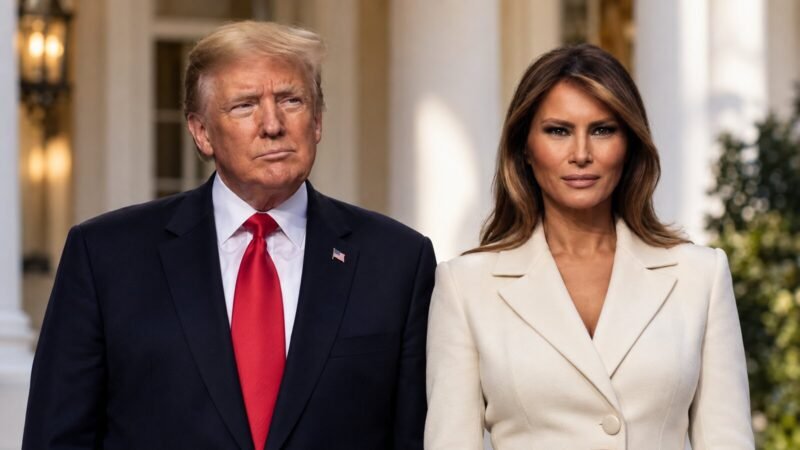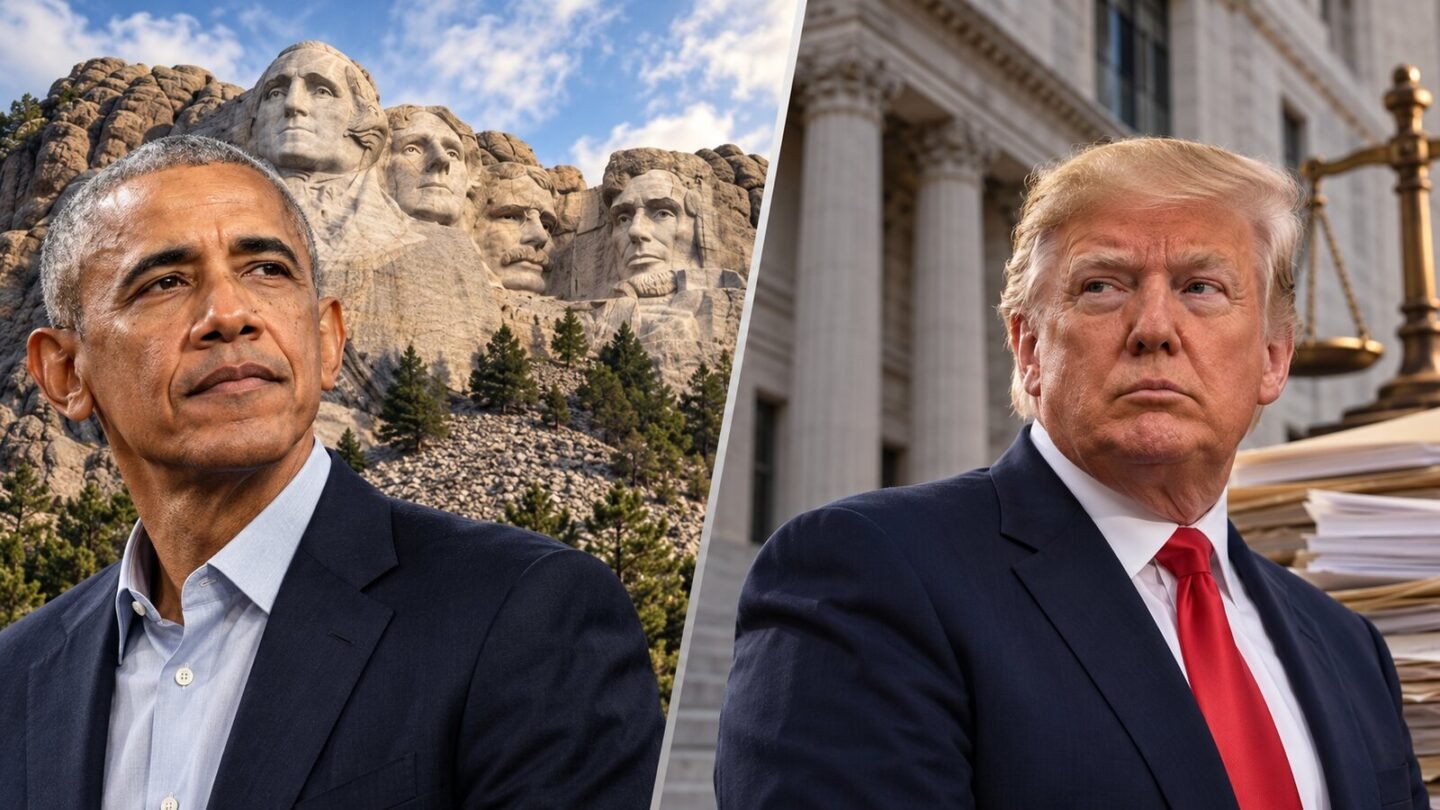
Obama and Trump represent two sharply different debates about presidential legacy, public honor and legal accountability. Barack Obama’s place in history is established, but adding him to Mount Rushmore is a matter of opinion. Donald Trump’s felony conviction is also established, while the prison question belongs to sentencing judgment rather than the verdict itself.
Why Obama and Trump Raise Two Different Questions
The Obama and Trump comparison may be politically powerful, but the two questions are not legally or historically equivalent. Mount Rushmore is a national memorial whose four carved figures were selected by sculptor Gutzon Borglum. A prison sentence, by contrast, can be imposed only by a court applying criminal law to a specific case.
Mount Rushmore currently depicts George Washington, Thomas Jefferson, Theodore Roosevelt and Abraham Lincoln. The National Park Service says Borglum chose them to represent major chapters in the nation’s development. Washington represented the country’s birth, Jefferson its growth, Lincoln its preservation, and Roosevelt its development.
That explanation describes Borglum’s original design; it does not create an objective test that later presidents must pass. Asking whether Obama belongs on the mountain is therefore a debate about symbolism, achievement and whose story the country chooses to honor.
The Case for Honoring Obama
Obama served as the 44th president from 2009 to 2017 and became the first Black president in United States history. That milestone carries exceptional significance in a country shaped by slavery, segregation and a long struggle for voting rights and equal citizenship.
Supporters of adding Obama to Mount Rushmore may see his election and two terms as a lasting sign of national change. They may also point to his administration’s record on health care, economic recovery, diplomacy and social policy.
Critics can reasonably answer that historical importance alone does not require adding a president to the monument. They may disagree with Obama’s policies, believe more time is needed to judge his record, or oppose changing Mount Rushmore at all. The memorial also sits in the Black Hills, a place sacred to the Lakota and other Indigenous peoples, which makes any proposal to alter it part of a larger and sensitive historical conversation.
There is no automatic process for earning a place on Mount Rushmore. It is best understood as a public argument over legacy, not a factual claim that can be proved or disproved.
What Trump’s Conviction Established
A New York jury found Trump guilty on May 30, 2024, on 34 counts of falsifying business records in the first degree. The case concerned records connected to reimbursements for a payment made before the 2016 election. Trump pleaded not guilty, denied wrongdoing and has continued challenging the conviction.
On January 10, 2025, Judge Juan Merchan imposed an unconditional discharge. That sentence left the judgment of guilt in place but imposed no jail term, probation or fine.
The court had authority to consider incarceration, but a possible sentence is not the same as a required one. Judges weigh the offense, the defendant, the law and the circumstances before choosing a sentence. Merchan’s written decision indicated that an unconditional discharge was the most workable way to preserve the judgment while allowing Trump to pursue appeals, especially as he prepared to return to the presidency.
A federal judge rejected another effort to move the case into federal court on August 28, 2026. That ruling left the state conviction intact at that point, although Trump’s legal challenges were continuing.
Should Trump Have Gone to Prison?
People can believe Trump’s status demanded a tougher penalty. Their argument is that equal justice should apply to powerful officeholders and that a felony conviction involving election-related concealment deserves a meaningful punishment.
Others can believe prison was unnecessary or inappropriate. They may emphasize that the offenses were nonviolent, that sentencing courts have discretion, that Trump had no prior criminal record before this case, or that imprisonment of a president-elect would have created extraordinary constitutional and practical problems.
Neither position changes the verdict. Saying Trump was convicted is a verified fact. Saying he deserved prison is an opinion about the proper sentence.
For Obama and Trump, the clearest approach is to separate record from judgment. Obama’s historic presidency does not by itself settle whether Mount Rushmore should be altered. Trump’s conviction does not by itself establish that incarceration was the only lawful or fair result.
The public can reach strong conclusions on both questions. A responsible debate should still begin with the same standard: honor what is documented, identify what remains contested and do not present political judgment as settled fact.