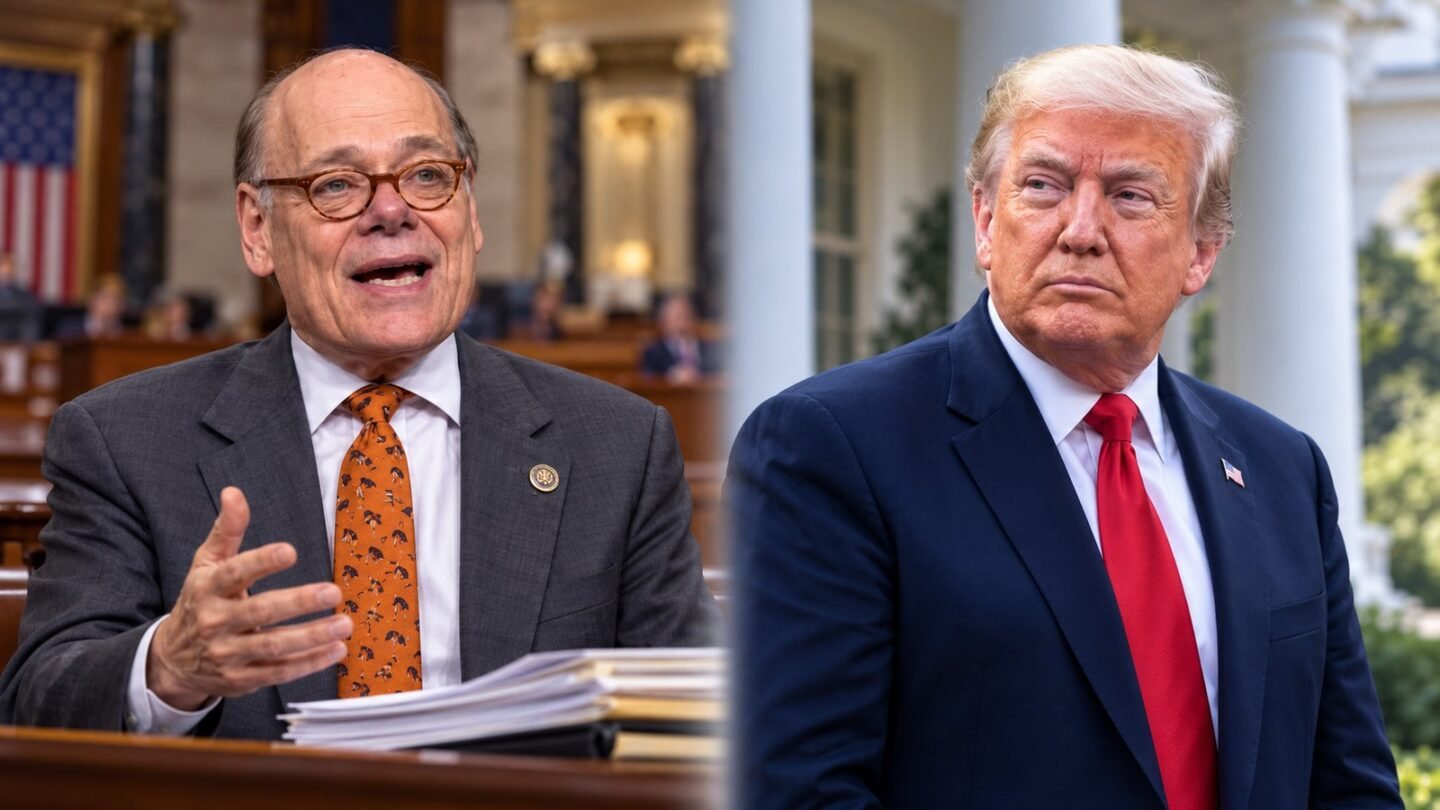
Rep. Steve Cohen’s 26 impeachment articles have put a wide range of accusations against President Donald Trump into a single congressional proposal. Filed on September 24, the measure asks lawmakers to consider conduct spanning foreign policy, immigration, federal spending and the use of presidential authority. It is a proposal by one House member, not a finding that the allegations are true.
Cohen, a Tennessee Democrat and senior member of the House Judiciary Committee, called Trump “the most impeachable President our country has ever endured.” He argued that Congress has a duty to check the executive branch. His description is a forceful political and constitutional judgment, and the House would have to assess the underlying evidence before deciding whether to act.
The immediate question for lawmakers is what deserves examination. Filing 26 articles places Cohen’s accusations on the record, but it does not require the House to adopt them or trigger a Senate trial.
What the 26 impeachment articles cover
Cohen’s list includes an allegation that Trump waged war against Iran without congressional approval. It also addresses military operations near Venezuela and the deployment of forces in American cities. Other articles concern immigration enforcement, alleged disregard of court orders and a birthright citizenship executive order.
Several focus on the operation of the federal government. Cohen alleges that the administration withheld money appropriated by Congress, dismantled established programs, imposed loyalty tests on federal workers and removed inspectors general without the required notice. The filing also challenges the use of emergency powers to impose tariffs.
The remaining subjects include accusations about political prosecutions, pardons, press access, pressure on television networks, law firms and universities, and personal benefit from the presidency. These are descriptions of Cohen’s claims. A full examination would need to look at the specific actions, the legal authority asserted for them and any evidence that supports or contradicts each article.
A long list of articles is not the same thing as a single proven case. Lawmakers could examine some allegations closely, reject others or seek more information before deciding whether any article meets the constitutional standard.
Cohen’s argument and the House’s response
In announcing the filing, Cohen said his own oath to defend the Constitution compelled him to introduce the resolution. He criticized the current Republican majority and expressed hope that the next Congress would more fully check the administration. His statement points to a difficult path for the proposal under current leadership.
A separate House vote earlier this month shows the challenge. On September 15, the chamber voted 232–147 to table an impeachment resolution introduced by Rep. Al Green of Texas; 47 members voted “present.” That resolution focused on immigration enforcement and due process. It was not Cohen’s measure, which was introduced nine days later.
The roll call also showed different views within the Democratic caucus. Eighteen Democrats joined 213 Republicans and one independent in voting to table Green’s resolution, while 46 Democrats voted “present” and 147 voted against tabling. Those votes do not establish how any member would vote on Cohen’s much broader filing.
What examining the charges would mean
Congress can scrutinize executive conduct through investigations, requests for records and hearings. The House would need to determine what evidence is available and which allegations, if any, merit formal action. Examining a claim is different from endorsing it.
Under the Constitution, the House has the sole power to impeach and can approve an article by a simple majority. The Senate then tries the approved article. Conviction requires the support of two-thirds of senators present, and conviction of a sitting president means removal from office.
The constitutional grounds are “Treason, Bribery, or other high Crimes and Misdemeanors.” That language leaves Congress to judge whether specific conduct reaches the required level. An alleged policy error or an unfavorable court ruling, by itself, does not automatically settle the impeachment question. Nor does an impeachment article serve as a criminal conviction.
Trump was impeached twice during his first term and acquitted in both Senate trials. Cohen’s new articles concern a different period and a different set of accusations. Whether Congress investigates them, votes on any article or takes no further action remains a matter for lawmakers. For readers evaluating the proposal, the key distinction is between a documented filing, disputed allegations and the separate constitutional votes needed to impeach and remove a president.