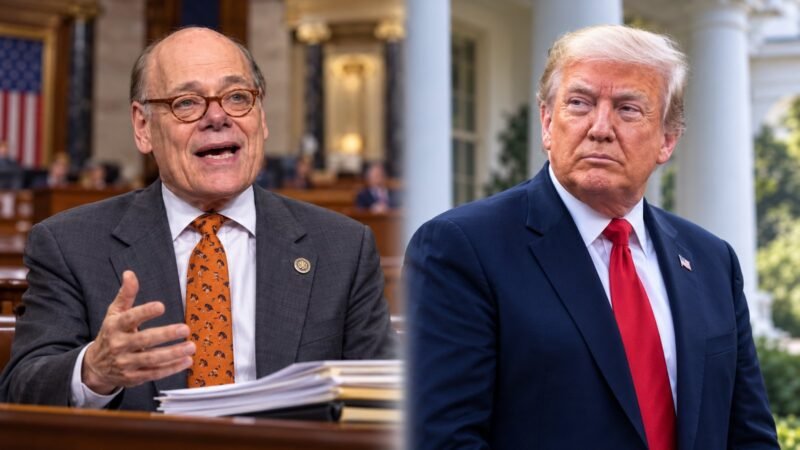
Mike Johnson leadership is becoming a campaign issue as the House speaker begins a six-week push to defend the Republican majority before the November 3 midterm elections. Axios reported on September 28 that Johnson plans to visit more than 40 districts in 22 states. The campaign comes amid arguments about his close working relationship with President Donald Trump and whether the House has provided enough independent oversight.
Johnson, a Louisiana Republican, remains speaker as Congress considers spending, defense, immigration, election policy and other issues. He has promoted the House Republican agenda and argued that his party is delivering on promises to voters. Democratic opponents say Republicans have been too willing to support Trump’s priorities without challenging the administration. Neither position, by itself, establishes a historical ranking of Johnson among House speakers.
Mike Johnson leadership: What the House has passed
House action provides a more concrete basis for assessing a speaker than an all-time label. In July 2026, the House passed a budget resolution intended to advance another Republican reconciliation package. It also passed a fiscal 2027 defense authorization bill and legislation addressing stock trading by members of Congress. Johnson pointed to those votes as evidence that Republicans were moving their agenda.
In September, the House passed the Ratepayer Protection Act by a 417-3 vote. The measure would require state utility regulators to consider whether large electricity users, including data centers, should bear additional infrastructure costs associated with their demand. Johnson also highlighted House passage of legislation concerning sanctions on Russia and Iran. A House vote, however, is not the same as a law taking effect; each measure’s later status must be checked separately.
These bills also show why judgments about a speaker are complicated. Moving legislation through the House requires scheduling votes and keeping a majority together. Outcomes also depend on the Senate, the president, courts and how a law works after enactment. Johnson can fairly be assessed on his decisions and influence, but he cannot be credited or blamed for every national result alone.
The dispute over oversight and Trump
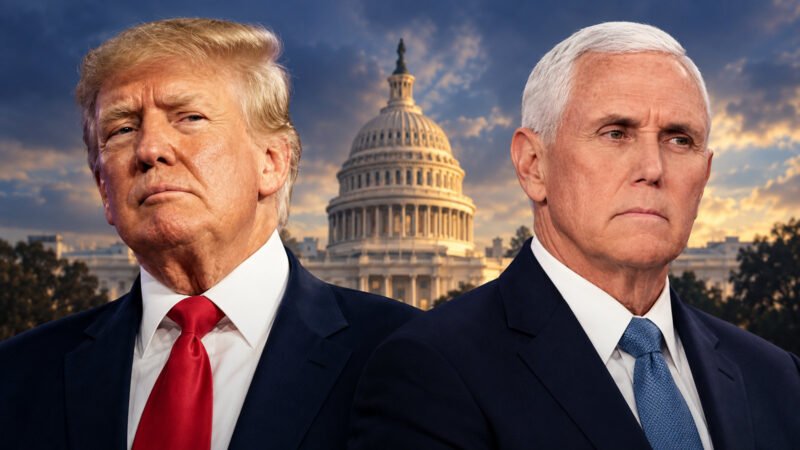
Johnson has made his partnership with Trump a defining feature of Republican leadership. Supporters see cooperation as the expected result of voters choosing a Republican president and a Republican House. Johnson’s office describes its priorities as securing the border, strengthening defense, cutting taxes and restraining spending.
House Democratic Leader Hakeem Jeffries has taken the opposite view. In an April interview published by his office, Jeffries argued that House Republicans were acting as a rubber stamp for Trump instead of serving as an independent branch of government. That is a political criticism. To evaluate it, readers can examine specific oversight hearings, subpoenas, investigations and votes rather than assume every agreement between Johnson and Trump proves a failure of oversight.
The balance of power may change after the midterms. Axios reported that Johnson’s planned campaign travel will include both Republican-held seats his party is defending and Democratic-held seats it hopes to win. Democrats, meanwhile, have discussed more investigations of the administration if they take control of a chamber. Which party controls the next House will affect its agenda and oversight powers.
What the Trump poll does—and does not—show
Trump’s standing is relevant to the political pressure on Johnson, but it is a separate measure. A Reuters/Ipsos survey conducted September 17-20 among 1,277 U.S. adults found 32% approved of Trump’s job performance and 66% disapproved. Among Republican respondents, 73% approved. Ipsos reported a margin of sampling error of plus or minus 2.8 percentage points for the full sample, with a larger margin for the Republican subgroup.
The 63% figure sometimes attached to that poll refers to respondents with an unfavorable view of Trump, a different question. It is not the job-disapproval number. The survey did not ask respondents to rank Johnson as speaker, and Trump’s approval rating cannot be used as a substitute for a judgment about Johnson’s performance.
Calling either leader the worst in American history is an opinion that requires a clear standard and comparisons across many administrations or speakerships. A reader may place particular weight on legislation, oversight, public trust, economic effects or respect for institutions. The available House votes and polling help inform those judgments, but they do not settle them. The next confirmed test for Johnson’s leadership is the November 3 election, when voters decide control of the House.