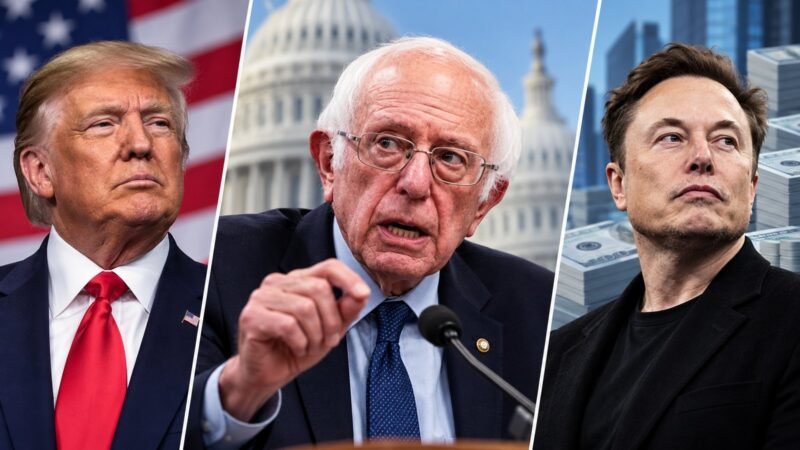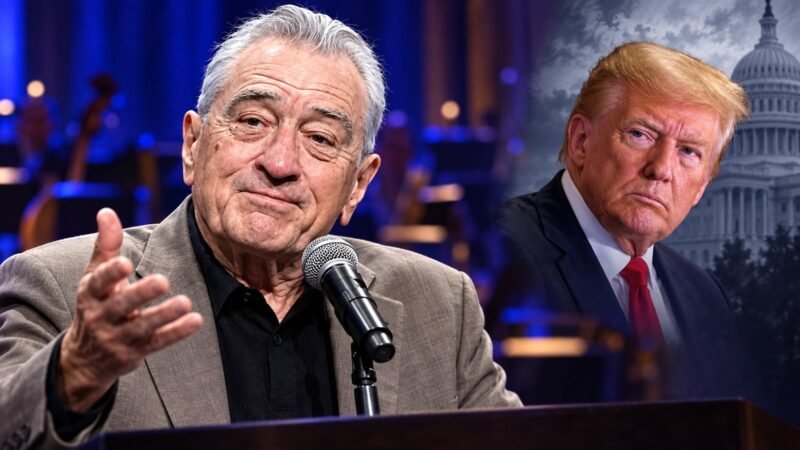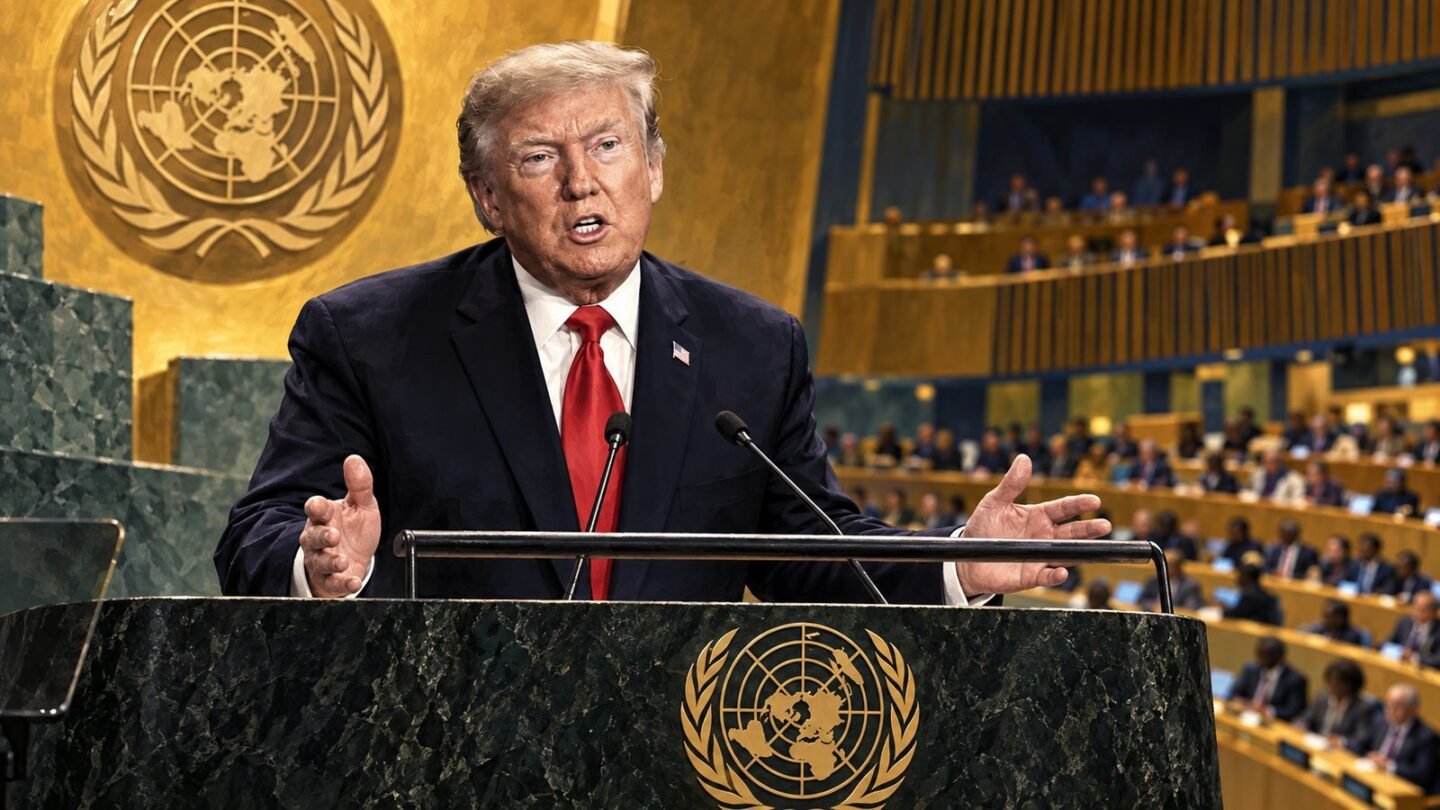
President Donald Trump’s September 22 speech to the United Nations General Assembly included sharp warnings about Iran, criticism of international institutions and a defense of his “America First” approach. The words and events can be checked. Whether the speech embarrassed America is a matter of opinion.
The supplied graphic says Trump embarrassed the country more than any of the “worst presidents” in the speaker’s lifetime. It does not identify that speaker or provide an original source for the quote. The line should be treated as an opinion in the graphic, not as a verified quotation from a named person.
What Trump said at the U.N.
The White House said Trump addressed the 81st General Assembly session on September 22. Reuters reported that his speech lasted about 37 minutes.
One of the most striking passages concerned Iran. Trump said he faced a choice between reaching a deal and “annihilat[ing] the Islamic Republic,” while arguing that his administration was preventing Iran from obtaining a nuclear weapon. Reuters reported that he called on other countries to isolate Iran economically and predicted a possible agreement after the U.S. midterm elections.
Trump also called Cuba a failed state and predicted it would fall. Reuters reported that Cuban delegates walked out as he spoke about the country. He compared drug cartels in the Western Hemisphere to ISIS and argued that the United States should use military power to confront threats in its region.
The president criticized the United Nations and the International Criminal Court, and rejected international control of artificial intelligence. The White House presented the speech as a forceful defense of American strength and sovereignty. Critics may see the threats and confrontational language as harmful to diplomacy and America’s standing abroad.
What the speech does—and does not—prove
A speech can be judged by its words, its policy arguments and its effects. The text confirms that Trump used forceful language and defended military action. It does not, by itself, show how other governments changed their policies, whether the speech advanced U.S. goals or how Americans viewed it.
“Embarrassed America” is not a factual claim that can be settled simply by replaying the address. People may judge the speech by different standards: whether it showed strength, helped U.S. interests, respected diplomatic norms, or reassured allies. Those assessments can differ even when people agree on what Trump said.
Nor does the speech alone establish whether the president’s approach made the country safer or more isolated. To answer that, it would be necessary to look at concrete results, such as negotiations, cooperation with allies, responses from other governments and changes in U.S. security.
A debate about presidential leadership
Supporters may view Trump’s remarks as a president speaking plainly about threats and refusing to let international institutions limit American action. Critics may see the same language as unnecessarily threatening or damaging to relationships with allies and international bodies.
Both are interpretations of what the speech means. The confirmed facts are that Trump spoke at the U.N. on September 22, made the reported remarks about Iran, Cuba, cartels and AI, and criticized international institutions. The claim that he embarrassed America more than other presidents is a personal comparison, not a conclusion established by those facts.
Readers can decide which standard matters most to them when a president speaks to world leaders: projecting strength, protecting diplomatic relationships, or finding a balance between the two.