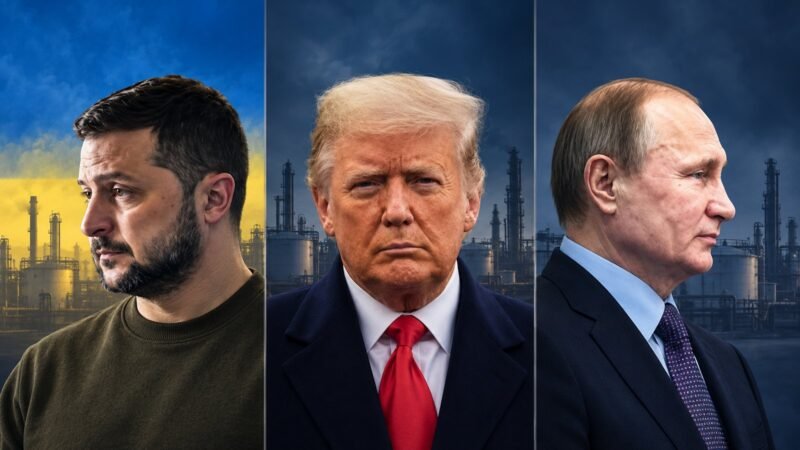
Trump and Zelenskyy clashed again over U.S. policy toward Russia after President Donald Trump signed an October 16 order waiving new sanctions and tariffs. Ukrainian President Volodymyr Zelenskyy criticized the decision on October 17, arguing that further relief would encourage Moscow rather than help end its invasion.
The disagreement follows Trump’s call for Ukraine to choose a new president and his decision to permit more Russian diesel trade. The verified record supports reporting on those disputes, while sweeping claims about what the entire world wants require separate evidence.
Trump and Zelenskyy Disagree Over Sanctions Relief
The White House’s October 16 executive order invokes waiver powers under the Lindsey O. Graham Sanctioning Russia and Iran Act of 2026. Trump said he had certified to Congress that the waivers served U.S. national interests.
The order concerns specified provisions of that law. It does not cancel every U.S. sanction against Russia, and it expressly preserves certain measures imposed under earlier executive orders.
Reuters reported that Zelenskyy said the waiver benefited Russia and could encourage additional aggression. That is the Ukrainian president’s assessment of its consequences, rather than proof that a particular future attack will result from the decision.
What Trump Said About Ukraine’s President
On October 10, Trump told reporters that Ukraine should choose a new president, Reuters reported. He blamed Ukrainian attacks on Russian refineries for harming diesel supplies and argued that a different Ukrainian leader could make a deal.
The remarks came after the Russian diesel agreement. Trump’s argument centers on increasing fuel availability and reducing prices; Ukraine’s objection centers on the money Moscow could receive while continuing its war.
The dispute continued during an interview aired October 15. Reuters reported that Trump criticized Ukraine’s renewed refinery attacks and linked them to elevated energy prices. His explanation of those prices should be attributed to him rather than presented as a complete, independently established account of their causes.
The Diesel Authorization Has Defined Limits
Treasury’s General License 135, dated October 9, authorizes specified transactions involving Russian-origin diesel through April 7, 2027. It covers sales, delivery, offloading and imports, including imports into the United States.
The license excludes debits to certain Russian government accounts at U.S. financial institutions. It establishes permission for transactions, rather than the quantity delivered, the revenue earned or the savings received by consumers.
Hourly Times’ earlier coverage explains Zelenskyy’s objections to the Russian diesel agreement and the distinction between that authorization and broader sanctions relief.
What Pew’s International Survey Actually Measured
Pew Research Center’s June 23 report found a median of 23% expressing confidence in Trump across 36 surveyed countries. Its research involved 42,151 adults interviewed from February 8 through May 13, 2026.
The question concerned confidence in Trump to do the right thing regarding world affairs. It did not ask whether the United States should remove him from office.
Pew used telephone, face-to-face and online interviews, depending on the country. Its published survey methodology explains the research approach.
A country median is a summary of national percentages, not a population-weighted vote by everyone outside America. The policy dispute is current; the survey provides earlier background about international attitudes toward American leadership. The interviews also preceded the October dispute between Trump and Zelenskyy, so they cannot establish international reactions to these specific decisions.
Earlier Sanctions Complicate the Claim of No Pressure
The assertion that Trump never pressures Russia overlooks documented actions by his administration. On October 22, 2025, Treasury announced sanctions against Russian oil companies Rosneft and Lukoil, explicitly linking the action to Moscow’s failure to commit seriously to peace.
That earlier action does not settle whether today’s policies apply enough pressure or treat Ukraine fairly. It does show why an absolute claim about never using pressure is inaccurate.
Calling a president an embarrassment remains an opinion. The documented disagreement between Trump and Zelenskyy concerns leadership, fuel trade, sanctions and the terms for ending the war; the surveyed confidence figure does not establish a worldwide demand for Trump’s removal.