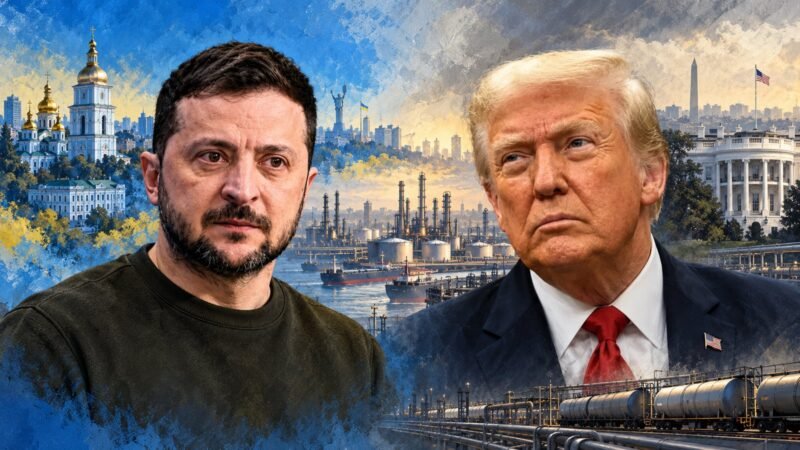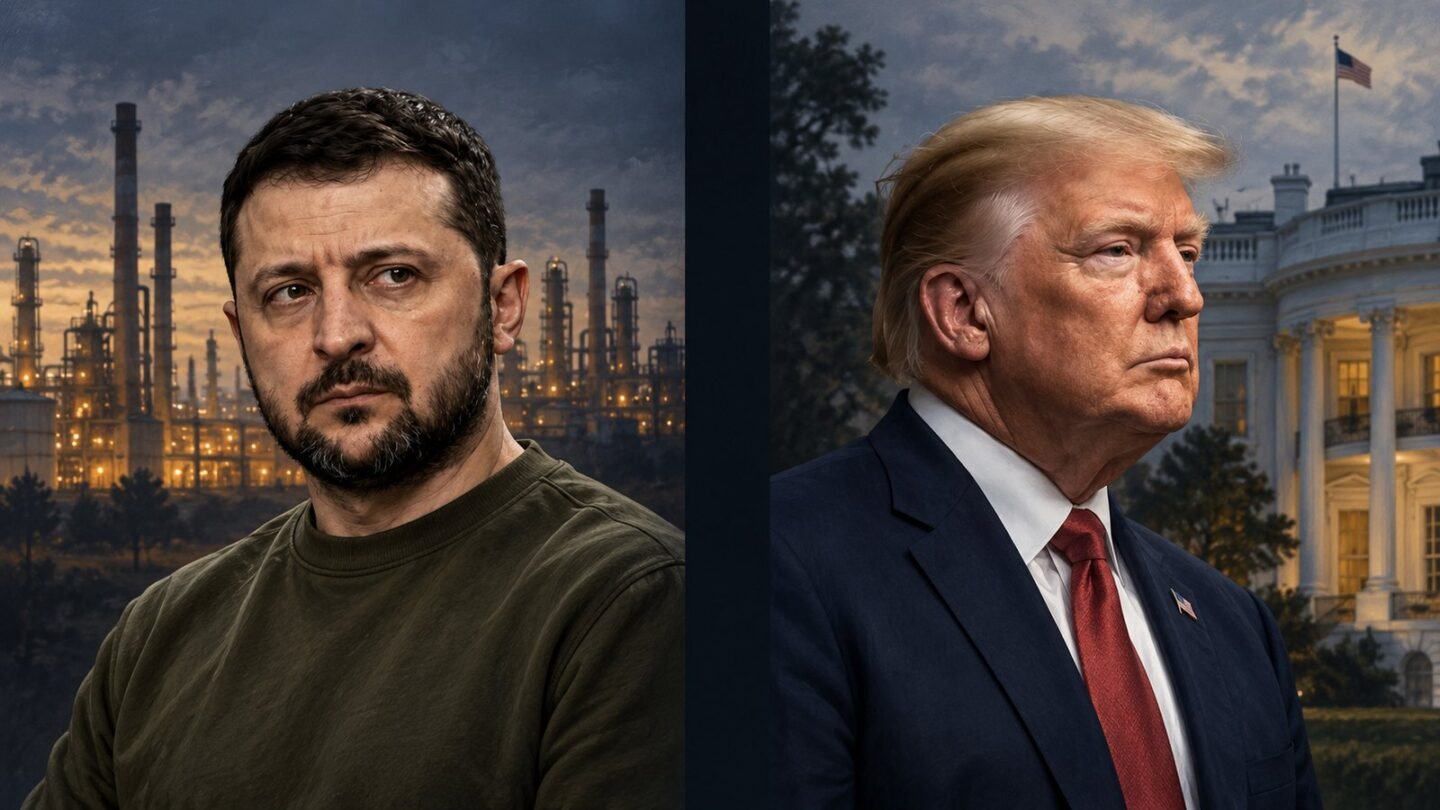
Ukraine resumed Russian refinery strikes on October 15 after President Volodymyr Zelenskyy said Kyiv would no longer observe a pause on energy targets while Russia continued attacking Ukrainian infrastructure. President Donald Trump condemned the renewed attacks, deepening a dispute over fuel supplies, wartime pressure and efforts to negotiate an energy ceasefire.
A drone attack caused a fire at a refinery in Russia’s Ryazan region, according to regional Governor Pavel Malkov. The facility belongs to Rosneft and supplies fuel to Moscow. Russian authorities said emergency crews responded while damage was being assessed.
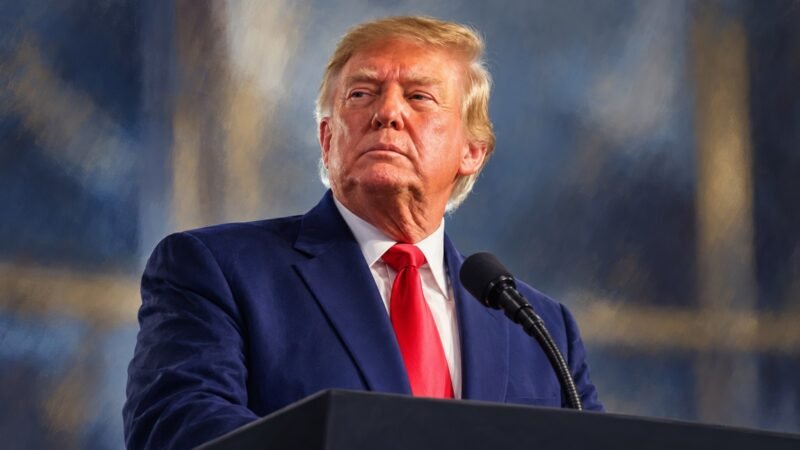
In an interview published by the Financial Times on October 15, Zelenskyy said, “We’re done,” referring to Ukraine’s restraint on refinery attacks. Trump called the renewed strikes a “disgrace” in a Newsmax interview broadcast that evening, according to Reuters.
Russian refinery strikes follow a disputed energy pause
Trump announced on October 11 that Russia and Ukraine had agreed to stop attacks on energy infrastructure. Kyiv briefly held back refinery strikes, but the announcement did not produce a clearly functioning ceasefire observed by both sides.
Zelenskyy publicly supported the idea of a reciprocal pause. In his October 12 address to the Warsaw Security Forum, he said Ukraine was prepared to respect an energy ceasefire if Russia did the same.
He accused Russia of striking a power plant in Kharkiv and other energy facilities after Trump’s announcement. His argument was that Ukrainian restraint needed to be matched by protection for Ukraine’s own electricity system and critical infrastructure.
The Kremlin disputed Kyiv’s account of its compliance. Spokesman Dmitry Peskov said Ukraine’s refinery attacks contradicted American peace efforts. Russia had also said the scope of the proposed ceasefire remained undefined.
Why Zelenskyy rejected continued restraint
Ukraine has used long-range attacks against Russian refineries as a response to Moscow’s bombardment. Zelenskyy’s position is that Russia cannot expect its energy facilities to be spared while continuing to damage Ukraine’s power supply.
At the Warsaw forum, he described electricity as Ukraine’s central concern and said the country depended on imported oil products. He called for American pressure to make Russia respect the proposed pause rather than expecting Ukraine alone to stop.
His October 15 comments marked the end of that brief restraint. RFE/RL reported that Ukraine had held off refinery attacks for three days before Zelenskyy declared the restriction over.
Trump focuses on diesel supplies and prices
Trump argued that Russian refinery strikes were keeping global energy prices elevated and that Ukraine had other targets available. His criticism centered on facilities producing diesel, which he said the United States and other countries needed.
That position accompanies his effort to increase Russian fuel supplies through sanctions relief. Ukraine has objected that economic concessions to Moscow weaken pressure on Russia while its invasion continues.
Fuel prices have several drivers. Reuters reported on October 17 that experts considered the Middle East war and disruption around the Strait of Hormuz the main cause of the broader energy-price surge. Trump’s emphasis on Ukrainian attacks should therefore be reported as his explanation, rather than a complete account of global market conditions.
Sanctions relief adds to the disagreement
The dispute widened after Trump issued a waiver on October 16 covering key Russia-related sanctions and tariffs due to take effect under recently enacted legislation. He said the action served American national interests.
On October 17, Zelenskyy criticized the waiver, saying it would encourage further Russian aggression. The disagreement now extends beyond individual refinery attacks to how Washington should use economic pressure during peace efforts.
Possible talks remain unconfirmed
Despite the confrontation over Russian refinery strikes, diplomatic contacts have continued. Zelenskyy said on October 17 that Ukrainian negotiators had spoken with American officials the previous day.
He raised the possibility of a meeting involving Ukraine, Russia and the United States around December’s G20 summit in Miami, while naming other possible locations. Neither Washington nor Moscow had confirmed such a meeting, he said. A venue and date for three-country talks remain unconfirmed.