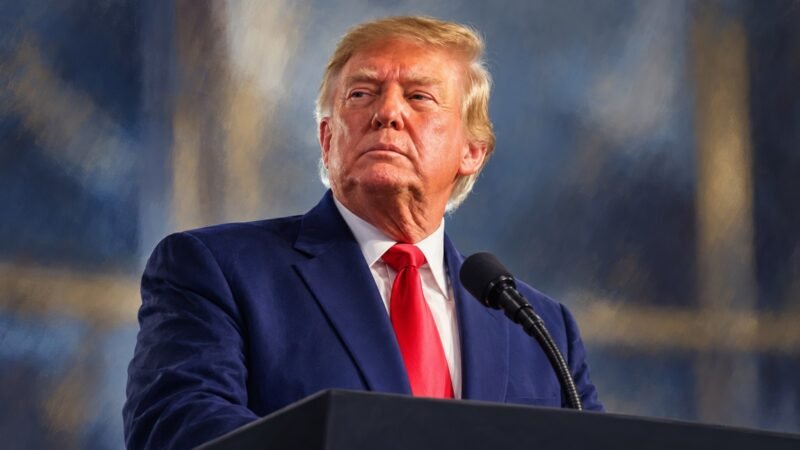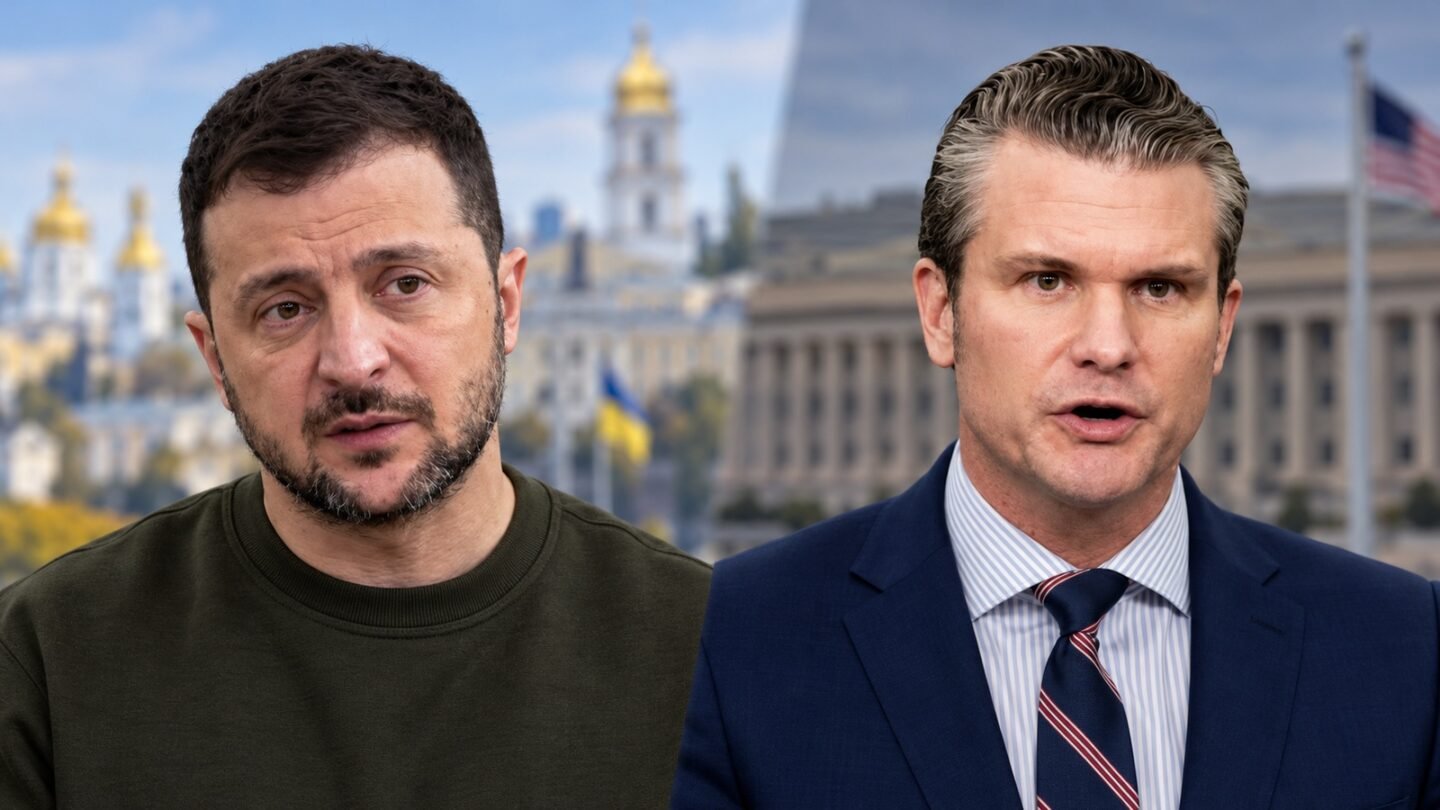
Zelenskyy wartime leadership is the subject of a political comparison portraying Ukraine’s president as more courageous than Donald Trump and Pete Hegseth. His decision to remain in Kyiv during Russia’s invasion is documented. The broader claim that the American leaders are “cowards” or “losers” is an opinion, rather than a finding established by those events.
The comparison raises a useful question about how leadership should be assessed. Public statements, decisions under pressure and the pursuit of security guarantees offer concrete evidence. A slogan cannot provide a complete assessment of three officials with different responsibilities.
Zelenskyy wartime leadership began with staying in Kyiv
In an address published early on February 25, 2022, after Russia’s full-scale invasion began, Zelenskyy rejected reports that he had left the capital. He said he remained with his people and was continuing to manage the government and speak with international leaders.
The official transcript of that address also records his account that Russian forces were targeting him and his family. That threat assessment was his government’s information, not an independently established finding in the transcript.
Later that morning, presidential adviser Mykhailo Podolyak told a briefing that Zelenskyy remained in Kyiv to demonstrate the endurance of Ukraine’s people. Together, the records document the administration’s public commitment to staying in the capital during the invasion’s opening phase.
Remaining in a threatened capital provides a concrete basis for describing that decision as courageous. It does not, by itself, establish that every subsequent military or political decision was correct. Personal resolve and the effectiveness of government policy are related questions, but they require different evidence.
Defense and diplomacy were both part of his response
The February 25 address also discussed negotiations. Zelenskyy said Ukraine was willing to talk about ending the invasion, a ceasefire and security guarantees. His early public position therefore combined resistance with a willingness to discuss a settlement.
This matters when evaluating the “warrior” description. Defending a country and seeking negotiations are not mutually exclusive. The relevant questions include what terms are proposed, whether commitments can be enforced and whether civilians will be protected.
The same distinction applies to praise for Zelenskyy wartime leadership. Recognizing his decision to remain does not remove the need to examine strategy, public accountability and the consequences of particular policies. Admiration should not substitute for scrutiny.
Trump and Hegseth must be assessed through their policies
On February 12, 2025, Hegseth told Ukraine’s partners that restoring its pre-2014 borders was unrealistic and that NATO membership was not a realistic outcome of a negotiated settlement, according to ITV News’s reporting of his remarks.
He also ruled out American troops participating in a security guarantee for Ukraine while reaffirming the U.S. commitment to NATO and its defense partnership with Europe. Those statements establish policy positions that can be debated; they do not establish a psychological judgment about courage.
A November 23, 2025 joint statement published by the White House said U.S. and Ukrainian representatives had discussed a peace proposal in Geneva. It said a future agreement must uphold Ukrainian sovereignty and provide a sustainable peace.
That document records the stated diplomatic objective at the time. It does not demonstrate that a durable settlement was achieved or settle whether later decisions advanced that objective.
The relationship has since faced renewed criticism. Reuters reported on October 14, 2026, that Zelenskyy described Trump’s apparent alignment away from Ukraine as painful. Asked about feeling betrayed, he answered affirmatively while saying the situation was more complicated than his emotions. These are Zelenskyy’s assessments of the relationship.
A fair comparison needs a clear standard
An assessment of Zelenskyy wartime leadership can reasonably consider personal risk, continuity of government, diplomacy and protection of sovereignty. An assessment of American leadership should examine its own decisions, commitments and results.
The supplied post offers a political verdict without defining a common measure. The documented record supports recognition of Zelenskyy’s resolve in Kyiv and examination of disagreements over Ukraine policy. It does not turn insults about Trump or Hegseth into verified facts.