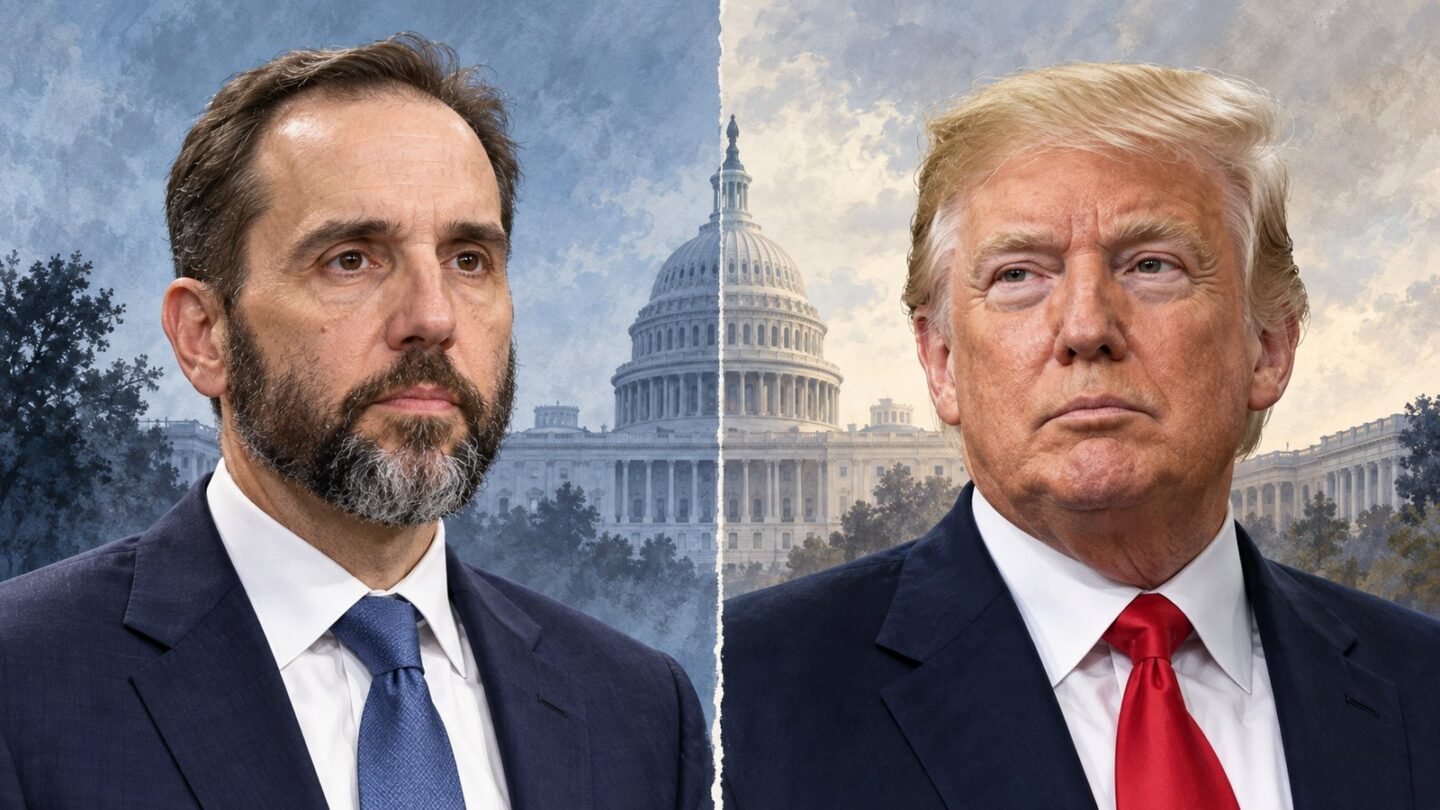
Former special counsel Jack Smith defended his investigations of President Donald Trump at a September 29 Senate hearing, rejecting allegations of partisan prosecution and saying threats would not silence him. The confrontation comes before the Midterm Elections 2026, when voters will decide control of Congress.
Smith appeared before the Senate Judiciary Committee in Washington to answer questions about the federal election-interference and classified-documents prosecutions. Both cases against Trump ended without a trial, but senators remain sharply divided over the investigations and the treatment of those who conducted them.
Smith stands by the Trump investigations
In his written Senate testimony, Smith said his charging decisions followed the evidence, the law and Justice Department policies. He maintained that he would make the same prosecution decision on the same facts regardless of a former president’s party.
Smith also said he believed his investigation had developed evidence establishing criminal activity beyond a reasonable doubt. That was the former prosecutor’s assessment of the evidence, not a verdict delivered by a jury.
I will not be silenced by the continued threats of prosecution from the President or others.
Jack Smith, written Senate Judiciary Committee testimony, September 29, 2026
His statement criticized what he described as pressure on public servants and attacks on the prosecutors, FBI agents and support staff who worked on his team. Reuters independently reported his warning and the Republican objections during the hearing.
Republicans challenge the scope of the inquiry
Committee Chairman Chuck Grassley argued that Smith’s investigation improperly targeted Republican officials and organizations. His opening statement raised concerns about lawmakers’ records, nondisclosure orders and constitutional protections for legislative activity.
Grassley’s accusations are the committee chairman’s position. The hearing’s accusatory title does not itself establish that Smith broke the law. Smith rejected the claim that political affiliation drove his work.
Democratic Senator Dick Durbin defended the investigation while also acknowledging that members had legitimate questions about access to their records. He asked Smith to explain what information his office obtained and why it was relevant.
According to the committee’s account of that exchange, Smith said his office consulted the Justice Department’s Public Integrity Section before seeking congressional toll records. He argued that the records helped corroborate contacts involving Trump and his associates during the January 6 certification proceedings.
Phone records, messages and the limits of the evidence
Smith distinguished telephone toll records from wiretaps. Toll records identify information about calls, rather than recording the conversations themselves. Durbin’s published account says Smith denied initiating wiretaps involving members of Congress.
That explanation should not be stretched into a claim that investigators never reviewed message content from any source. Reuters separately reported the dispute over texts involving lawmakers that appeared in material obtained from White House aides.
Another exchange concerned Senator Eric Schmitt’s suggestion that Smith attended an Atlanta Hawks basketball game. AP reported that Smith clarified he had attended an Iowa Hawkeyes women’s game at the University of Maryland. The reported mix-up did not establish the alleged Atlanta connection.
These disputes concern different investigative steps. Evaluating each requires identifying the record, how it was obtained, the legal authority invoked and the relevance claimed, rather than treating every form of communications evidence as surveillance of call content.
Dismissed prosecutions are not criminal verdicts
The election case ended after Trump won the 2024 election, with prosecutors citing the Justice Department’s position against prosecuting a sitting president. That longstanding legal position concerns presidential duties and prosecution while in office; it is not a finding about whether the alleged conduct occurred.
The classified-documents case had a separate procedural history. Judge Aileen Cannon dismissed it in 2024 after concluding Smith’s appointment was unlawful. AP’s February 2026 reporting also documented her order barring release of the related report.
Hourly Times’ coverage of January 6 responsibility and pardons provides additional background on the distinction between investigative findings and court judgments.
The oversight stakes in Midterm Elections 2026
The institutional connection to the Midterm Elections 2026 is congressional oversight. The Congressional Research Service’s oversight manual explains that investigations and subpoena powers operate under chamber and committee rules, with minority members generally lacking the same compulsory authority as an authorized committee investigation.
Democrats and Republicans have presented competing accounts of the Smith investigations. The Midterm Elections 2026 can change committee leadership and priorities, but they cannot substitute for evidence, override court orders or turn a prosecutor’s testimony into a conviction.
A possible Blue Wave remains an electoral scenario. Vote Blue No Matter Who is a partisan slogan, not a legal assessment of either Smith or Trump. Neither resolves the factual and procedural disputes raised at the hearing.
The next confirmed electoral milestone is November 3. Until then, coverage of the Midterm Elections 2026 should distinguish congressional scrutiny, prosecutorial allegations and judicial findings, while checking any new filings or announcements before declaring a change in either man’s legal status.