The Congress funding deadline has moved beyond the Midterm Elections 2026, but the temporary deal leaves the central budget choices unfinished. President Donald Trump signed the measure on September 2, 2026, providing continuing funding through December 11 and giving lawmakers time to negotiate after voters choose the next Congress.
That distinction matters as fiscal year 2027 begins. Avoiding an October funding lapse is a concrete governing achievement. Deciding how much Washington should spend, which programs should receive priority and how tightly Congress should constrain executive discretion remains a separate task.
The December talks will involve the current Congress. Election results could change the political incentives, but they will not immediately replace the lawmakers negotiating the bills.
What the Congress funding deadline actually covers
The White House signing notice identifies H.R. 6500 as the Continuing Appropriations and Extensions Act, 2027. The enacted measure is Public Law 119-103. Reuters reported the signing on September 3; the event itself occurred the previous day.
Its continuing resolution generally supports covered operations using rates based on fiscal year 2026 appropriations, with specified exceptions. It is a bridge into the new fiscal year, rather than a completed set of annual funding decisions.
The Congressional Research Service reported that none of the 12 regular fiscal year 2027 appropriations bills had become law when Trump signed the stopgap. That is a statement about the September signing, not an assertion that every bill’s legislative status has remained unchanged since then.
Under the enacted funding law, applicable full-year appropriations can replace the temporary authority before December 11. For activities still dependent on the continuing resolution, Congress must provide replacement funding to avoid a gap beginning December 12.
Readers should therefore distinguish the deadline from a prediction. The law establishes when this temporary funding ends; it does not establish that a shutdown will happen.
The votes complicate both parties’ campaign claims
The House approved the final measure on September 1 by 370 votes to 48. The official clerk’s record shows 193 Republicans, 176 Democrats and one independent voting yes. Nineteen Republicans and 29 Democrats voted no.
The Senate passed it on August 8 by 90 votes to six. Senate Democratic Leader Chuck Schumer voted yes. Those records establish substantial participation from both parties, alongside dissent within each.
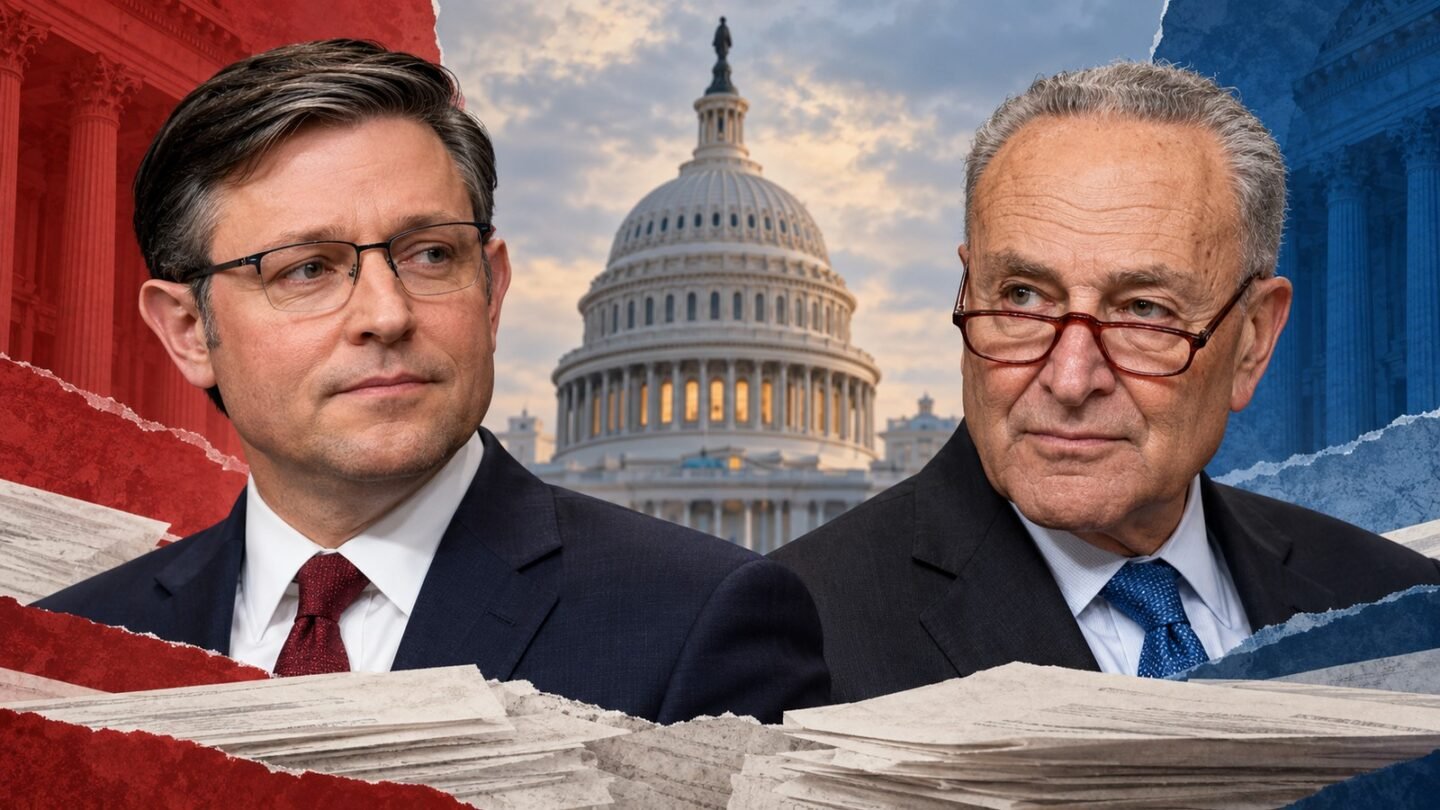
House Speaker Mike Johnson credited Republican leadership with preventing a shutdown and said the appropriations process would continue after the election. His September 1 remarks also blamed Democrats for earlier shutdowns. That partisan account should not obscure the Democratic votes supporting this particular agreement.
Republicans can reasonably cite the stopgap as evidence that they helped keep government operating. Their governing record also invites a practical question: why did the annual appropriations process still require temporary funding when the law was signed?
Democrats face a corresponding test. Having helped pass the bridge, they need to explain the permanent funding choices they want and the compromises they would accept. Supporting continuity does not demonstrate agreement with every provision or with the administration’s broader budget agenda.
Democratic priorities extend beyond keeping agencies open
Schumer’s August 8 statement supported a bipartisan budget focused on affordability and protecting federal grants for community projects. Those are negotiating priorities; his statement did not announce a completed agreement on future spending levels.
Senator Patty Murray, the senior Democrat on the Senate Appropriations Committee, identified more specific objectives when the compromise was released. She sought stronger nondefense funding, continued infrastructure investment and protections against executive withholding of money Congress had approved.
A concrete provision illustrates the difference between a temporary concession and a lasting settlement. Section 157 prohibits issuing or finalizing the administration’s proposed overhaul of federal grant rules, or a substantially similar rule, through December 11. Murray wants to stop that proposal permanently.
That creates a defined issue for subsequent negotiations: whether the temporary restriction should expire, continue or be replaced with another policy. The provision does not settle every dispute over presidential control of appropriated money.
The Republican position also deserves precision. Senate Appropriations Chair Susan Collins described the compromise as bipartisan, emphasizing continuity and necessary program adjustments. An August 3 administration policy statement supported the Senate measure as a way to prevent disruption while full-year appropriations work continued.
For Democrats, the strongest accountability argument connects the budget debate to specific services and enforceable legislative language. For Republicans, defending the bridge is easier than demonstrating that the remaining annual choices have been resolved.
Temporary exceptions reveal the practical stakes
The law includes targeted exceptions, commonly called anomalies, to its general funding approach. Collins highlighted adjustments for the Special Supplemental Nutrition Program for Women, Infants, and Children, national security programs and the Disaster Relief Fund.
Murray emphasized provisions supporting housing programs and nutrition assistance for low-income seniors. These examples show why continuing existing funding can require adjustments: maintaining a service is not always as simple as repeating last year’s number.
Neither party should turn those provisions into a claim that all affected households are guaranteed unchanged benefits or that every funding request was approved. Program rules, agency decisions and the eventual appropriations legislation still matter.
Voters can ask candidates what they would prioritize in the final bills and how they would fund those choices. A useful answer identifies a program, a proposed allocation or a legislative restriction. A general promise to protect families offers much less information about the tradeoffs ahead.
Midterm Elections 2026 change incentives before they change Congress
New congressional terms begin January 3, 2027, under the Constitution’s 20th Amendment. December negotiations therefore fall within the current Congress, including members whose successors may already have been elected.
An election loss could make a party prefer settling spending before power changes hands. A gain could encourage it to seek another extension and negotiate later. Those are possible bargaining incentives, not confirmed plans by Johnson, Schumer or Trump.
In Democratic organizing, a potential Blue Wave describes an ambition for electoral gains, not a verified outcome or an automatic December majority. Vote Blue No Matter Who is a Democratic campaign slogan; it supplies no evidence about how individual lawmakers will vote on funding.
The next scheduled expiration under this law is December 11 for funding still governed by the continuing resolution. The meaningful developments to watch are actual bill text, funding allocations, executive-authority restrictions and recorded votes. Those will show whether lawmakers use the extra time to reach an annual agreement or ask for another temporary extension.