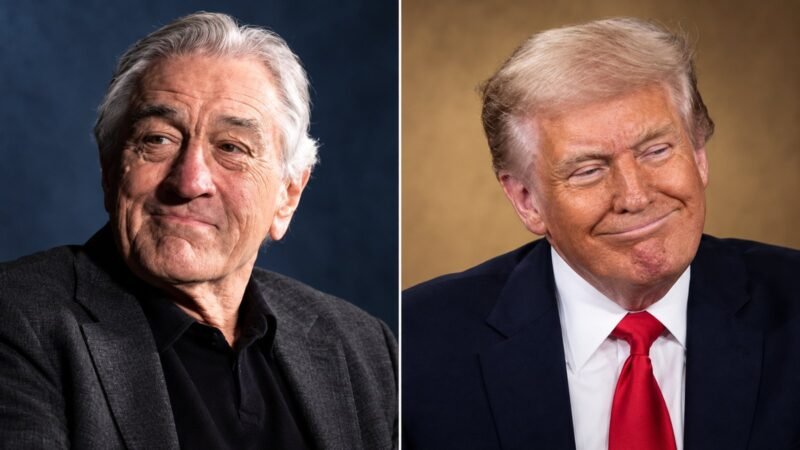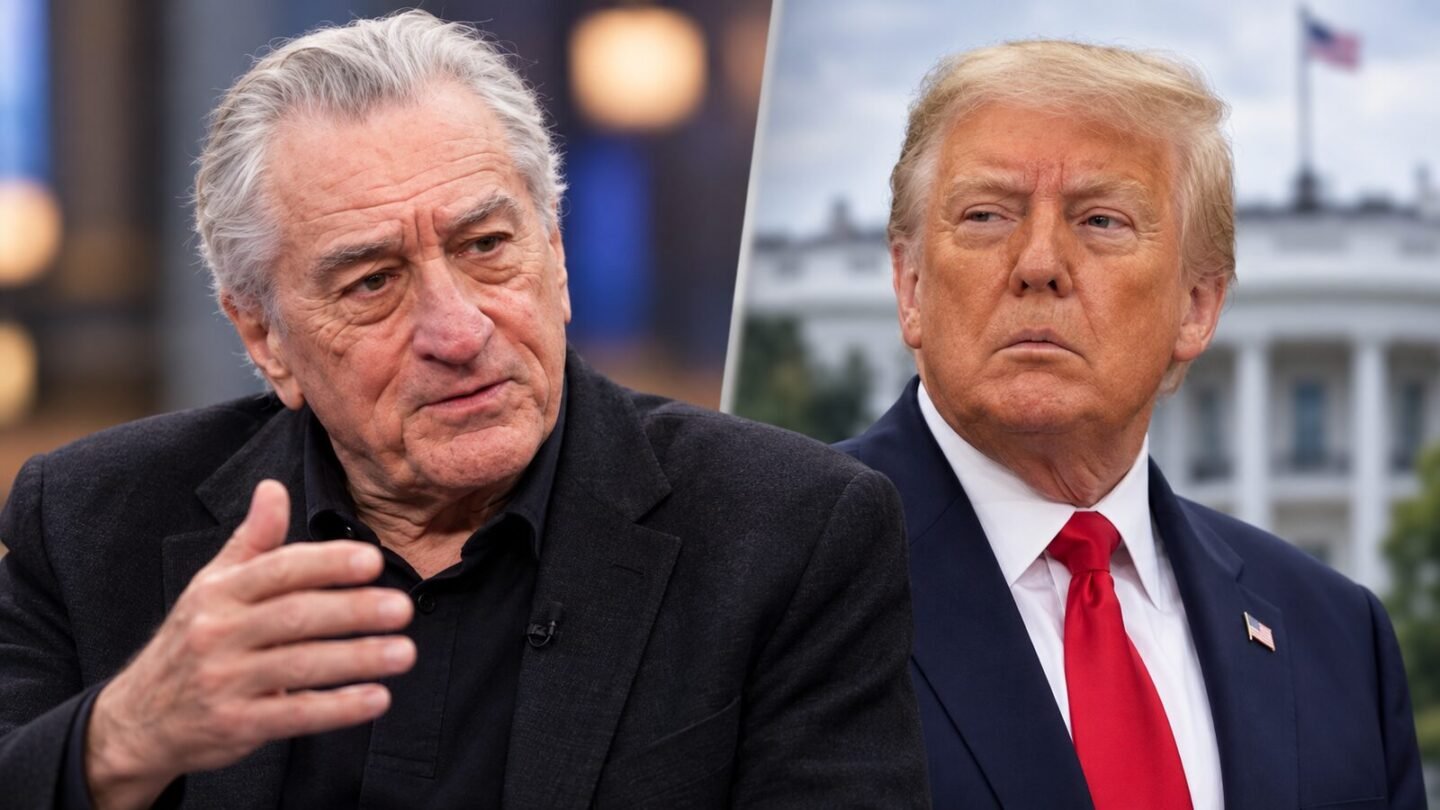
Robert De Niro criticizes Trump in an emotional interview released February 23, 2026, urging Americans to “resist” the president and protect the country. Speaking with Nicolle Wallace on The Best People podcast, the Oscar-winning actor said he believes President Donald Trump is damaging the United States and warned that public opposition will require sustained civic participation.
“The story is our country, and Trump is destroying it,” De Niro said during the conversation. He repeatedly called on Americans to resist, arguing that change would not happen automatically and that citizens needed to defend the country’s institutions.
De Niro also predicted that Trump would not willingly leave office when his second term ends. That statement is De Niro’s political opinion, not an established fact. The interview did not provide evidence proving that Trump will refuse to leave, and the Constitution limits how many times a person may be elected president.
Why Robert De Niro Criticizes Trump
De Niro has publicly opposed Trump for years, but the Wallace interview brought several of his concerns together. He described Trump as an enemy of the country, criticized his leadership and urged Americans to unite despite their political differences.
The actor became emotional while discussing the importance of bringing people together. He argued that division creates a “no-win situation” and said Americans had a responsibility to protect the country. His appeal to “resist, resist, resist” referred to continued public opposition and protest rather than waiting for political conditions to change on their own.
Reports about the interview described De Niro calling for people to organize and demonstrate. Wallace specifically referred to peaceful organization during their discussion. Nothing in the verified interview coverage establishes that De Niro called for violence or unlawful action.
Concern About Trump Leaving Office
One of De Niro’s strongest claims came when Wallace suggested Trump would be gone after completing his second term. De Niro replied that Trump would “never leave” voluntarily and said Americans would have to make him leave through public action.
He connected that concern to Trump’s comments about Republicans taking greater control of voting and “nationalizing” elections. Trump had said Republicans should take over voting in multiple places, a proposal that generated criticism and constitutional questions because election administration is primarily handled by states under rules shaped by state and federal law.
De Niro’s prediction should still be separated from the legal framework. The 22nd Amendment says no person may be elected president more than twice. It does not by itself prove what any individual will attempt, but it establishes the constitutional limit governing another election to the presidency.
At the time of De Niro’s interview, there was no official finding that Trump intended to remain in office unlawfully after his term. Readers should therefore understand the actor’s statement as a warning about what he fears, not confirmation of a future event.
Trump Responds to De Niro
Trump answered De Niro’s criticism after the interview and a separate appearance by the actor at a Democratic-led event responding to the State of the Union. In a Truth Social post, Trump called De Niro “sick and demented” and attacked his intelligence. He also characterized some of the actor’s statements as criminal without identifying a specific criminal act or charge.
The response continued a long-running public feud between the two men. The February exchange in which Robert De Niro criticizes Trump followed years of the actor condemning Trump’s character and policies, while Trump answered with personal criticism of De Niro. Their exchange represents political advocacy and personal opinion rather than an official legal dispute.
The inclusion of Trump’s response is important because it gives readers the reaction of the person criticized. However, Trump’s insults do not resolve the factual question raised by De Niro’s prediction about leaving office, just as De Niro’s warning does not establish that the prediction will occur.
What “Resistance” Can Mean
In the American political system, opposition to an administration can take many lawful forms. Citizens may vote, peacefully protest, contact elected representatives, attend public meetings, support advocacy organizations or challenge government action through the courts.
Robert De Niro criticizes Trump as a private citizen and public figure, not as an elected official or constitutional authority. His fame gives his words a large audience, but it does not turn his political judgments into verified conclusions.
The interview is significant because it shows the intensity of opposition to Trump among some cultural figures and because it produced a direct response from the president. De Niro’s call for resistance and his prediction that Trump may not leave office should remain clearly attributed to him as opinion. The constitutional rules, election results and official actions will determine what happens next.