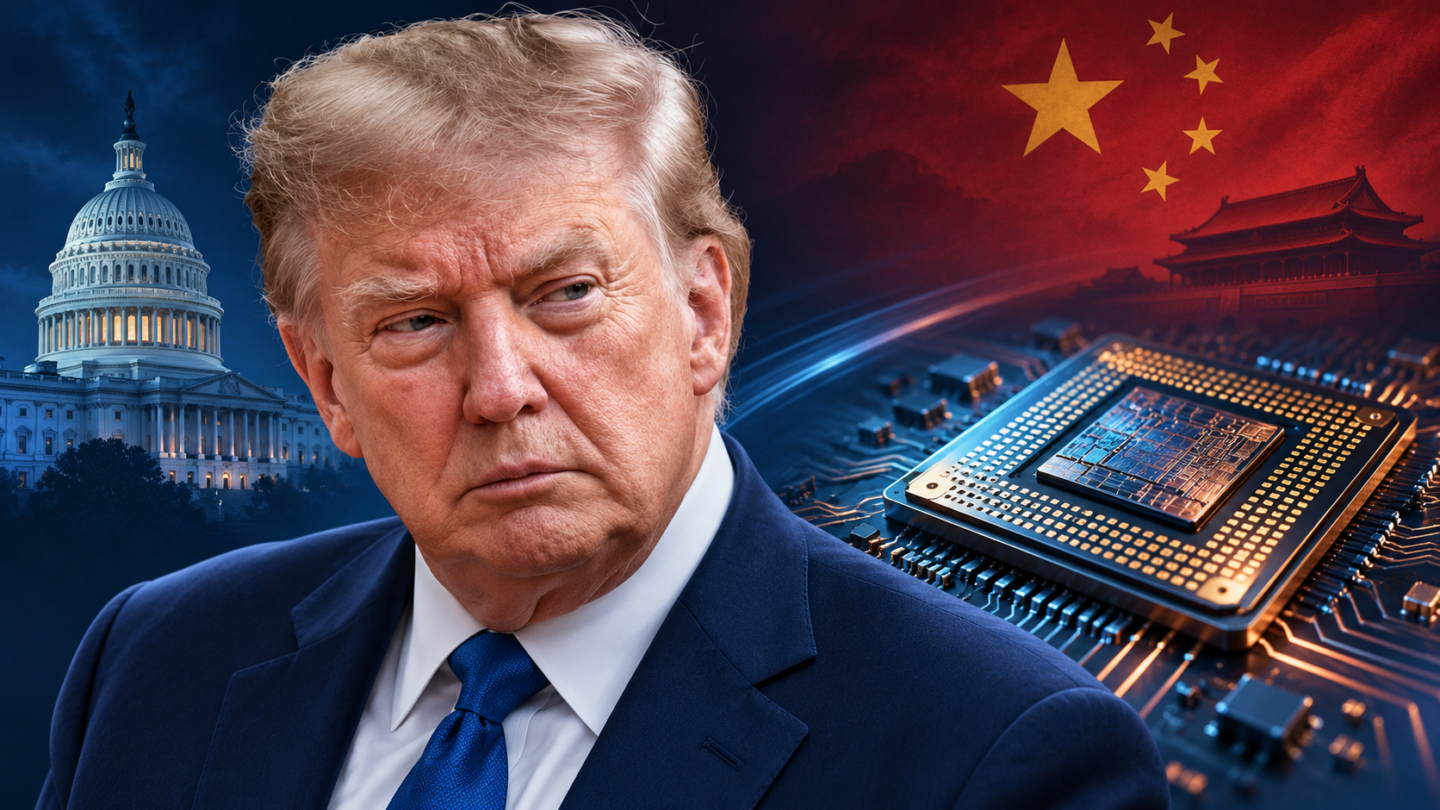
China AI chip approvals under the Trump administration covered 879,868 advanced processors for Chinese-linked companies, according to records released by the House Foreign Affairs Committee on November 19. The total included 272,000 chips for four companies the committee identified as appearing on the U.S. military-company list.
The disclosure concerns permission to export or transfer chips. It does not establish that every approved processor reached China, or that the full total was approved for military-linked buyers.
What the China AI chip approvals covered
The committee’s published licensing summary records approvals across 21 applications as of May 11, 2026. It identifies the products as Nvidia H200 and AMD MI325X processors.
The named approvals included 75,000 chips for Alibaba, 150,000 for Tencent and its subsidiaries, 43,000 for Baidu and 4,000 for BYD. Those figures add up to 272,000, approximately 30.9% of the overall approved volume.
The summary references a June 2026 military-company list. That timing matters: the document’s reference to that list should not be read as proof that every company held the same designation when an earlier license was approved.
Applications covered more than 3.4 million processors. Requested volumes and approved volumes are different measures; neither should automatically be described as completed sales.
Lawmakers question the review process
Committee Chairman Brian Mast released the information using authority under the Export Control Reform Act. His November 19 announcement highlighted approvals involving designated companies and raised concerns about potential intermediaries in chip transactions.
Ranking member Gregory Meeks said the committee approved disclosure by unanimous consent. In prepared remarks, he argued that export-control enforcement had endangered national security and America’s technological advantage.
Meeks also questioned whether licenses had received sufficient scrutiny. He called for public hearings with Commerce Secretary Howard Lutnick and Bureau of Industry and Security Undersecretary Jeffrey Kessler.
Those statements describe lawmakers’ criticism and proposed oversight. They are not findings by a court that the administration or either chipmaker committed a crime.
What the administration’s rules require
The Commerce Department announced a revised licensing policy on January 13, following Trump’s December 8, 2025 announcement allowing H200 sales to approved Chinese customers.
Under the policy, H200, MI325X and similar products can receive case-by-case consideration if specified security requirements are met. The department said applicants must show that exports would not reduce production capacity available to U.S. customers.
Other requirements include purchaser compliance procedures and customer screening, alongside independent testing in the United States to verify product performance and security.
The published rule also requires applicants to confirm that the chips are not intended for prohibited military or military-intelligence uses or users. It requires information about intended remote users and the receiving facility’s physical security arrangements.
Commerce has defended its approach by pointing to those requirements. The existence of a licensing framework, however, leaves lawmakers able to question how officials assessed individual buyers and enforced the conditions attached to approvals.
What the companies have said
Nvidia told Reuters that approvals carried strict conditions and limited volumes, and that it had since stopped shipping H200 processors to China. AMD said it follows applicable U.S. export-control rules and maintains compliance processes throughout its operations.
Reuters reported that Alibaba, Tencent, Baidu and BYD did not immediately respond to requests for comment for its November 19 report. That reporting does not establish their position today.
Separately, the Associated Press reported Treasury Secretary Scott Bessent’s position that further restrictions on older Nvidia chips were unnecessary after measures addressing Chinese remote access to newer technology.
What remains unresolved
The China AI chip approvals raise questions about recipient screening, delivery and diversion controls. Republican Senator Chuck Grassley has also sought answers from Commerce about reported security risks involving firms approved to buy or install Nvidia chips.
Readers can find related leadership context in Hourly Times’ coverage of Trump’s support for Jensen Huang’s return to Nvidia. That separate development does not resolve the export-licensing questions.
The clearest distinction remains between authorization and delivery. The disclosed approvals establish the scope of licensing decisions; they do not, by themselves, establish the final destination or use of every processor.