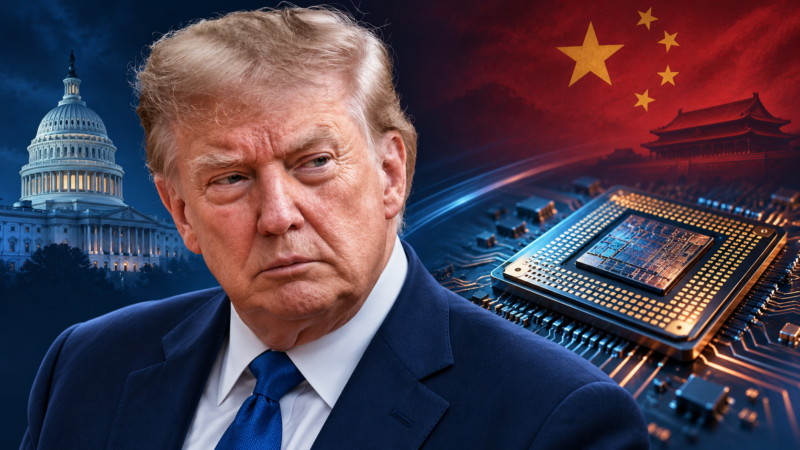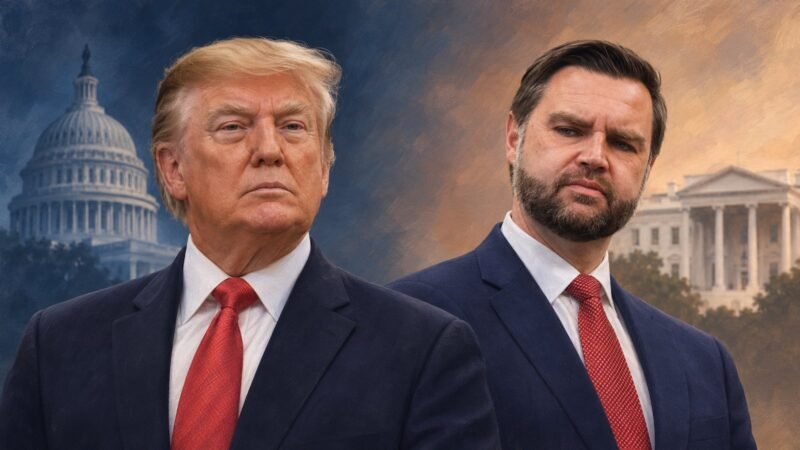
President Donald Trump criticized Fox News host Shannon Bream on November 28 for saying “artificial intelligence” instead of “Super Intelligence,” expanding his campaign to replace the technology’s familiar name. In a Truth Social post, he also claimed that Securities and Exchange Commission Chairman Paul Atkins would soon make his preferred terminology mandatory.
The criticism came nearly two months after Trump signed an executive order directing executive-branch agencies to adopt the new wording. That order governs federal communications; it does not itself require private broadcasters to change their language.
No published SEC rule imposing the requirement Trump described was located during this review. His statement should therefore be understood as a claim about future action, rather than confirmation that a new broadcasting or corporate disclosure requirement has taken effect.
What Trump said about Super Intelligence
Trump singled out Bream’s repeated use of the word “artificial” while discussing the technology. He argued that his alternative was more accurate and invoked Atkins as the official who would make the term compulsory.
“Like me, he likes ACCURACY in language!” Trump wrote.
The post was preserved by Trump’s Truth, an independent archive, and its wording was reproduced in Mediaite’s November 28 report. The original Truth Social page could not be accessed directly during this review.
Mediaite said it contacted Fox News for comment. Its report reviewed for this article did not include a response. Hourly Times has not independently established which specific broadcast prompted the president’s post.
What the September order actually changed
Trump signed the executive order on federal terminology on September 29. It was published in the Federal Register on October 2.
The directive covers official correspondence, websites, public communications, reports, policy documents and other non-statutory materials within the executive branch, subject to applicable law.
It does not require officials to alter previously issued regulations, presidential actions, contracts, grants or historical documents. Its implementation provisions also preserve existing legal authority.
For purposes of the order, the replacement terminology initially refers to the technologies already covered by the existing federal statutory definition of artificial intelligence. The naming directive therefore should not be mistaken for an official finding that a new technological capability has been achieved.
Why the White House favors the new name
In its September 29 fact sheet, the White House argued that federal terminology should reflect the technology’s expanding capabilities and potential benefits. It presented the wording change as part of its broader approach to American technological leadership.
The administration said the name would help agencies focus on expanding applications and capabilities. Those explanations describe the White House’s rationale, rather than an independent assessment of the performance or safety of any particular system.
The order also directed the president’s science and technology adviser to submit proposed legislative language establishing a federal definition within 60 days. A proposal to amend statutory terminology is distinct from Congress passing such a change.
Federal agencies are already adopting the wording
The Food and Drug Administration offers a concrete example of implementation. It said it would begin using Super Intelligence and SI in newly issued public-facing documents and communications on November 16, where permitted by law.
The FDA said existing documents remain effective as written and that updates would occur during substantive revisions or normal maintenance. It also said it would continue quoting statutory and regulatory references to artificial intelligence as written.
The agency explicitly said the order creates no new requirement for sponsors, applicants, manufacturers or others submitting information to it.
What remains unclear about Trump’s SEC claim
The SEC has already used the new terminology in an October announcement about a November 9 roundtable on machine-understandable data. An agency using a phrase in its own materials is different from imposing a binding requirement on outside organizations.
The commission describes its mission as protecting investors, maintaining orderly markets and facilitating capital formation. Its published rulemaking guidance describes a process involving analysis and public input.
The next development to establish would be a formal SEC announcement or published regulatory action explaining any proposed requirement, its scope and its legal basis. Until then, the scope and timing of the action Trump described remain unconfirmed.