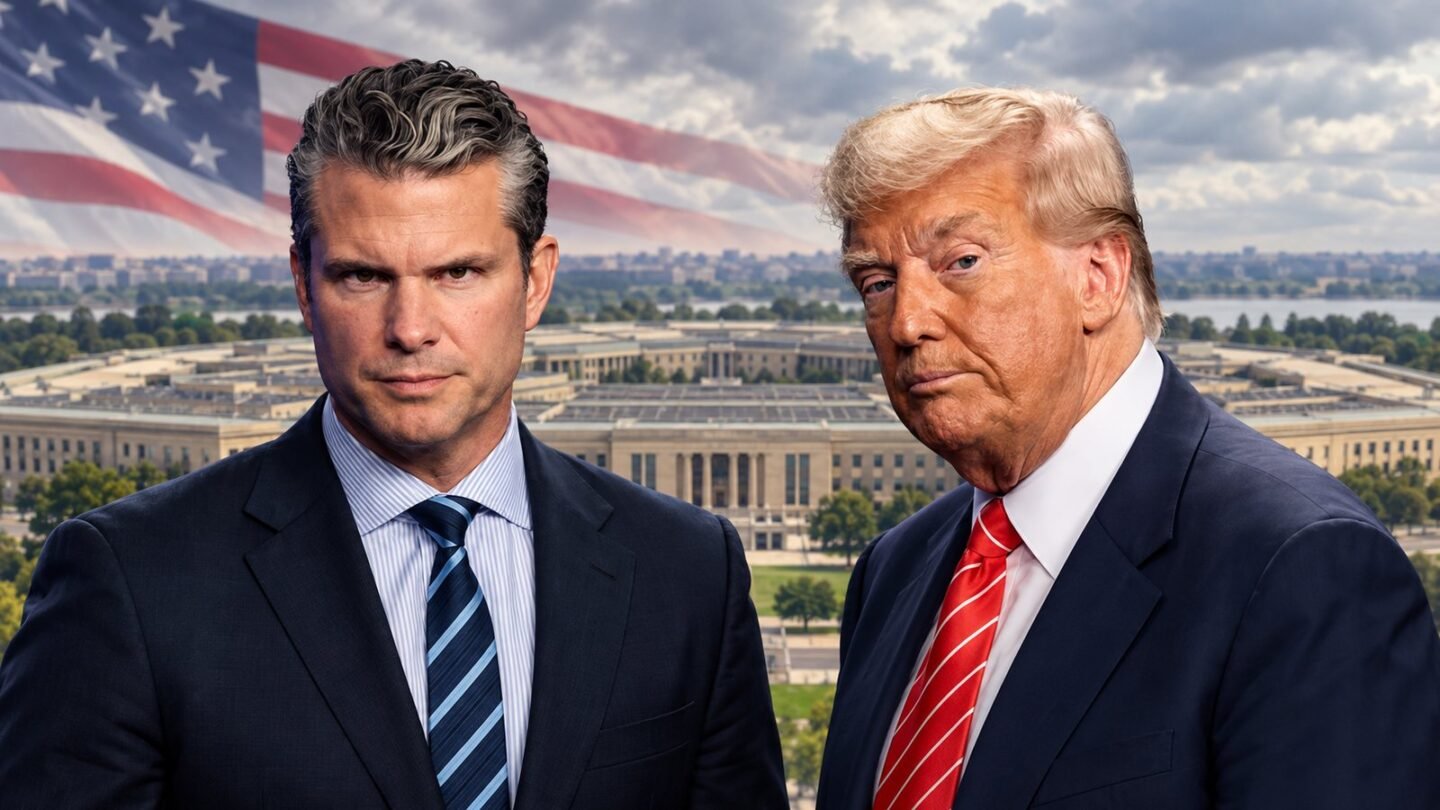
President Donald Trump and Defense Secretary Pete Hegseth have made major changes to U.S. military leadership and policy. Those actions are documented. Whether they have “damaged” the Pentagon or made the military stronger is a judgment that depends on how people weigh the changes and their results.
The poll question supplied for this article asks whether Trump and Hegseth have harmed “everything that was once good” about the military. That wording expresses a strong opinion. The events cited below provide context, but they do not by themselves prove that the military has been damaged—or strengthened.
Senior military leaders were removed
In February 2025, Trump removed Air Force Gen. C.Q. Brown as chairman of the Joint Chiefs of Staff and announced other senior leadership changes. Reuters described the move as an unprecedented shake-up and reported that it included the Navy’s top officer and the judge advocates general of the Army, Navy and Air Force.
Democratic lawmakers criticized the dismissals, raising concerns about the risk of politicizing the military. The administration’s supporters can view a president’s authority to choose senior leaders as a way to change priorities and command direction. The fact of the dismissals is clear; their long-term effect on military readiness, morale and political neutrality requires separate evidence and time to assess.
A further change came in April 2026, when Hegseth fired Army Chief of Staff Gen. Randy George while U.S. forces were involved in a major war in the Middle East. Reuters reported that firing the head of a military service during wartime is extremely rare. That timing makes the decision notable, but it does not alone establish whether the change harmed the Army’s performance.
Personnel policies also changed
The Trump administration and the Defense Department ended military diversity, equity and inclusion programs and changed policies affecting transgender service members. The Pentagon described its DEI changes as part of a focus on readiness and merit. Its policy on gender dysphoria called for affected service members to be processed for separation, subject to legal and administrative developments.
Supporters argue that the changes reinforce standards and focus the force on combat readiness. Critics say some policies may exclude qualified people and weaken equal opportunity. These are competing views of the policies. To assess their effects, readers would need evidence about recruitment, retention, readiness, unit performance and how the policies are applied.
U.S. force posture is shifting
The administration has also reviewed and adjusted U.S. troop deployments in Europe. In May 2026, Reuters reported that the Pentagon planned to withdraw 5,000 troops from Germany and canceled a planned deployment of 4,000 U.S. troops to Poland. NATO officials have said changes to the U.S. presence could take years, while some European allies have voiced concern about the pace and uncertainty of reductions.
The picture is not simply one of U.S. forces leaving Europe. In September, Lithuania said a new rotation of U.S. troops was on its way, even as it had earlier expressed concern about a broader review of the American presence. The administration has also announced closer defense cooperation with Australia. Taken together, these reports point to changes in where and how the United States deploys forces, rather than a single uniform shift.
What the evidence can—and cannot—show
The record supports saying that Trump and Hegseth have rapidly reshaped military leadership, personnel policy and deployment plans. It also supports saying that some changes have drawn criticism and concern from lawmakers or U.S. allies.
It does not establish that “everything that was once good” about the military has been damaged. That is a sweeping conclusion, and the supplied post does not define how to measure it. A fuller assessment would look at readiness, recruitment and retention, military performance, morale, civilian control, relationships with allies and the ability to meet U.S. defense goals.
Readers may reasonably disagree about which measures matter most. Supporters may see a needed reset; critics may see disruption and risks to the institution. The key question is whether the changes improve the military’s ability to protect the country over time.