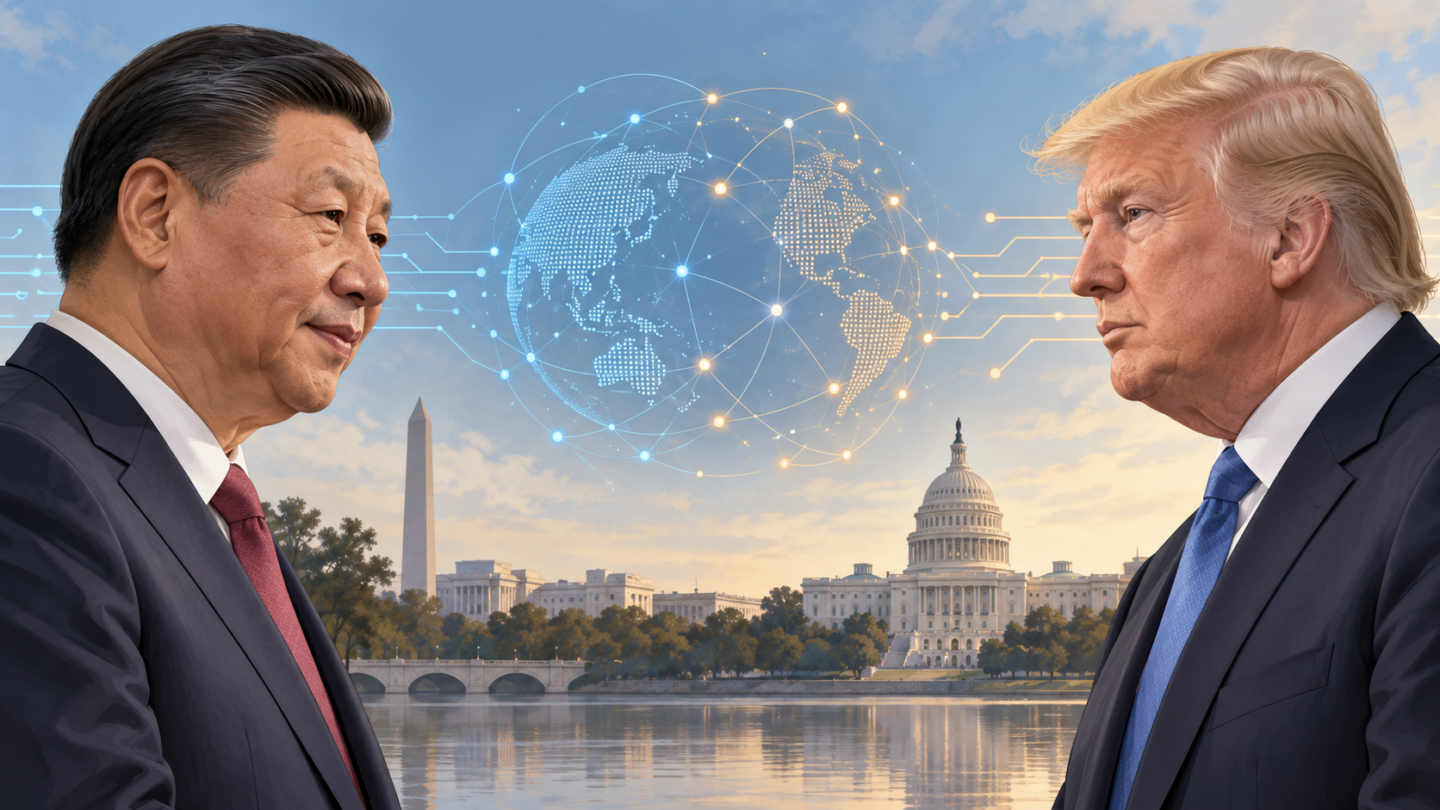
China and the United States share the ability and responsibility to manage artificial intelligence, according to commentary published Sunday by Yuyuantantian, a social media account affiliated with China’s state broadcaster, CCTV. The post appeared days after Chinese President Xi Jinping and U.S. President Donald Trump met in Washington.
The commentary cited Xi as saying the two countries should keep AI under human control and direct the technology toward public benefit. It described AI governance as involving both technological development and the sharing of its benefits, as well as managing risks such as misuse and the possibility of people losing control over AI systems.
The post also urged government departments to carry out agreements and understandings reached by the two sides. It referred to trade and investment consultation mechanisms, tariff discussions, and the extension of outcomes from earlier talks in Kuala Lumpur.
Tariff language needs care
The post’s summary describes the tariff proposal as a “$30 billion reciprocal tariff-reduction arrangement.” The White House’s September 25 fact sheet uses more limited language: it says the countries reached consensus on recommendations for more favorable tariff treatment for $30 billion of non-sensitive goods in each direction. It does not say those tariff changes have already taken effect.
The White House also says the leaders established a bilateral dialogue on “super intelligence” risks and benefits, along with a communication channel for related incidents. That announcement provides context for the AI governance discussion, though the Yuyuantantian post presents Beijing’s own framing of the issue.
The commentary signals that China wants AI governance discussed alongside trade and investment. It does not, by itself, establish a new binding bilateral AI agreement. The public statements show both governments referring to dialogue and risk management, while leaving the details of any future cooperation unclear.