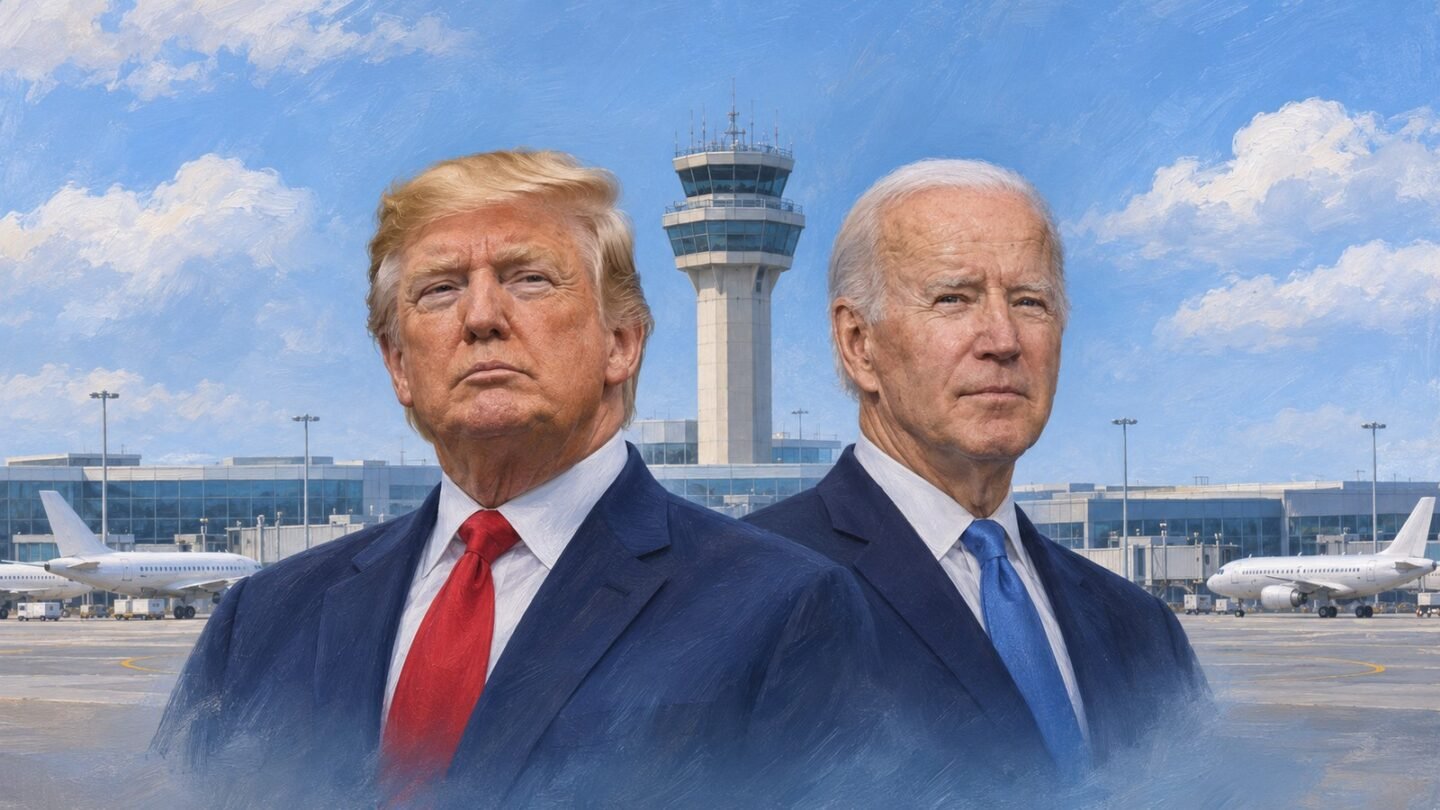
President Donald Trump blamed the Biden administration for problems with air traffic control on Sunday, November 15, in his first public comments following Friday’s nationwide FAA ground stop. He also urged Congress to provide more funding for upgrades as airlines worked to restore service across the United States.
In a Truth Social post, Trump accused the previous administration of spending money unwisely and worsening an aging system. Those were the president’s claims; investigators had not established that Biden-era decisions caused the November 13 disruption.
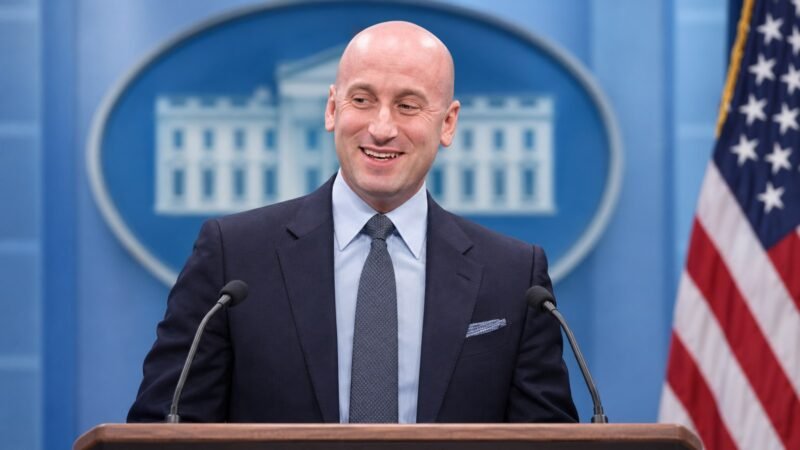
People and The Associated Press reported that Trump had not publicly addressed the incident until Sunday. Transportation Secretary Sean Duffy defended his involvement, telling CNN that he had remained in contact with Trump and that the president was engaged.
Trump seeks funding after the FAA ground stop
In a second Sunday post, Trump called for a comprehensive air traffic control overhaul instead of piecemeal improvements. He said his administration had already started work and pressed lawmakers to approve the money needed to continue.
The funding request follows Friday’s nationwide departure halt, which disrupted travel after communications problems affected air traffic control facilities. The restriction was lifted Friday evening, but airlines continued recovering over the weekend.
Congress approved $12.5 billion for FAA modernization in 2025. Duffy has characterized that allocation as partial funding and argued that additional resources are needed to complete a broader replacement of aging systems.
In Sunday interviews summarized by the Transportation Department, Duffy said the money was designated for equipment including radar, radios and electronic flight strips. He said a new telecommunications network and airspace-management software still required funding.
What earlier infrastructure funding covered
FAA records provide important context for Trump’s criticism. The Infrastructure Investment and Jobs Act, signed during Biden’s presidency, provided $25 billion for the nation’s aviation system.
The FAA’s official funding breakdown assigns $5 billion to FAA facilities upgrades. Approximately $20 billion was allocated to airport infrastructure and terminal development, including certain airport-owned towers and related projects.
The full $25 billion was therefore not exclusively for replacing air traffic control telecommunications. Those different funding purposes matter when assessing claims about how much earlier administrations invested and what that money could pay for.
Investigators examine routers and installation work
The FAA ground stop investigation has identified possible points of origin at a radio communications site in El Dorado, Arkansas, and a radar site in Amarillo, Texas. Officials described excessive network traffic that disrupted communications and radar information.
Duffy said Saturday that contractor L3Harris had been working to replace old copper communications lines with fiber. Investigators were examining whether installation work or an equipment problem triggered the disruption; those possibilities were not final findings of fault.
FAA Administrator Bryan Bedford also distinguished the maintenance from the separately funded modernization program. He said replacing equipment in the existing telecommunications network was routine work, rather than part of the $12.5 billion modernization effort.
L3Harris said it was supporting the FAA’s investigation. In its November 14 statement, the company said it and its partners had completed more than 70% of the planned conversion of airspace communications from copper wiring to fiber.
Departure restrictions did not stop every flight
The FAA ground stop paused departures as a safety measure. It did not mean every aircraft already flying had to stop operating: Duffy said approximately 3,500 aircraft were airborne when the restriction began and that all landed safely.
The FAA said air traffic resumed at 8:15 p.m. Eastern on November 13. It also reported no indication of a cyberattack and said some radio frequencies and radar feeds remained available throughout the disruption.
Nationwide departure restrictions had also occurred in January 2023. The FAA’s preliminary review of that earlier incident found that personnel unintentionally deleted files while correcting database synchronization. That finding concerns a separate outage and does not establish the cause of Friday’s failure.
What remains unresolved
The FAA ground stop investigation remained open in the official updates reviewed. Equipment diagnostics and review of the installation process were continuing, while the administration sought additional congressional funding for its broader upgrade plans.
Officials had not announced a final root-cause finding or a date for completing the investigation. Further equipment testing and review of the installation process remained the next confirmed investigative steps.