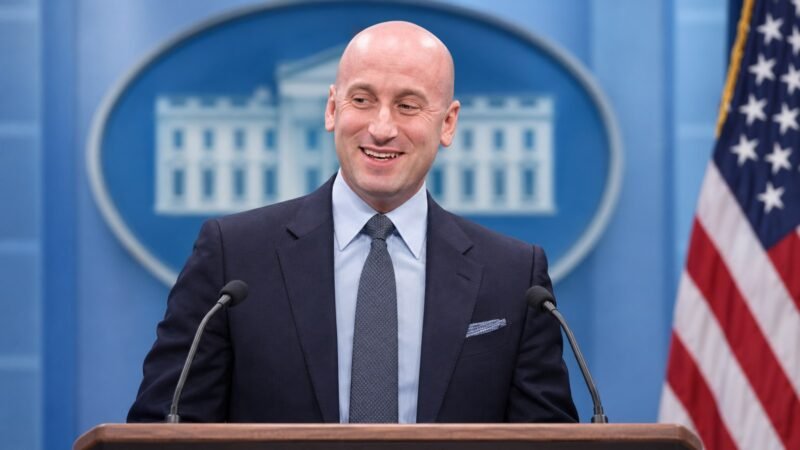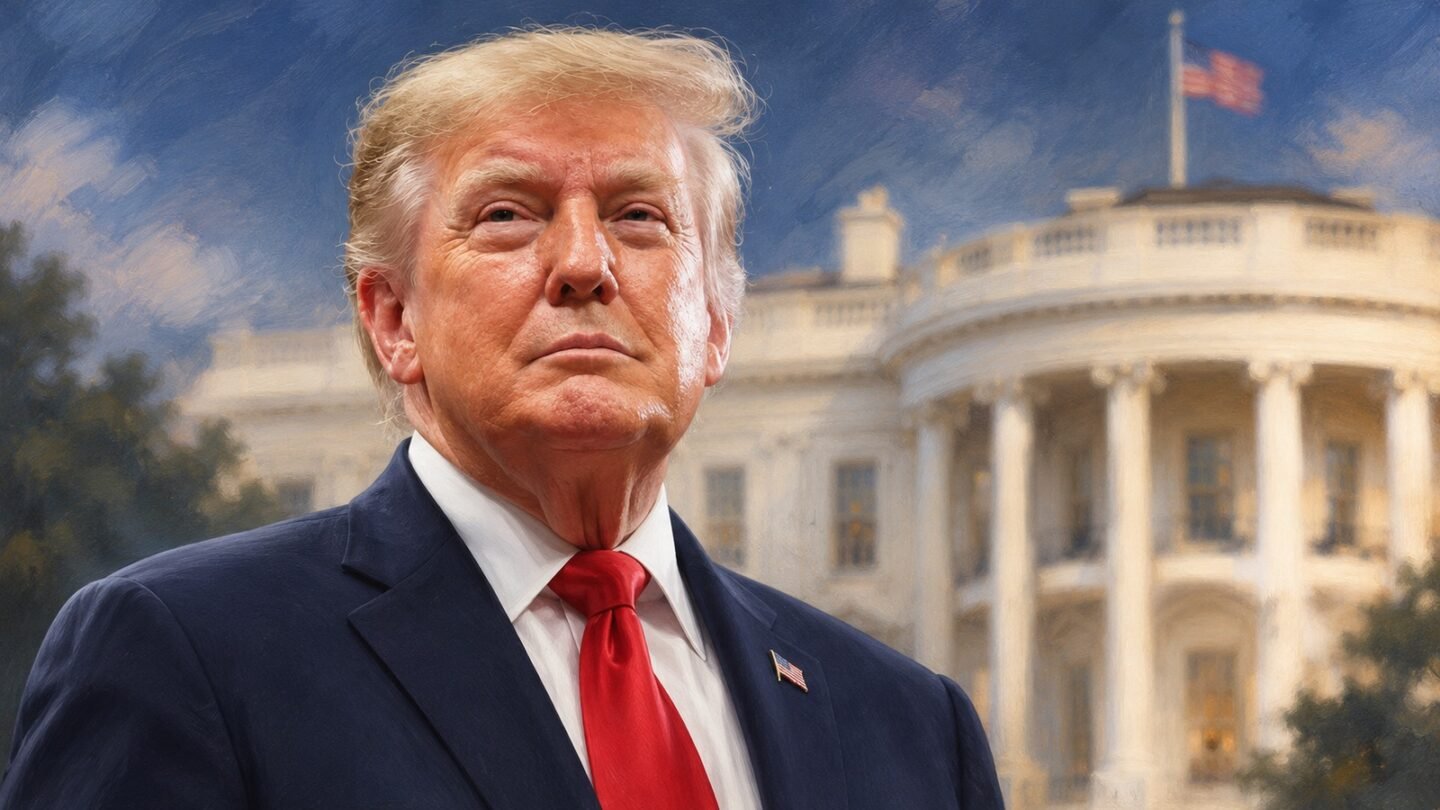
President Donald Trump said he would easily defeat former President Barack Obama in a hypothetical third-term election during a White House interview with Stephen A. Smith released November 12, 2026. He cited his past vote totals in Texas and Florida and criticized Obama’s record in office.
The exchange concerned an imagined contest, rather than an election either man is currently eligible to enter. The Constitution’s 22nd Amendment bars a person from being elected president more than twice, a limit both Trump and Obama have reached.
Smith raised the scenario on his Straight Shooter program by asking what would happen if both men could run again. Trump’s answer combined a prediction about winning with his personal assessment of his Democratic predecessor.
Donald Trump predicts an easy victory over Obama
Trump pointed to the number of votes he had received in previous elections and described his totals in Texas and Florida as state records. Smith then asked directly whether he was saying he would beat Obama.
“Yeah. I think I’d beat him easily,” Trump replied, according to the indexed interview transcript. He then described Obama as “highly overrated.”
Smith challenged that assessment and asked Trump to explain it. Trump characterized the criticism as his opinion, said he did not consider Obama a good president and accused him of dividing Americans.
Those remarks are Trump’s political judgments. The interview exchange did not produce an actual election result or establish how voters would respond to a contest between the two men.
What the Texas and Florida vote totals show
Official Federal Election Commission records confirm that Trump received 6,393,597 votes in Texas and 6,110,125 in Florida in 2024. Those are historical results from his race against Kamala Harris, rather than votes cast in a contest against Obama.
Nationally, the FEC lists Trump’s 2024 total as 77,302,580 votes, or 49.80% of the popular vote. Its 2008 records show Obama receiving 69,498,516 votes and 52.93% of that year’s popular vote.
The comparison therefore produces two different observations: Trump received more individual votes in 2024 than Obama did in 2008, while Obama won a larger share of the votes cast in his election. The figures describe separate elections held 16 years apart.
The FEC also records 312 electoral votes for Trump in 2024 and 365 for Obama in 2008. Those figures provide another way to describe the two past elections, but they still cannot test Trump’s prediction about facing Obama.
They do not measure support for both candidates among the same voters at the same time. Treating those totals as proof of a future head-to-head result would go beyond what the election records establish.
Trump says economic success brings people together
After questioning Trump’s criticism of Obama, Smith asked how the president would describe his own leadership. Trump presented himself as someone who unites people and said economic success was the reason.
Donald Trump linked that argument to his administration’s claims about investment and growth. His answer was a defense of his presidency, rather than an independent assessment of whether the country had become more united.
The distinction matters because the interview moved between a hypothetical election, criticism of a predecessor and claims about current performance. Each was part of Trump’s argument; none turned the imagined matchup into a scheduled race.
Why a third-term contest remains hypothetical
The 22nd Amendment, published by the National Archives, limits election to the presidency to two occasions. Its wording concerns how many times a person has been elected, rather than whether those terms were consecutive.
Obama won the presidency in 2008 and 2012. Donald Trump won in 2016 and 2024. Trump’s return after a gap between terms does not give him another opportunity to be elected under that limit.
The interview supplied no election date or formal process for a Trump-Obama contest. The current constitutional restriction remains the controlling context for the discussion: neither man can be elected president for a third time under the existing amendment.