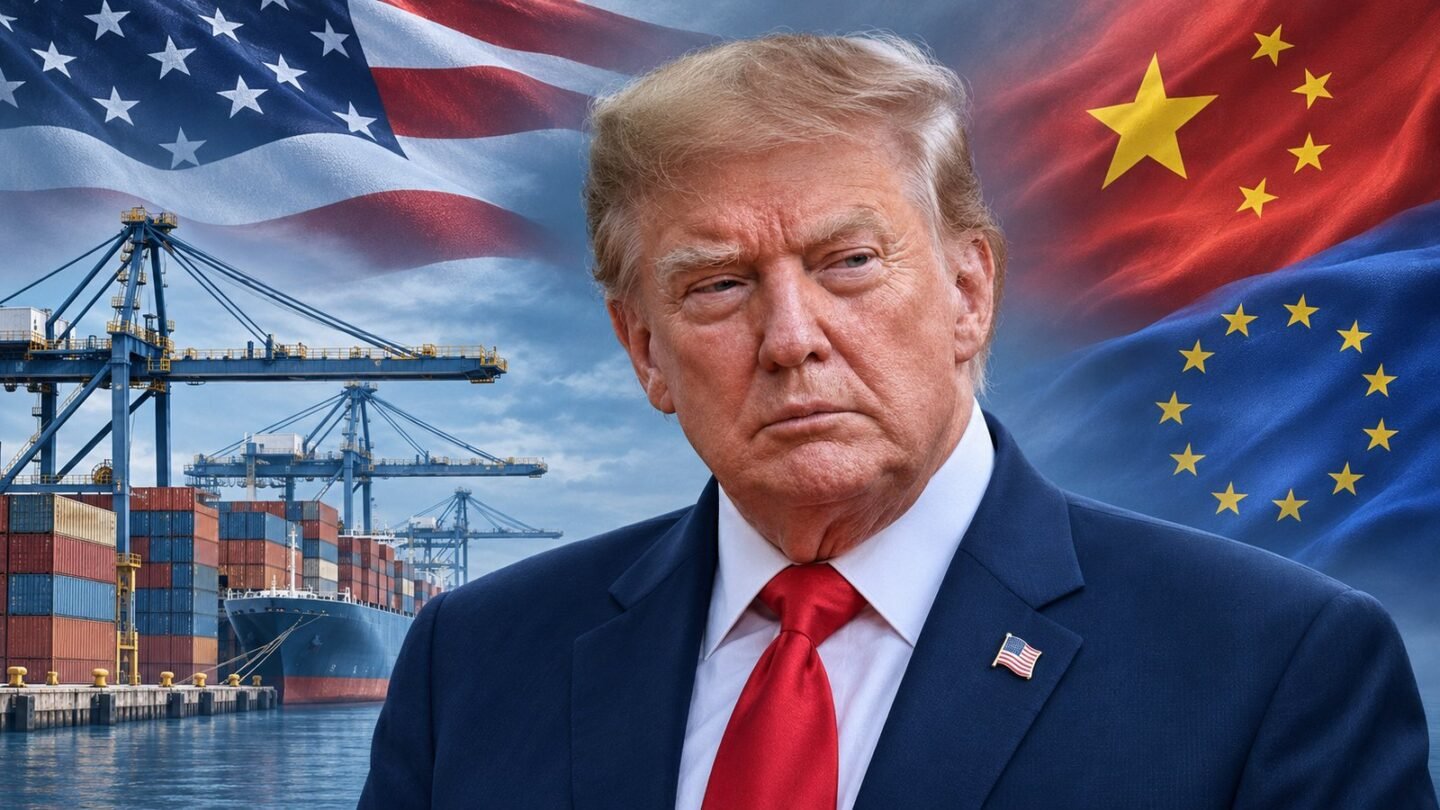
The Trump administration announced US tariff proposals covering 14 trading partners on November 25, 2026, including China, the European Union, Japan and India, after investigations into policies it says create excess manufacturing capacity and harm American commerce.
The measures are proposed actions under Section 301 of the Trade Act of 1974. The Office of the United States Trade Representative is seeking public comments and has scheduled hearings beginning January 25, 2027.
The announcement therefore does not mean that the proposed duties have already taken effect. Rates, exemptions and treatment of existing tariffs remain part of the process laid out in the official notices.
Which economies the US tariff proposals cover
USTR’s November 25 determinations cover China, the European Union, Singapore, Switzerland, Indonesia, Malaysia, Cambodia, Thailand, South Korea, Vietnam, Taiwan, Bangladesh, Japan and India.
The agency has not made determinations concerning Mexico or Norway at this stage. Both were included in the broader investigations launched in March, but neither is among the 14 economies covered by these proposed actions.
U.S. Trade Representative Jamieson Greer said the investigated policies were unreasonable and burdened or restricted U.S. commerce. The administration’s argument concerns production capacity sustained by government interventions rather than ordinary market demand.
Those findings represent USTR’s assessment under American trade law. They should not be presented as a consensus among the countries being investigated.
China and the EU face different proposed structures
The official investigation page and linked notices set out different treatment for each economy, including product exclusions and adjustments for existing duties.
For China, USTR proposes considering tariffs of up to 20%, net of duties under its forced-labor-related Section 301 action, on goods outside specified annexes. Certain listed products would face up to 10%, while another list would be exempt.
The China notice also identifies an alternative: up to 40%, with the specified offset, if ongoing engagement does not adequately address the issues raised. That is a conditional option under consideration, not an announced blanket rate already being collected.
For the European Union, the notice describes a 15% rate net of ordinary most-favored-nation duties and existing Section 301 tariffs, with exemptions. It also considers an alternative of up to 20% if consultations and commitments prove unsatisfactory.
Most-favored-nation duties are the ordinary tariff rates referenced in the proposal. The adjustment language means the headline percentage cannot simply be added to every other tariff without checking the relevant product rules.
India and Vietnam notices include negotiating options
India’s notice proposes tariffs of up to 25%, net of existing Section 301 tariffs, with exemptions. It also considers adjustments for other duties and a 17% rate if India reaches a responsive reciprocal-trade agreement with Washington.
Vietnam’s notice proposes up to 35%, also net of existing Section 301 tariffs and subject to exemptions. It considers a 20% rate linked to a responsive trade agreement, alongside possible adjustments accounting for other duties.
The same document records Vietnam’s objection to the investigation’s premise. Its government says it does not direct business production or investment in ways that create unfair competitive advantages or sustain excess capacity.
That disagreement underscores why the US tariff proposals remain contested. USTR maintains its findings, while affected governments can challenge the analysis and seek changes through consultations and public submissions.
What happens before any final tariff action
The notices invite comments on the products covered, proposed rates, exemptions and potential adjustments. Their annexes identify product classifications and limitations that matter when determining how a particular shipment would be treated.
The proposal’s scope therefore depends on both the economy of origin and the specific goods involved.
Written comments are due January 5, 2027. Requests to testify, accompanied by a summary of testimony, must also be submitted by that date to be assured of consideration.
Public hearings are scheduled to begin January 25, 2027, in Washington and may continue as needed. Those are consultation dates, not a confirmed date when the US tariff proposals become effective.