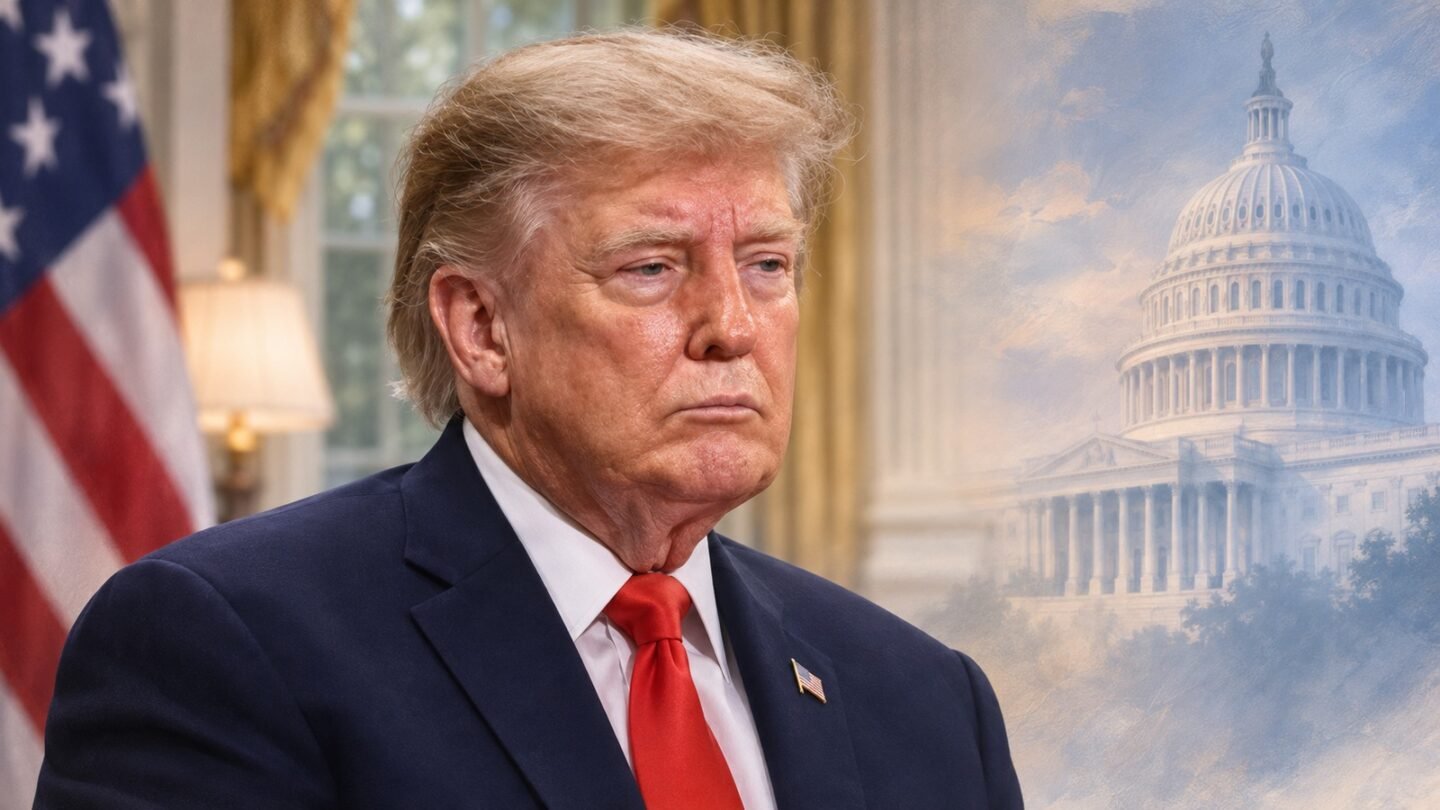
President Donald Trump said he did not expect a third impeachment after Democrats won control of Congress, defending his record during an interview with “60 Minutes.” His remarks came as Democratic lawmakers discussed how to use their incoming majorities without committing to a single course of action.
Asked about another impeachment, Trump replied, “I can’t imagine it, you know?” He also claimed: “I’ve had the best two years in the history of the presidency.” That comparison was his assessment of his performance, not an independently established historical ranking.
The White House interview with Ross Douthat was recorded on November 6 and broadcast on November 8, 2026. The recording date and broadcast date are different; the remarks were not delivered during a new November 9 interview.
The third impeachment question followed discussion of cooperation
In the exchange, Trump was discussing whether he could work with Democrats while they investigated his administration. He referred to his two previous impeachments and suggested that some people believed those proceedings had helped him politically.
His answer expressed doubt about another proceeding. It did not establish what House Democrats would decide, identify a legal obstacle to new charges or settle any allegation against his administration.
The distinction matters because congressional investigations, House impeachment and Senate conviction are separate decisions. Lawmakers can pursue oversight without adopting impeachment articles, and an impeachment does not itself remove a president.
Democrats have described options rather than a settled plan
Before the interview aired, Rep. Jamie Raskin had cautioned against assuming that impeaching Trump would be the new majority’s first action. Roll Call reported on November 5 that he described impeachment as a constitutional tool available to Congress, rather than an automatic opening priority.
The same report quoted Illinois Gov. JB Pritzker urging oversight hearings into alleged corruption while leaving open whether those inquiries would lead to impeachment. That was a call to investigate, not an announcement that Congress had approved charges.
Separate Associated Press reporting described disagreements among Democrats about priorities. Kansas Sen.-elect Adam Hamilton expressed skepticism about impeachment, while Sen. Bernie Sanders warned against allowing investigations to consume the time needed to address working families’ concerns.
Those positions do not amount to a partywide promise to abandon a third impeachment. They show that winning control of Congress and agreeing on how to use that power are different political questions.
Two previous impeachments ended without Senate conviction
The House impeached Trump twice during his first administration. The Senate acquitted him in February 2020 and again in February 2021, according to its official historical record.
The second Senate verdict came after he had left office. Neither acquittal erased the House’s impeachment vote, but neither produced the Senate conviction required for removal through the impeachment process.
Under the Constitution, the House has the sole power to impeach, while the Senate conducts the trial. The House approves articles through a simple majority; conviction requires two-thirds of senators present.
If all 100 senators are present, that means 67 votes to convict. A Senate majority sufficient to organize committees or control the chamber is therefore different from the supermajority required for conviction.
When a sitting president is tried, the chief justice presides. Senators still make the decision on conviction; the presiding officer does not replace their constitutionally required vote.
The Constitution identifies treason, bribery and other high crimes and misdemeanors as grounds for impeachment and removal. Any renewed effort would require lawmakers to identify alleged conduct, assess evidence and decide whether to adopt specific charges.
Hourly Times previously reported on a separate Trump impeachment resolution that the House tabled. Ending consideration of one resolution does not prevent members from introducing another, and introducing a resolution does not mean the House has adopted it.
January changes congressional control, not the legal requirements
The new congressional terms begin January 3, 2027, under the Twentieth Amendment. That is when the election results change the membership exercising Congress’ powers.
Trump’s prediction does not bind the incoming House, and Democratic victories do not guarantee a third impeachment or a Senate conviction. The next consequential steps would be committee decisions, any proposed articles and the votes lawmakers actually take.