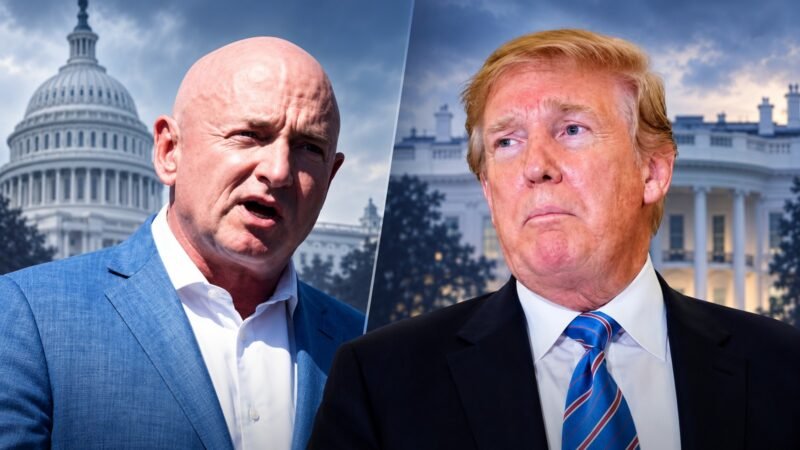
The Trump impeachment resolution introduced by Democratic Rep. Al Green was blocked by the House on September 15, 2026, when lawmakers voted 232–147 to table the measure. Another 47 members voted present and seven did not vote, ending that specific effort without the House deciding whether to impeach President Donald Trump again.
H.Res. 1486 accused Trump of high crimes and misdemeanors connected to his administration’s immigration enforcement policies. Green alleged that Immigration and Customs Enforcement and Customs and Border Protection were being used in ways that violated civil liberties, due process and the president’s constitutional oath.
Those assertions were allegations presented by Green, not findings adopted by the House. The vote was on a motion to table the resolution, which prevented it from advancing. It was not a vote declaring Trump innocent of every allegation, nor was it a third impeachment.
Trump Impeachment Resolution Tabled by House
The official House Clerk record shows that 232 members supported tabling H.Res. 1486, while 147 opposed the motion. Forty-seven voted present and seven did not vote. The Trump impeachment resolution therefore did not advance to an up-or-down vote on adoption.
Republicans supplied 213 of the votes to table the resolution. Eighteen Democrats and one independent also supported tabling it. All 147 votes against tabling came from Democrats, while 46 Democrats and one Republican voted present.
Democratic leaders had recommended voting present, arguing that a formal impeachment effort should follow a more extensive congressional investigation. Other Democrats supported Green’s attempt or opposed shelving it, reflecting disagreement inside the party over both the allegations and the timing of impeachment before the 2026 midterm elections.
The White House rejected the effort as partisan obstruction and defended the administration’s immigration enforcement record. Green maintained that the issue concerned constitutional accountability and the conduct of federal immigration agencies rather than ordinary party competition.
What H.Res. 1486 Alleged
Green introduced H.Res. 1486 on August 24, 2026. Its articles accused Trump of abusing presidential power through the operation of ICE and CBP. The resolution referred to deaths involving federal immigration agents and alleged that enforcement practices had become unaccountable and dangerous.
The resolution also alleged that Trump had violated the presidential oath to preserve, protect and defend the Constitution. Such language represents Green’s case for impeachment. Determining whether conduct meets the constitutional standard of “Treason, Bribery, or other high Crimes and Misdemeanors” is ultimately a political and constitutional judgment assigned to Congress.
The House did not adopt Green’s allegations. By tabling the measure, it stopped consideration of that resolution at the time. Lawmakers could still conduct oversight, investigate administration actions or introduce a different impeachment resolution later.
How the Constitutional Process Works
The Constitution gives the House of Representatives the sole power to impeach. Approval of articles of impeachment requires a majority vote in the House. Impeachment is comparable to bringing formal charges; it does not by itself remove a president from office.
The Senate has the sole power to conduct an impeachment trial. Conviction and removal require the support of two-thirds of senators present. This division means the House determines whether to impeach, while the Senate decides whether the official should be convicted.
Members of Congress swear an oath to support and defend the Constitution. However, the oath does not dictate a particular vote on a disputed impeachment resolution. Lawmakers may disagree over whether alleged conduct satisfies the constitutional standard, whether sufficient evidence has been developed and whether an investigation should occur before articles are considered.
Trump’s Two Previous Impeachments
Trump remains the only U.S. president impeached twice by the House. In December 2019, the House approved articles accusing him of abuse of power and obstruction of Congress. The Senate acquitted him in February 2020.
In January 2021, the House impeached Trump on a charge of incitement of insurrection following the January 6 attack on the Capitol. The Senate again voted to acquit him in February 2021 because the votes for conviction did not reach the constitutionally required two-thirds threshold.
Those acquittals mean Trump was not convicted or removed through either Senate trial. They do not erase the historical fact that the House impeached him twice.
What Could Happen Next
The September vote ended H.Res. 1486, but it did not close the broader debate over congressional oversight. Democrats have discussed expanded investigations into the Trump administration if they gain control of the House, and party leaders have said impeachment remains among the possible tools available depending on evidence developed through oversight.
Whether Trump is the “most impeachable” president is an opinion, not a verifiable historical ranking. The confirmed record is narrower: Trump has been impeached twice, acquitted twice by the Senate and faced another resolution in 2026 that the House voted to table.
Any future Trump impeachment resolution would require a new House process and sufficient votes for adoption. Until that happens, claims that Congress has impeached him a third time would be inaccurate.