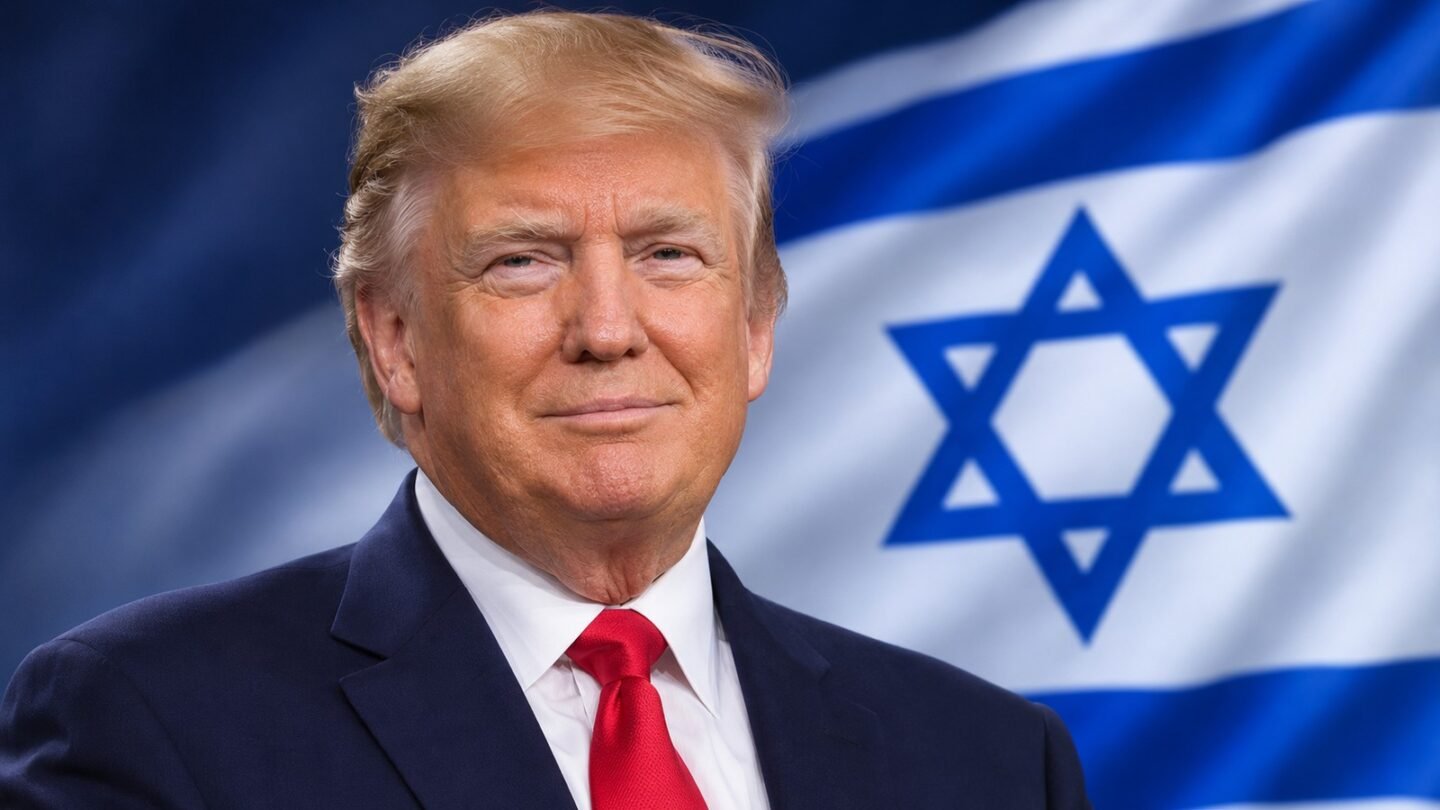
Trump’s Israel remark about moving there and becoming prime minister was a joke made during a November 3, 2026, Election Day telephone interview with Fox & Friends. President Donald Trump raised the possibility while boasting about his popularity in Israel and discussing American assistance to the country.
The comment is supported by multiple published accounts of the interview. It does not, on its own, establish a plan to leave the United States or launch an Israeli political campaign.
The surrounding conversation included a more consequential claim: Trump said annual U.S. assistance to Israel would stop at the end of 2026. That announcement raised questions about an existing aid arrangement and how any change would be carried out.
Trump’s Israel Remark Came During a Fox Interview
AL.com reported that Trump called Fox & Friends on Tuesday morning as Americans began voting in the congressional midterms. During the discussion, he praised his standing in Israel before making the prime minister comment.
“In fact, if people ever got tired of me in the U.S., I’ll move to Israel and become prime minister,” Trump said, according to AL.com.
The Indian Express also reported the remark as a joke. Fox also listed a clip describing the remark as a joke. The video could not be played during verification for this report.
That context matters when interpreting a screenshot containing only the quotation. The president was making a boast about his popularity, rather than setting out the steps for a political move or announcing a departure date.
The 99% Figure Was Trump’s Claim
Trump also claimed that he had a 99% approval rating in Israel. AL.com’s account places that assertion immediately around his comment about becoming prime minister.
The reporting reviewed for this article did not identify a poll supporting that exact figure. It should be attributed to Trump, rather than described as an independently established measure of Israeli public opinion.
Trump’s Israel remark and his polling boast therefore require different checks. Published interview accounts support that he made the remark; they do not establish that the approval number he cited is accurate.
No survey sponsor, fieldwork dates, sample size, question wording or margin of error was supplied for the 99% figure in those accounts. Without that information, readers cannot assess it as a documented polling result.
The Interview Also Raised Aid Questions
During the same appearance, Trump said Washington would stop providing roughly $4 billion in annual assistance to Israel after the end of this year. He said Israel could continue buying American weapons.
According to The Jerusalem Post, Trump said Prime Minister Benjamin Netanyahu had proposed the change. The newspaper reported that the hosts pressed him to clarify whether he meant military assistance, money or weapons deliveries, but important details remained unresolved.
The Indian Express reported that Trump also connected aid to political criticism of Republicans, including criticism from Michigan Democratic Senate candidate Abdul El-Sayed. Trump argued that Israel no longer needed the assistance.
Those are statements about a proposed policy shift. They should not be confused with confirmation that all payments, commitments or weapons deliveries have already ended.
The Existing Agreement Extends Through 2028
An archived White House fact sheet describes a $38 billion memorandum covering fiscal years 2019 through 2028. Its annual framework includes $3.3 billion in military financing and $500 million for joint missile defense, totaling $3.8 billion.
The framework covers military financing and missile defense, rather than a single unrestricted cash payment.
The Associated Press reported that Congress would have a major role in any change and that the timing of a possible wind-down remained unclear. AP also reported no comment from Netanyahu or his office as of Tuesday evening in Israel.
For now, Trump’s Israel remark is best understood as a documented Election Day joke, while his separate aid announcement awaits clarification. The next substantive questions are how Washington would implement the proposed cutoff, what Congress would do and how Israel’s government would respond.