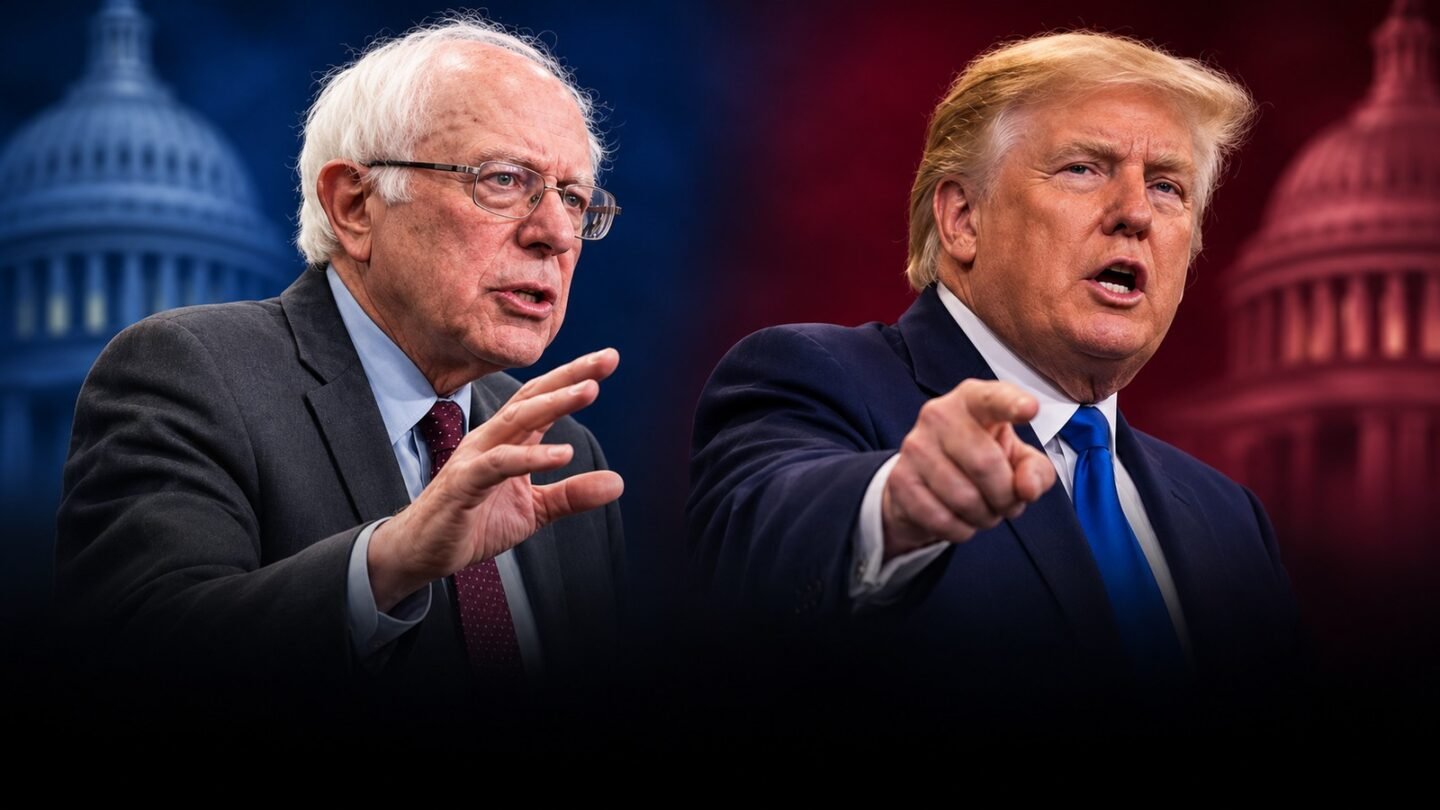
Bernie Sanders’ criticism of taxpayer-funded advertisements featuring President Donald Trump now sits alongside an expanded court order: on October 30, 2026, a federal judge directed the removal of three named ads from official government websites and social media.
The Vermont independent challenged the advertising spending after Trump and Vice President JD Vance announced a fraud whistleblower rewards program on October 20. The program’s written Justice Department rules differ from Trump’s public description of how much tipsters could receive and who would decide payments.
The dispute involves several separate questions: what the rewards program actually offers, how much public money financed the ads, and what the court has temporarily restricted. Sanders’ accusations do not themselves establish a criminal finding against Trump.
What Bernie Sanders said about the advertising
In an October 20 X post reproduced by HuffPost reporting carried by AOL, Sanders accused Trump of improperly spending nearly $22 million in taxpayer money on advertisements praising himself. He used the new anti-fraud announcement to demand an explanation and repayment.
“I’d like to report a theft,” Sanders wrote, according to the published report.
The quoted criticism is a political accusation. The reporting reviewed does not establish that Bernie Sanders filed a formal, qualifying whistleblower application, that DOJ accepted a complaint from him, or that he received an award.
The amount also needs a date and a source. NPR’s October 12 analysis of AdImpact data estimated that nearly $22 million in taxpayer funds had been spent airing the advertisements since late September. It was a reported advertising-spending estimate, not a court-ordered repayment amount.
DOJ’s written rules differ from Trump’s remarks
The Justice Department’s October 20 announcement says Treasury committed $25 million to the Fraud Whistleblower Incentive Program. It describes awards of $10,000 to $30,000 for qualifying information leading to criminal charges in specified fraud cases.
Under the department’s published eligibility criteria, participation must be voluntary, information must be original, truthful and complete, and participants must cooperate. Applicants must not have actively participated in the fraud.
DOJ says awards are made at its discretion after criminal charges are filed. That is different from guaranteeing money for every submitted tip or requiring a completed conviction before any payment.
Trump described an unlimited 1% commission at the launch and said he would arbitrate reward decisions, Reuters reported. Those remarks should be distinguished from the department’s published payment range and eligibility conditions, rather than combined into one supposedly settled rule.
What the October 30 court order covers
Judge Jennifer L. Rochon’s October 30 order names three advertisements: “$5,000 to Americans,” “Every Democrat Voted Against No Tax on Tips,” and “Cost of Socialism.” It directs government defendants to remove them from official websites and social media and cancel authorized third-party distribution arrangements, including through MAGA Inc.
The court granted the requested expansion only in part. The Associated Press reported that Rochon declined to order other challenged advertisements removed and recognized that presidential communications can legitimately explain or defend government policies.
For Bernie Sanders, the development supplies additional context for his spending criticism. It does not convert his broader characterizations of Trump into judicial conclusions.
The White House’s response and unresolved questions
The White House defended the advertisements as public service announcements. Responding to the October 30 ruling, spokesperson Lauren Bis criticized the judge’s decision and said it prevented the administration from sharing patriotic videos, the AP reported.
The administration’s defense and the plaintiffs’ allegations concern the content, financing and distribution of specific advertisements. A temporary restriction is different from a final judgment resolving the entire lawsuit or ordering Trump personally to repay the estimated advertising costs.
Hourly Times previously examined Trump’s promise to change the advertisements’ funding. Changing who pays for future broadcasts and reimbursing taxpayers for earlier spending are separate issues.
The October 30 order states that it lasts 14 days unless extended. Further court orders and compliance filings will determine the next confirmed developments.