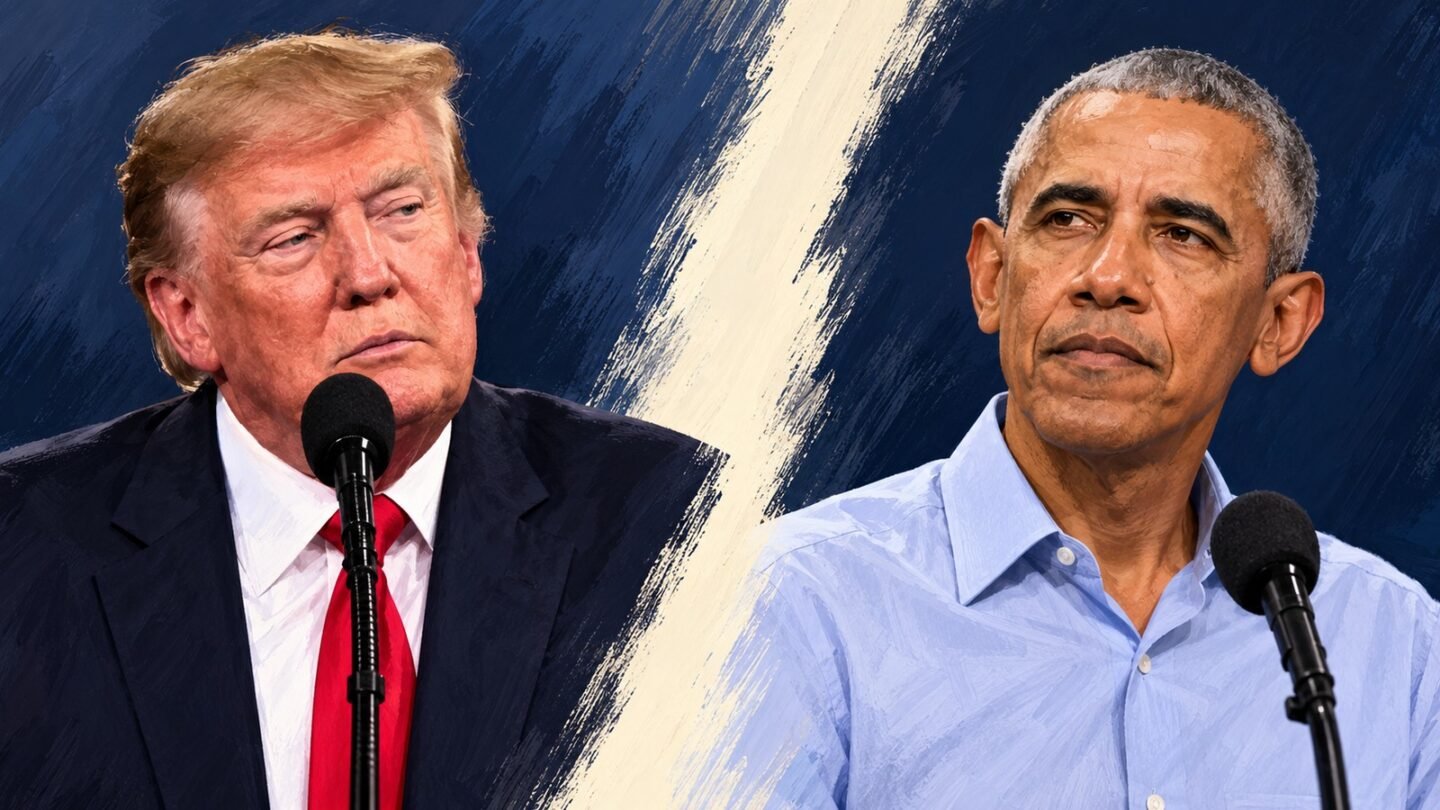
The Obama rally crowd claim made by President Donald Trump conflicts with contemporary reporting from Detroit. Trump said an Obama event in Michigan was empty, while Associated Press coverage described a packed high school gym. A comparison graphic also needs context: its lower photograph contains an Ohio campaign backdrop.
Barack Obama campaigned in both Cleveland and Detroit on October 24, 2026. Those were separate events supporting different candidates. Evidence about one gathering should not automatically be presented as a photograph of the other.
What Trump said about the Obama rally crowd
Trump made the remark while campaigning in Perry, Georgia, on October 24. The Roll Call Factba.se transcript records him saying: “You know, I saw Barack Hussein Obama was in Michigan, and the place was empty.”
He then criticized how the gathering was being described and contrasted coverage of Obama’s attendance with coverage of his own crowds. The location in his statement was Michigan.
The supplied graphic uses a shortened version of that argument above a photograph of a crowded auditorium. Its text leaves out the Michigan reference found in the transcript, which is important when assessing whether the two panels concern the same event.
Detroit reporting contradicts the empty-venue description
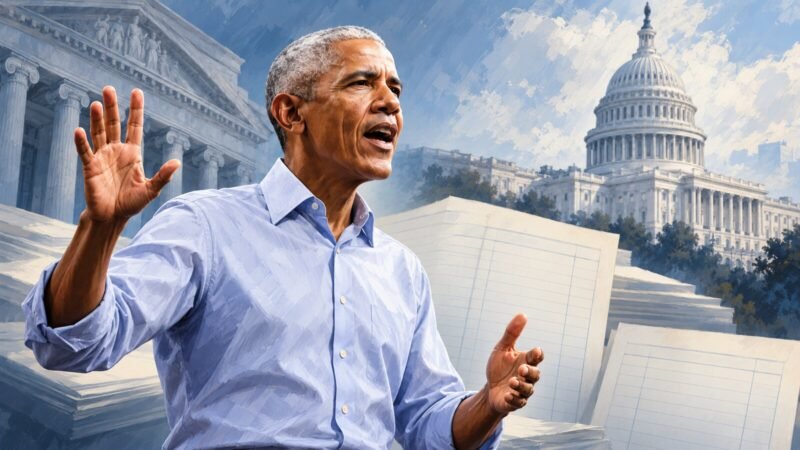
AP identified Obama’s Detroit appearance as a rally at Cass Technical High School on October 24. Its account described the gym as packed, and its photographs show supporters attending the event.
That contemporaneous description contradicts a literal claim that the venue was empty. It does not provide an independently audited attendance total, and no such total was verified for this article.
CNN also covered Obama’s Detroit speech that evening. Its broadcast transcript records applause, cheers and crowd chanting, followed by a report from correspondent Arlette Saenz at the event.
The CNN transcript identifies Obama’s appeal for voters to elect Jocelyn Benson governor and Abdul El-Sayed to the Senate. That places the speech within Michigan’s campaign contests, rather than the Ohio races shown on the supplied graphic’s backdrop.
The Ohio photograph needs its own identification
The lower image carries a stage banner reading “Fighting for Ohio.” That visible detail should be preserved when describing the comparison. It does not identify the scene as Obama’s Michigan appearance.
Separate local reporting confirms that Obama addressed a large Cleveland gathering the same day. Cleveland.com reported thousands of people at Public Auditorium, with attendees filling the building’s upper areas and a line wrapping around the venue beforehand.
The Cleveland event supported Democratic gubernatorial nominee Amy Acton and Senate candidate Sherrod Brown. Hourly Times previously reported on Obama’s endorsement of Brown and the planned Cleveland rally.
Those reports establish a well-attended Ohio event. They do not, by themselves, authenticate the exact photograph used in the supplied graphic. I cannot independently confirm that photograph’s original photographer, capture time or complete publication history.
Describing Cleveland’s attendance as thousands also does not justify converting the venue’s advertised capacity into a verified turnout figure. Capacity and attendance are different measurements.
What the available evidence establishes
The Obama rally crowd dispute contains two separate questions: whether Trump’s Michigan description matches contemporary reporting, and whether the graphic presents the correct photograph for that claim.
On the first question, reporting contradicts his empty-venue description. On the second, the Ohio backdrop requires a location warning, while the photograph’s exact provenance remains unconfirmed.
No exact crowd total is needed to distinguish an occupied venue from an empty one. However, a precise attendance claim would require additional evidence, such as a documented count from organizers or the venue, with the source clearly identified.
The Obama rally crowd evidence also does not establish which candidates will win. The appearances were campaign events intended to encourage participation ahead of the November 3 midterm elections.