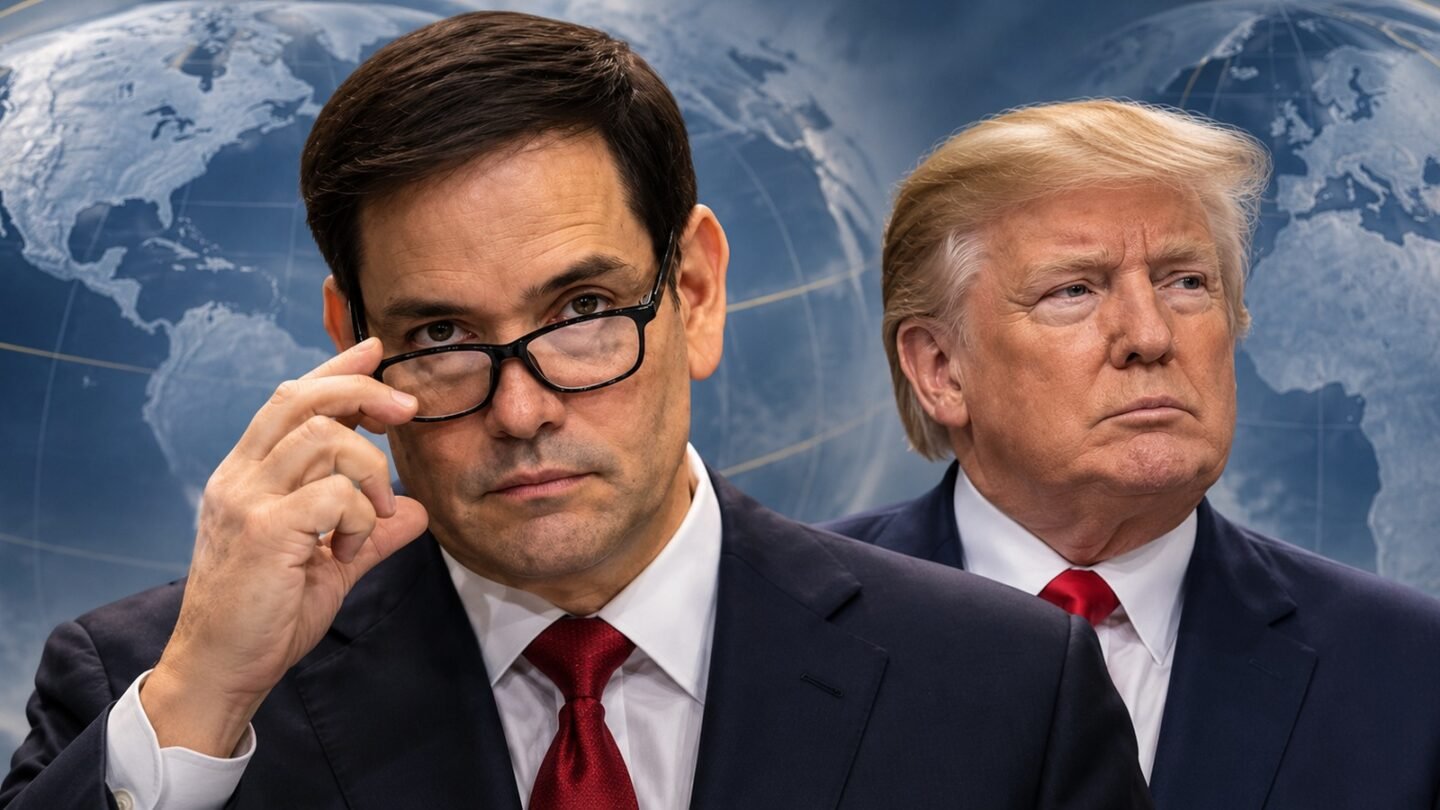
Secretary of State Marco Rubio is the subject of a social-media question linking America’s international reputation to calls for imprisonment alongside President Donald Trump. The supporting material combines real polling figures with criticism of diplomatic priorities, but neither establishes criminal wrongdoing or measures Rubio’s personal responsibility for America’s image.
The distinction matters because the question asks readers to judge three different things: foreign policy, international public opinion and potential criminal liability. Evidence supporting one does not automatically support the others.
Pew Research Center’s June 23, 2026, report documents negative international assessments of Trump and the United States. Separate October reporting describes disagreement over Rubio’s diplomatic focus. Those findings provide context for a policy debate, rather than a verdict on whether anyone should be imprisoned.
What the international survey measured
Pew reported a median of 23% expressing confidence in Trump to do the right thing regarding world affairs across the 36 countries surveyed. The median favorable rating for the United States was 37%, compared with 57% unfavorable.
These are medians of country percentages. They are not the share of the entire world’s population holding those views, nor a pooled percentage of every participant. Countries also differed in their assessments, so a single summary figure should not be presented as a universal judgment.
The study covered 42,151 adults interviewed from February 8 through May 13, 2026. June was the publication month, not the month in which all interviews occurred. The figures describe that survey period and should not be labeled an October measurement.
Pew’s published methodology describes telephone, face-to-face and online interviewing. Country-specific designs and sampling uncertainty must be considered when interpreting national results.
What the findings establish about Marco Rubio
The cited percentages concern Trump and the United States. They are not approval ratings for Marco Rubio. Assigning him a measured share of responsibility would require evidence beyond these two survey results.
A reader may judge that an administration’s policies are harming its standing abroad. That remains an assessment requiring a clear explanation of which policies, relationships or outcomes are being examined. The supplied graphic’s wording does not identify such a measurement for Rubio personally.
Nor does placing “seriously damaging” in quotation marks identify a speaker. No named source for that exact characterization of Rubio is established in the supplied material. It should not be presented as an authenticated quotation.
Diplomatic priorities drew criticism and a defense
In an Associated Press report carried on October 18, former U.S. ambassador to NATO Ivo Daalder criticized Rubio’s travel priorities and distance from major crises. The State Department disputed that assessment, saying Rubio remained involved behind the scenes and that his schedule served the president’s broader strategy.
That is a dispute over diplomatic performance. It does not establish a criminal offense. Related Hourly Times coverage examines criticism of Steve Witkoff’s praise for Putin and the administration’s defense, providing additional context for debate over Washington’s Russia policy.
Criminal punishment requires a separate legal basis
The Justice Department’s federal prosecution principles require legally sufficient, admissible evidence capable of supporting a conviction. At trial, the government bears the burden of proving guilt beyond a reasonable doubt; defendants do not have to prove their innocence.
The federal judiciary’s explanation of criminal proceedings also distinguishes conviction from sentencing. A sentence can include imprisonment, fines or other penalties. A finding of guilt does not make every possible punishment automatic.
The supplied post identifies no specific criminal charge, statutory violation or court finding connecting Marco Rubio to the reputation claims. Its conditional reference to wrongdoing being proven does not supply that missing evidence.
A criminal allegation would also have to distinguish each person’s conduct; holding office in the same administration does not establish that both committed the same offense.
Any substantiated allegation would need to be assessed on its own facts, applicable law and procedural requirements. The polling and diplomatic criticism reviewed here cannot determine that outcome for either Rubio or Trump.