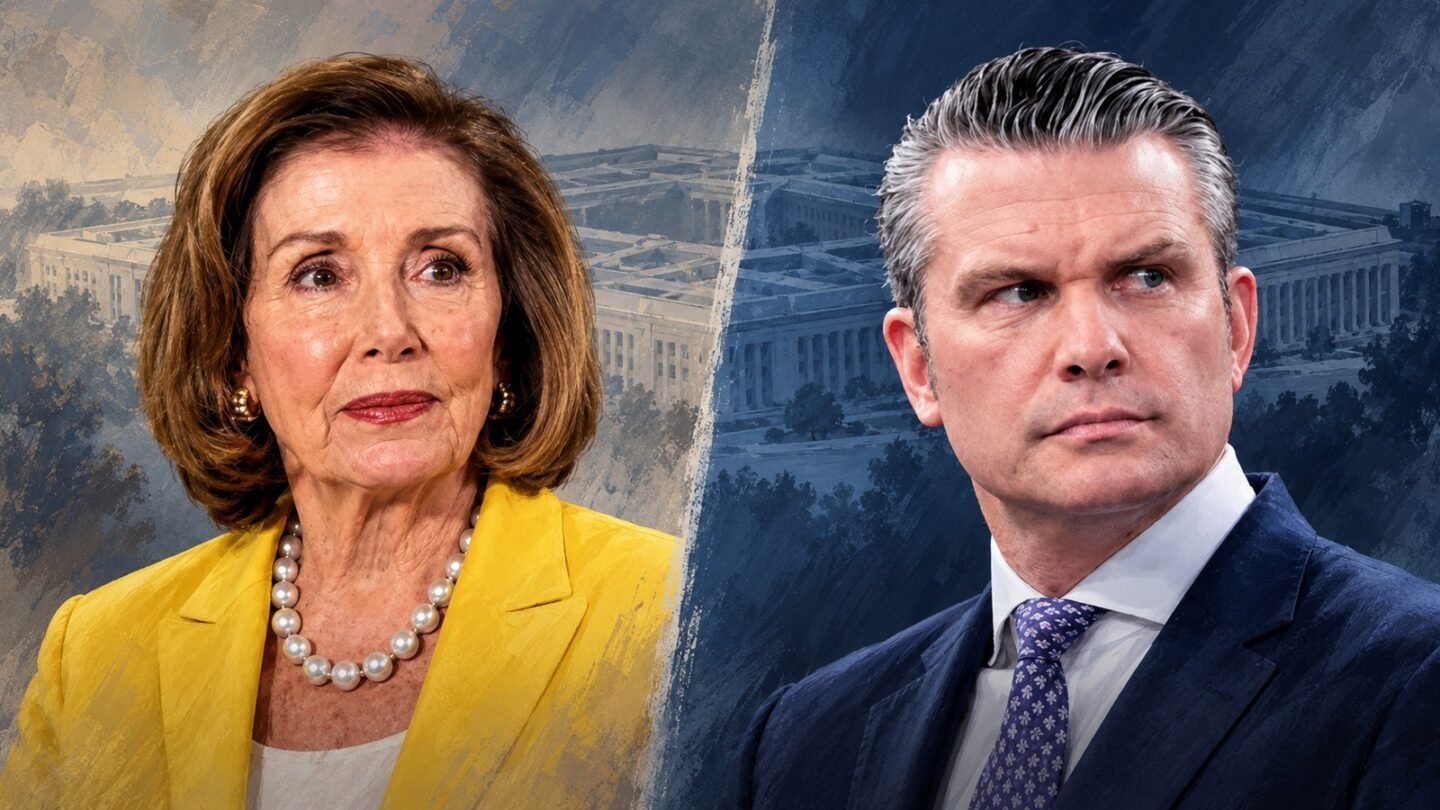
Nancy Pelosi called for Pete Hegseth to resign on March 28, 2025, after the disclosure of a Signal chat about planned U.S. strikes in Yemen. The Hegseth Signal report later documented policy violations and risks to American personnel, while acknowledging the defense secretary’s authority to make classification decisions.
Pelosi’s statement described the handling of sensitive information as “horrifying incompetence.” Her demand preceded the Pentagon inspector general’s findings by several months. It should not be presented as a newly issued response to that investigation.
The record supports reporting that Hegseth’s communications created operational risks. It does not establish that the messages caused American casualties. Whether he should resign or be removed is a separate question of political accountability.
What Prompted Pelosi’s Resignation Demand
The controversy concerned messages about the March 15, 2025, strikes against Houthi forces in Yemen. Jeffrey Goldberg, editor-in-chief of The Atlantic, had been inadvertently included in a Signal group containing senior Trump administration officials.
According to reporting by Stars and Stripes, then-national security adviser Mike Waltz accidentally invited Goldberg. Hegseth posted information about aircraft and the approximate timing of launches and strikes before the operation.
The Atlantic published accounts of the conversation on March 24 and March 26. Pelosi’s official statement followed on March 28, placing her resignation demand within that initial controversy rather than the later release of the watchdog’s findings.
That chronology also separates Pelosi’s criticism from the investigation’s conclusions. Her language expressed her assessment of Hegseth’s conduct; the inspector general subsequently evaluated compliance with specific security and recordkeeping requirements.
What the Hegseth Signal Report Found
The inspector general’s report was dated December 2, 2025, and publicly released on December 4. It examined official use of Signal, classification requirements and preservation of government records.
The investigation found that Hegseth sent sensitive, nonpublic operational information through Signal on his personal cellphone. Some information matched details in a U.S. Central Command email that had been classified SECRET/NOFORN when sent to him.
Investigators concluded that his use of the personal device and messaging application did not comply with Pentagon policy. The finding concerned the handling of nonpublic government information, not simply whether Signal provides encryption.
The public inspector general report provides the underlying findings and Hegseth’s written explanation.
Operational Risk Is Different From Confirmed Harm
The watchdog said advance exposure of the information could have allowed adversaries to counter American forces or reposition personnel and equipment. That could have jeopardized mission objectives and American pilots.
However, the report said those potential consequences did not ultimately occur. Describing a documented risk is therefore supported; claiming that the chat caused deaths, injuries or a failed operation would go beyond the findings.
Republican House Armed Services Committee Chairman Mike Rogers emphasized the operation’s success and the absence of harm to U.S. troops, Stars and Stripes reported. His response challenged the consequences attributed to the episode without changing the watchdog’s policy findings.
Hegseth Rejected Claims of Improper Disclosure
Hegseth declined an interview with investigators but supplied a written statement. He said he had provided an unclassified summary using information he determined either was not classified or could safely be declassified.
The Hegseth Signal report recognized his authority as the department’s senior classification official. That authority did not remove the separate requirements governing personal devices, nonpublic information and official records.
Hegseth and Pentagon spokesman Sean Parnell subsequently characterized the investigation as an exoneration. FactCheck.org disputed that description in its December 5 review, pointing to the documented security and recordkeeping failures.
Recordkeeping Was a Separate Accountability Issue
Investigators found that Hegseth and his office had not retained the Signal conversations as required. Some messages automatically disappeared, leaving the inquiry partly dependent on The Atlantic’s published transcript.
The Hegseth Signal report was an oversight evaluation, not an order removing the secretary. Pelosi’s resignation demand likewise did not itself remove him. The cited statement and report establish no new resignation deadline, dismissal decision or scheduled congressional vote.